
Reviewed · SALSA DANCING
Cali Salsa Tour: Learn the history, dance and play instruments
Cali is the salsa capital, but this tour is more than steps and playlists. You start with Cali’s salsa roots through museum-style history, then move into performance energy at key city landmarks where the music has a physical address.
What I like most is the hands-on mix: you get Cali-style dance basics plus time to play instruments, not just watch. I also love how the route connects names, places, and sounds, so the story lands in your body and ears. One thing to consider: it is about 3 hours with multiple short walking segments, so you will want comfortable shoes and a moderate fitness level.
Key moments I’d plan around
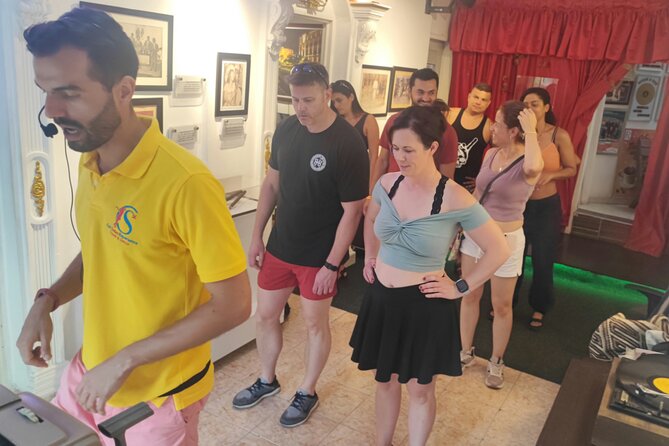
- Museo Raizales De La Salsa: first orchestra artifacts, vinyl, and instrument and dance classes
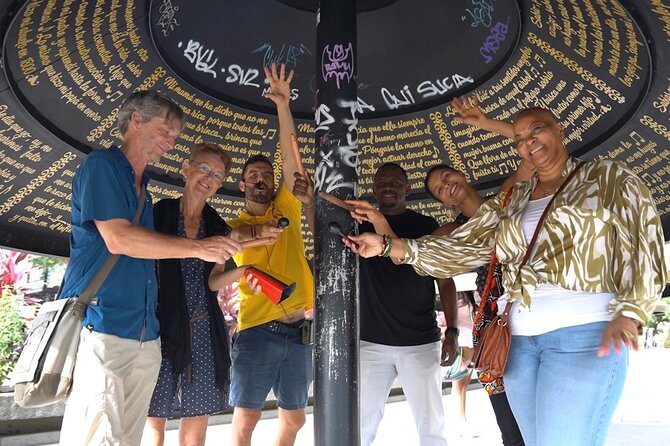
- Plazoleta Jairo Varela: giants trumpets, plus a focus on Grupo Niche and Guayacán
- Hands-on instrument time: a real chance to try music-making during the tour
- Kumis Kasimiro on Sin Street: a look at the local Friday and Saturday night energy
- ASOMUCAF stop: 18th-century house, souvenirs, and support for 60 women heads of family
Why Cali salsa history works better with a route
If you only do a dance class, salsa in Cali can feel like a skill lesson. This tour adds something more useful: context. You see why Cali salsa sounds the way it does, and you learn how people in this city treat music as everyday culture, not a stage trick.
I also like that it is structured in compact chunks. Each stop is short enough that you stay curious, but long enough to pick up facts and then connect them to what you will do next, dance or play.
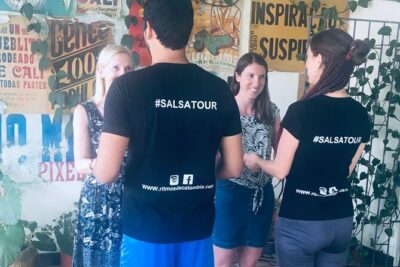
The group size matters too. With a maximum of 15 people, the guide can keep the experience interactive, and you are not stuck as a spectator in a crowd.
More Historical Tours in Cali
- Shared Tour of the Historical and Cultural Center of Cali
★ 5.0 · 211 reviews - Shared Tour Cali’s Historical Downtown
★ 4.8 · 143 reviews - Historical Shared Tour Salsa, Graffiti & Resistance in Cali
★ 5.0 · 107 reviews
Getting there: the 2:00 pm start at Plazoleta Jairo Varela
Your tour starts at Plazoleta Jairo Varela o de La Caleñidad, at Av. 2 Nte. #10 Norte-1 a 10 Norte-75 in Granada, Cali. The start time listed is 2:00 pm, which is a nice slot because you get daytime clarity in museums, then you still roll into the evening vibe as you move through the city.
This is one reason I’d book it earlier in your trip. It helps you get your bearings fast, then you can use what you learn when you later wander for dinner, street music, or a club night.
The tour also ends at ASOMUCAF Asociación Mujeres Cabeza de Familia, Cl. 4 #5-84 in San Pedro, Cali. You even have a practical payoff at the finish point: you end up at a cafe area where they sell crafts and souvenirs, in front of the Merced church, which is convenient if you want to head toward San Antonio or take a taxi.
Stop 1, Museo Raizales De La Salsa: where the story begins
The first stop is Museo Raizales De La Salsa, and you get about 30 minutes there. This is not a quick photo stop. It is an original collection tied to the first salsa orchestra in Cali, so the museum theme is history plus objects, not just theory.
From what you can expect at this stop, you will see early salsa connections through vinyl, the city’s first instruments, and instrument and dance classes. The vibe here is educational, but it sets up why later parts of the tour feel so physical.
Practical note: because admission is included at this stop, you avoid that small hassle of figuring out tickets while the day is rolling. I like tours that handle the basics for you.
Potential drawback: museum time can feel slower if you want a pure dance workout. But the benefit is that you go in understanding what you are about to try.
Stop 2, Plazoleta Jairo Varela: giant trumpets and real salsa names
Next you head to Plazoleta Jairo Varela, with about 45 minutes allocated. This is the longest stop after the museum, and it is where the tour leans into place-based music storytelling.
The focus is on Colombia’s musical heritage, and the stop is described as a kind of monument where you will talk about Grupo Niche and Guayacán, then connect with the music around you under giant trumpets. That detail matters. When you stand in front of big public instruments and sonic symbols, the music history becomes more than facts on a page.
Why this is valuable for you: learning salsa is not only about counting steps. It is about learning how rhythm, orchestration, and lyrics connect to identity in a city. This stop helps you understand that salsa in Cali is a living local language.
What to watch for: because the trumpets and monument setting can be visually loud, the guide will probably manage the pace so everyone can follow. If you are the type who likes to take photos, keep your camera ready, but be sure you also listen, since the point here is the story tied to the sound.
More Salsa Dancing in Cali
- Shared Tour Cali’s Salsa, Graffiti & Resistance Experience
★ 4.8 · 53 reviews - Salsa Bar Hopping in Cali
★ 4.5 · 43 reviews - Salsa & Music Tour of Cali
★ 5.0 · 42 reviews - Friday Night Street Salsa and Bar Crawl in Cali, Colombia
★ 4.5 · 24 reviews
Stop 3, Edificio Coltabaco: tobacco, vinyl, and the smell of industry
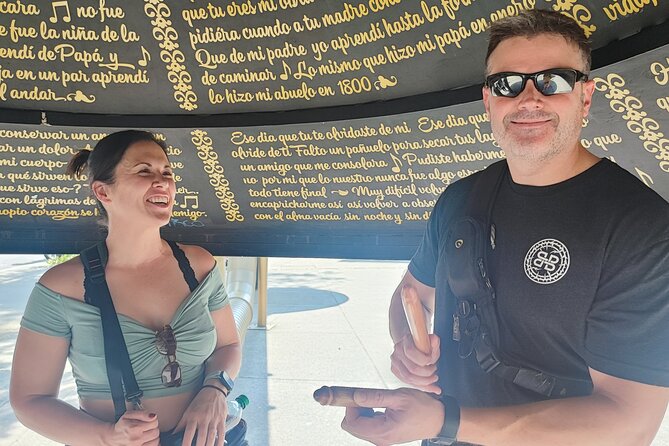
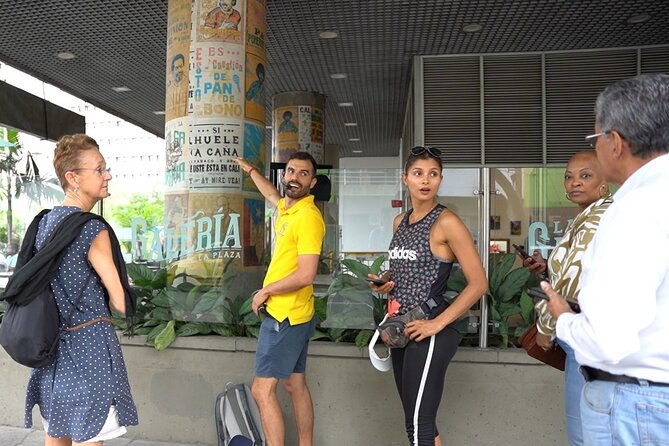
The third stop is Edificio Coltabaco, around 15 minutes, with admission listed as free. The connection is surprisingly specific: tobacco and vinyl, plus the phrase If it smells like cane, tobacco and tar.
That one line tells you the tour is paying attention to how culture forms around industry and materials. In cities where record labels, factories, and nightlife share the same geography, salsa does not appear from nowhere. It grows from the local economy and daily life.
I like this stop because it breaks the usual museum pattern. You are not only chasing performers and instruments. You are learning how the physical world around Cali shaped the music world.
Potential drawback: this is short. If you prefer slow, detailed stops, you might wish it lasted longer. But as part of a 3-hour route, it keeps the energy moving.
Stop 4, Kumis Kasimiro on Sin Street: how locals actually party
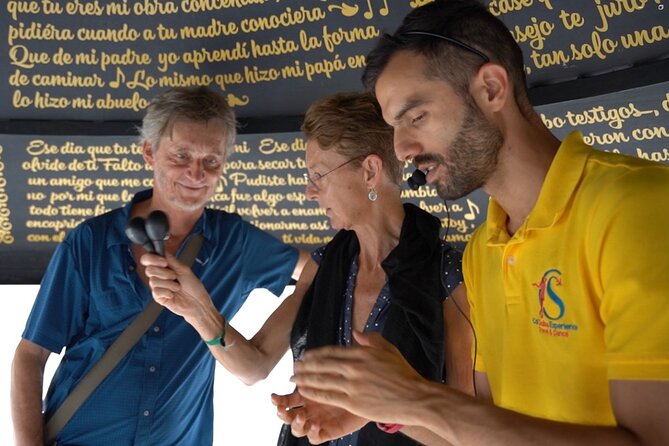
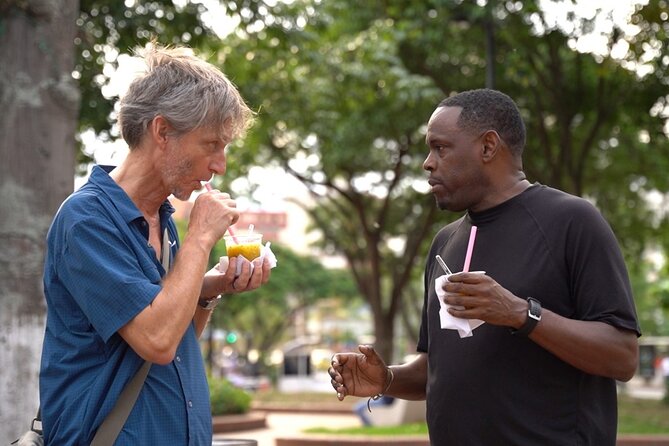
Then comes a more street-level moment: Kumis Kasimiro, again about 15 minutes, listed as free. This stop is on what is called Sin Street, described as a place where hundreds of locals gather on Friday and Saturday nights for an open-air carnival with live music and dancing.
Even if you are not arriving on a Friday or Saturday, you still get the point. The tour shows you where the city’s social rhythm happens, and you understand how salsa is tied to weekends, gathering, and movement in public space.
Why this is worth your time: later, when you walk around at night, you will recognize the kind of street energy the guide is referencing. That makes your self-guided plans easier.
A consideration: if you are sensitive to crowds, this particular street vibe can be intense when it is actually happening. The stop itself is short, so you are not stuck there for hours.
Stop 5, ASOMUCAF: an 18th-century house with a purpose
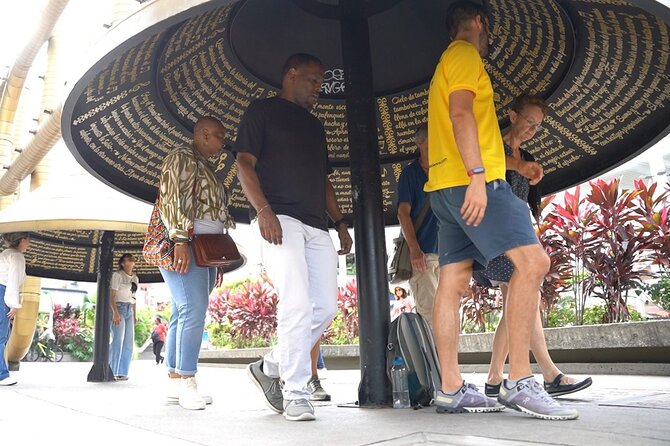
The final stop is ASOMUCAF Asociación Mujeres Cabeza de Familia, about 20 minutes. This one is listed as free, and it is also practical if you like to buy souvenirs with meaning.
The foundation supports 60 women heads of family, and the site is located in an 18th-century house where the treasure of the Spanish settlers was kept. That historical angle gives the stop more depth than a simple market table.
I like that you have time here to pick up souvenirs and still feel like your money does something. You also end the tour in a part of town that is easy to transition from, because the tour notes that you end at a cafe selling crafts and souvenirs in front of the Merced church.
The real win: dance basics plus playing instruments
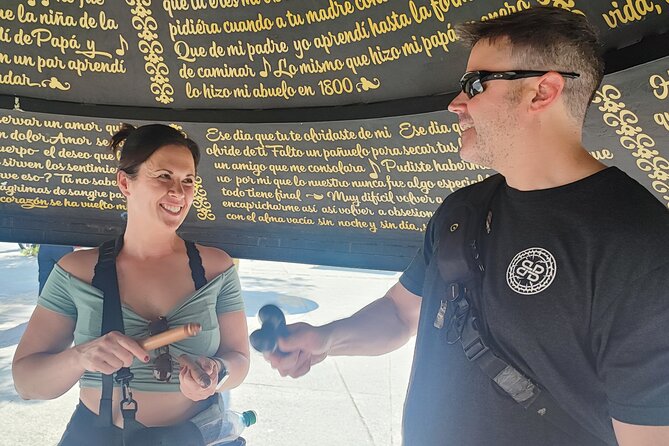
The tour title promises learn history, dance, and play instruments, and that combination is what people keep praising for a reason. You are not only learning facts at the museums and monuments, you are also doing stuff with your body and hands.
A standout detail is that the guide for this experience is Alejandro in many accounts. The feedback you have here highlights his command of history, a fun, interactive style, and great English. That matters if your Spanish is basic and you want to follow every idea without guessing.
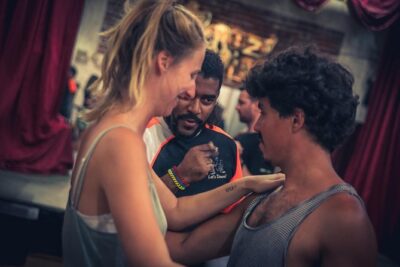
You should expect both learning and try-it-yourself moments. Some stops focus on rhythm and instrument context, then the tour turns that into practical participation, including hands-on instrument time and Cali-style salsa steps.
What to do to get the most out of it: when the guide asks people to try a move or make a rhythm, jump in even if you feel awkward. This kind of tour works because the group stays small, so you get feedback instead of just moving on.
Price and value for $70.67, 3 hours long
At $70.67 per person for about 3 hours, the key value question is what you get for that time. You get five stops across Cali’s salsa story, one paid museum entrance, and multiple free cultural stops. More importantly, you get interaction, not just a guided walk.
A lot of tours charge similarly for either a dance class or a history talk. This one combines both, plus includes instrument playing, which is harder to find in a single half-day format.
Also, this is booked far ahead, with an average booking window around 64 days. If you are flexible, you might sometimes find other options later. If you want this specific style of tour, booking earlier is your best move.
Timing, fitness, and what to wear so you enjoy it
The tour starts at 2:00 pm and lasts around 3 hours, with multiple short visits. The data also calls for moderate physical fitness, which I read as: you should be comfortable walking and standing for stretches, not that it is athletic training.
Wear comfortable shoes. Bring a light layer, especially if the afternoon turns breezy. And if you have a way to keep your phone safe during hands-on activities, that helps too, since you will likely be moving and focusing on trying things.
Good to know: the tour allows service animals, and it is listed as near public transportation, so you can plan an easy arrival and departure.
Should you book this Cali Salsa Tour?
Book it if you want salsa in Cali that connects music history to what you actually do. This is best for people who enjoy culture that includes participation, not just sightseeing. If you like learning about specific names in the salsa world, you will appreciate the attention to Grupo Niche and Guayacán and the way the tour ties them to places.
Skip it if you want a long, slow museum experience or you want a strictly advanced dance session. This is a well-paced route, so it is not meant to be hours of deep lecture.
One more smart move: if you are the type who loves night life, ask the guide about additional salsa experiences. The information you have here mentions a nighttime salsa dancing experience through Alejandro’s company, and doing both can round out your trip, daytime culture and then the street and club energy.
FAQ
How long is the Cali Salsa Tour?
The tour lasts about 3 hours.
What does the tour cost?
It costs $70.67 per person.
When does the tour start?
The listed start time is 2:00 pm.
Where does the tour start?
It starts at Plazoleta Jairo Varela o de La Caleñidad on Av. 2 Nte. #10 Norte-1 a 10 Norte-75, Granada, Cali.
Where does the tour end?
It ends at ASOMUCAF Asociación Mujeres Cabeza de Familia, Cl. 4 #5-84, San Pedro, Cali.
What’s included at the stops?
Admission is included at Museo Raizales De La Salsa (Stop 1). The other stops listed are free.
How big is the group?
The tour has a maximum of 15 travelers.
Is the tour accessible for people with moderate mobility?
It lists a moderate physical fitness level, so you should be comfortable with walking and standing for the duration.
Are service animals allowed?
Yes, service animals are allowed.
What is the cancellation policy?
You can cancel for free up to 24 hours in advance for a full refund, based on local time.
Recently reviewed around Cali
- Private Transfer from Cali Airport (CLO)★ 5.0 · 4 reviews
- Historical Walking Cali City Tour 3H★ 5.0 · 4 reviews
- Roundtrip Private Transfer from Cali Airport (CLO)★ 5.0 · 5 reviews
- Trekking & Rivering Reserve Pericos★ 5.0 · 5 reviews
- Cali: Bird Watching | Birding in the cloud forest at kilometer 18★ 4.5 · 5 reviews
- Private Tour in Cali with Salsa Class, Museums and Local Food★ 5.0 · 6 reviews
- Cali Mountain Bike Ride★ 5.0 · 6 reviews
- Alameda Market Food Tour★ 5.0 · 6 reviews
Salsa Dancing, compared.

Salsa & Bachata Nightlife Tour in Medellín with a Local Dancer
Read our review →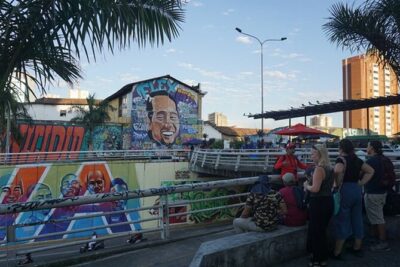
Historical Shared Tour Salsa, Graffiti & Resistance in Cali
Read our review →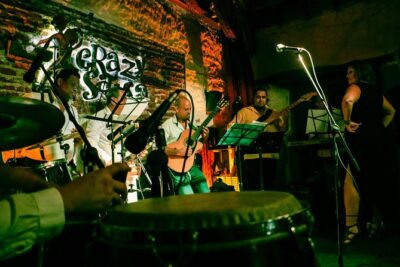
Salsa Tour in Cartagena with admission Ticket to Café Havana
Read our review →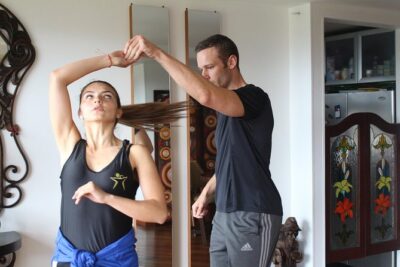
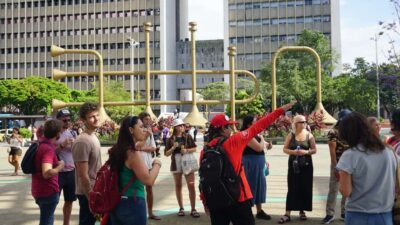
Shared Tour Cali’s Salsa, Graffiti & Resistance Experience
Read our review →
Browse the lists this tour appears in