
Reviewed · SALSA DANCING
Historical Shared Tour Salsa, Graffiti & Resistance in Cali
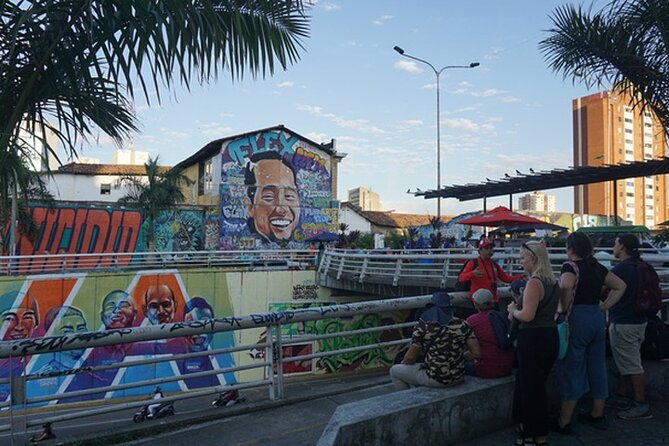
Cali is the kind of city where music lives on the walls as much as it lives in clubs, and this walking tour leans into that idea. You start at Plazoleta Jairo Varela and follow murals, public art, and salsa landmarks tied to identity, rhythm, and community. I especially like how the tour connects salsa history to what you actually see outside your window.
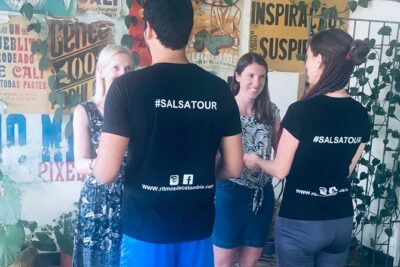
Two things I really like: I love the way the guide keeps the pace moving with short stop times, about 18 minutes each, so you stay focused instead of doing a long lecture. And I like the push toward action, not just talk, since you get salsa survival tips and even some steps along the way, led by guides such as Cristian and (in other runs) Juliana. One drawback to consider, good shoes matter, because it is a 3-hour walk and you do not get food or drinks included.
Key Highlights You Get on This Cali Salsa Graffiti Walk
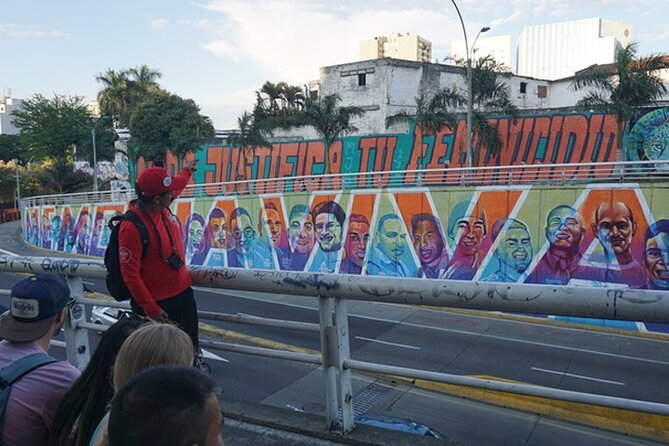
- Cali salsa history told through murals connected to music and popular culture
- Stop-to-stop structure with about 18 minutes at each location over roughly 3 hours
- Free entry for the included sights listed for each stop
- A lively finish at Cimarrón Salsa Bar where dancing continues late, with live music
- A small group vibe with a maximum of 30 travelers, guided in Spanish
- Resistance theme that frames music and dance as social power, not just entertainment
Why Cali’s Salsa Story Runs Through Murals and Music
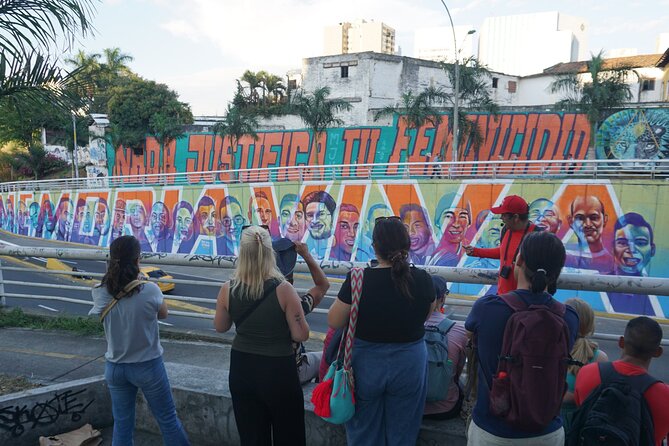
This tour is interesting because it refuses the usual split between nightlife and art. In Cali, salsa is not only what you hear. It is also what you see in murals, in neighborhood landmarks, and in streets that carry meaning from older social struggles. You get the story through places you can point at, not just facts you try to remember later.
The “resistance” angle is practical, too. The guide ties music and dance to community strength, which makes the stops feel purposeful. It also helps you understand why the graffiti and public art are not random decoration, they are communication.
If you want a walking tour that actually explains why Cali salsa matters, this is the format. And if you only want photos and quick sightseeing, you might find yourself wishing for more free time. The tour does keep moving, which is usually a plus, but it does limit how long you can linger.
More Historical Tours in Cali
- Shared Tour of the Historical and Cultural Center of Cali
★ 5.0 · 211 reviews - Shared Tour Cali’s Historical Downtown
★ 4.8 · 143 reviews - Cali: Walking tour of the historic center
★ 5.0 · 69 reviews
Price and Value: What $14 Buys (And What It Does Not)
At $14 per person for about 3 hours, you are paying for a guided route, not for meals. The listed price includes a certified guide in Spanish, plus the walking route and interpretation of salsa movements in Cali, with murals and active street art as part of the “teaching materials.”
What you do not get is drinks, food, or souvenirs. That matters because this route spends time near places where you might want to eat and refresh. You will have the chance to find typical food on the way, but you will be buying it yourself.
Is $14 worth it? For me, yes if you are new to Cali salsa. The guide work is the core value: you are getting context for what you see, and you are also getting dance instruction bits rather than just listening. Reviews back this up with strong praise for guides like Cristian and the way they make the walk fun.
Duration and Group Size: Your Pace and Your Comfort Level
Expect roughly 3 hours total, with about 18 minutes at each of the 10 stops. That timing is helpful. You get a sequence of quick hits: one mural landmark, one cultural anchor, one nightlife area, repeat. It keeps energy high and helps you see more of Cali without feeling rushed every second.
The group size has a maximum of 30 travelers. That is big enough to have a shared buzz, small enough that a guide can still keep the group together. You can also count on a Spanish-speaking guide, since that is the provided language.
One detail I appreciate is that the route is described as suitable for most travelers, and service animals are allowed. Still, it is a walking itinerary, so plan for pavement and time on your feet.
Stop 1: Plazoleta Jairo Varela, Where the Rhythm Starts
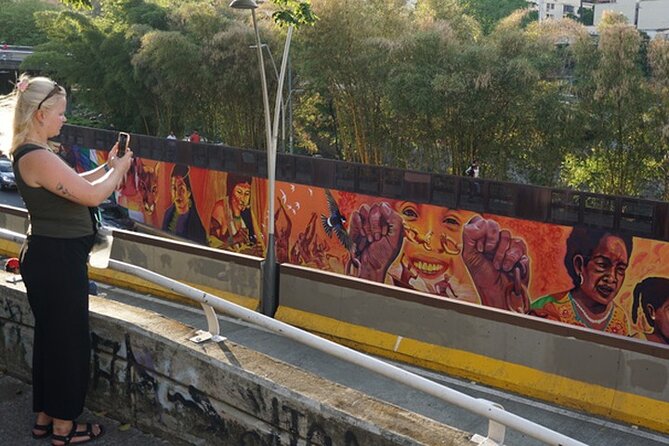
You begin at Plazoleta Jairo Varela, a tribute to one of Cali’s greatest salsa composers. The setting is built for atmosphere: murals celebrate his life and work, so the tour starts with a visual cue that salsa in Cali is not background music, it is a cultural foundation.
This first stop sets the tone for the rest of the walk. The guide typically uses it to explain how Cali salsa developed and why certain movements and names matter. If you arrive without a mental map of Cali salsa, this is a smart place to start, because it gives you a reference point right away.
Drawback note: since this is an opening stop, you might feel a bit like you are catching up at the beginning. Give yourself five to ten minutes to settle in and then you will start picking up patterns.
More Salsa Dancing in Cali
- Shared Tour Cali’s Salsa, Graffiti & Resistance Experience
★ 4.8 · 53 reviews - Salsa Bar Hopping in Cali
★ 4.5 · 43 reviews - Salsa & Music Tour of Cali
★ 5.0 · 42 reviews - Friday Night Street Salsa and Bar Crawl in Cali, Colombia
★ 4.5 · 24 reviews
Stop 2: Parque de las Piedras, Fountains, Murals, and a Breather
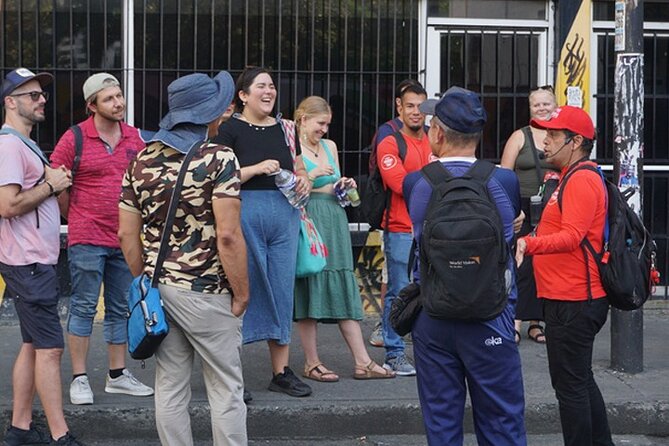
Next comes Parque de las Piedras, also called Parque de las Piedras. The tour frames it as a meeting place for salsa lovers, and the space helps you understand why people love hanging out in public plazas. You get fountains, sculptures, and room to sit or just regroup.
This is also where the murals emphasize cultural diversity. The tour uses the art here to widen your view beyond “salsa club culture” and into the broader city identity that feeds the music.
Practical tip: if you want a calmer moment to absorb what you are learning, this stop is it. Use it to reset your energy for the next stretches.
Stop 3: Departmental Institute of Fine Arts, Art Meets Sound
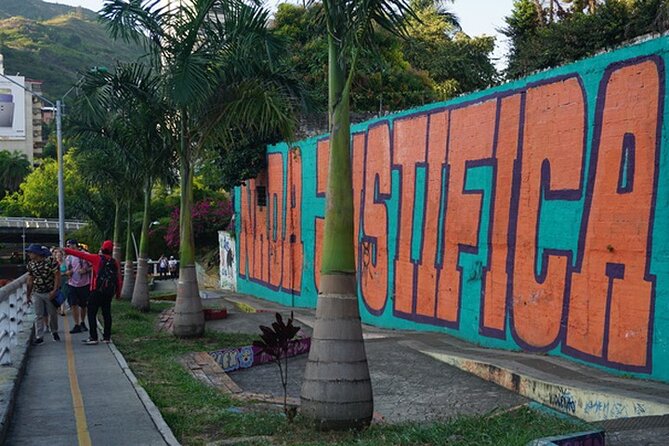
At the Departmental Institute of Fine Arts, you get a more formal cultural setting. The building is described as a cultural center with exhibitions such as painting, sculpture, and photography.
What makes this stop valuable is the connection. You are not just seeing “art somewhere.” You are learning how the local art scene connects to music, which matters for understanding Cali salsa as a lived, everyday culture. Salsa, in this framing, is not isolated from other creative expression.
Potential downside: if you prefer purely street-level scenes, an institute stop might feel more structured and less photo-forward than a tunnel or street. It still fits the tour’s main goal, though, which is connecting art types and social meaning.
Stop 4: La Curva del Boulevard, Food Options and Nightlife Energy
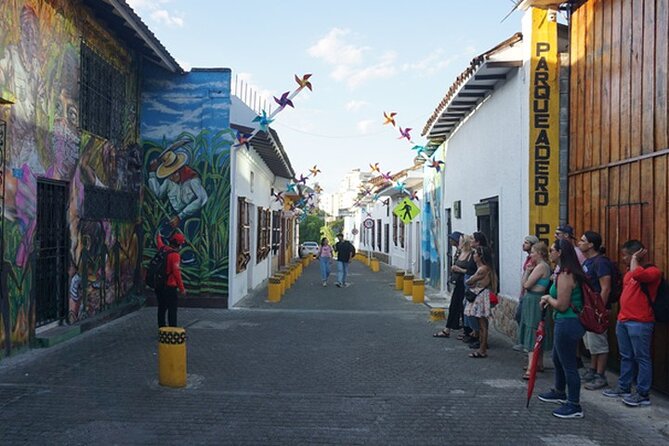
Then the walk shifts toward the nightlife corridor around La Curva del Boulevard. This area is known for evening energy and for having lots of dining options. The tour also points out the murals on building facades, so you keep the street-art theme going while you move into a more lively zone.
This stop is a good time to think about your next meal. The tour includes typical food as part of the experience, but it does not include drinks. So if you want something specific, you can use this area to steer yourself toward what sounds good.
Consideration: nightlife areas can feel louder and busier. If you are sensitive to noise, you may want to mentally prepare for a slightly higher-energy stretch.
Stop 5: Edificio Boulevard del Río Emcali, City Views and the River Connection
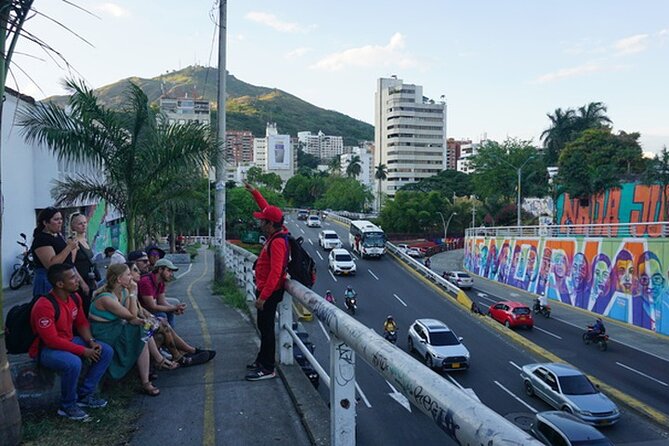
At Edificio Boulevard del Río Emcali, the focus turns to architecture and view. The building represents urban development, and the tour highlights a panoramic look at Cali and the Cali River.
Even if you are not a view person, this stop helps you understand how salsa neighborhoods and cultural spaces fit into the city as a whole. When the guide talks about development, it often supports the tour’s bigger message: music and art evolve alongside the city.
Best move: take a few minutes here to look around before you start moving again. A view stop is one place where your brain needs a little time to “zoom out.”
Stop 6: La Calle del Sabor, The Heart of Caleña Style
Now you hit La Calle del Sabor, described as the heart of Caleña salsa style. This is one of the stops where the tour’s title starts making sense. You are in an area built around bars, restaurants, and theme shops, and the murals tell stories of musicians, dancers, and popular culture.
This is also where you feel the “dance and street art” relationship most directly. The murals are not only decoration, they are storytelling. You start noticing faces, names, and scenes that match what you have been hearing about.
If you want to buy something, this is the most natural place. Just remember, drinks and food are not included. I like using this stop to get something small so I am not hungry when the tour ends in a dancing mood.
Stop 7: BENEFICIENCIA del Valle del Cauca, Colonial Architecture with Cultural Purpose
Next is BENEFICIENCIA del Valle del Cauca, a historic building with colonial architecture. Today it functions as a space for cultural events, including art exhibitions and music presentations.
This stop helps you see the contrast: colonial-era structure, modern cultural programming, and salsa as a thread tying it all together. The tour frames it as heritage and promotion of Cali culture, which makes the walk feel less like entertainment-only sightseeing.
One consideration: if you expected only street art every step, this might feel more institutional. But it adds depth to the story.
Stop 8: Calle de la Escopeta, Street Art With a Name and Meaning
At Calle de la Escopeta, the tour spotlights urban art and colorful facades covered in murals. A street with a strong name plus strong visual art gives you a memorable stop, and it works well for the resistance theme. You can see how creativity can take over surfaces and reclaim public space.
This is the sort of location where I would slow down if I were walking independently. On the tour, you still get a focused look, but you are on a schedule. If you really love street art, take a couple extra seconds for close-up photos and do not worry about rushing.
Stop 9: Túnel Mundialista, Football Murals and Local Culture
Then you pass through Túnel Mundialista, a tunnel decorated with murals celebrating football and local culture. It is described as a meeting point for sports fans, and the guide uses it to talk about stories behind each work of art.
Tunnels like this can become a photo trap if you try to do everything at once. Instead, let the guide’s explanation pull your attention to the meaning of the mural choices. It turns “wall art in a tunnel” into a context lesson.
Practical tip: tunnels can be darker than open streets. If you care about photos, keep your expectations realistic and let the guide’s story matter more than perfect lighting.
Stop 10: Cimarrón Salsa Bar, Dance Until Late
You finish at Cimarrón Salsa Bar, described as an emblematic place to dance salsa until dawn. The tour ends with live music, dance shows, and that infectious “let’s go” energy.
This is a smart ending. After walking through salsa history and street art meaning, you get to feel the tradition in motion. Even if you are not a dancer, being near live music changes your understanding. It makes the earlier murals and stories feel more like a living culture instead of a lecture.
If you love salsa clubs, this ending alone is a reason to book. If you prefer quiet nights, you might want to mentally position this as your active finale, not a calm last stop.
What Your Spanish Guide Typically Adds (Beyond Walking)
The guide is listed as certified and provides precise knowledge of Cali salsa and the popular cultural revolution. The tour also includes representative salsa movements of Cali and recommendations for cult salsa bars.
From the reviews, the strongest praise is consistent. People highlight guides like Cristian for strong energy, friendly hosting, and the way the tour turns what could be a boring walk into a fun, informative evening. One review also mentions learning instruments and some dance steps, plus a mix of city history and salsa survival skills.
So what should you expect in your experience? You will probably hear:
- a crash-course style salsa history through Cali locations
- explanations linking music, dance, and public art
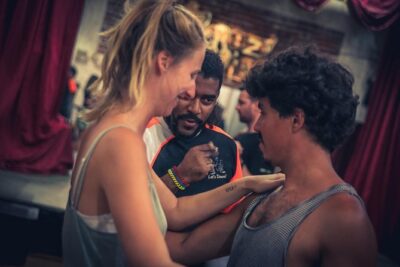
- short dance step moments, depending on the group and guide
The guide also has insider awareness, since you get recommendations for salsa bars beyond this official route. That can help you plan the rest of your Cali nights.
Who This Tour Best Fits
This tour fits best if you want your Cali trip to include both culture and action. It is a great pick if:
- you are a first-time visitor and want a clear starting map for the city’s salsa world
- you like street art and want context, not just photos
- you want light dance instruction and to end in a real club atmosphere
It might be less ideal if:
- you want a slow museum-style tour with long stops
- you are not interested in the resistance and social meaning angle
- you need food and drinks included, because those are not part of the package
My Quick Checklist Before You Go
Because the tour runs about 3 hours and ends in a dancing venue, I suggest simple planning:
- wear shoes that handle walking, since you are moving through multiple neighborhoods
- plan to buy water or snacks on your own, since drinks and food are not included
- bring your curiosity, especially if you enjoy murals, since each stop is chosen for what you can see
And keep in mind the tour requires good weather. If weather is poor, you should expect the day to change or your money to be refunded.
Should You Book This Salsa, Graffiti & Resistance in Cali Tour?
Book it if you want an early win in Cali, a tour that gives you both stories and a payoff. The ending at Cimarrón Salsa Bar makes it feel like a complete arc, and the mural-driven route keeps it grounded in real places, not just ideas.
I would skip it if you only want a food crawl or only want club hopping with no explanations. This tour is for people who want salsa meaning, street art context, and a guide who can turn a walk into rhythm.
If you are deciding between a generic walking tour and one focused on Cali salsa and public art, this one has a clearer purpose. You get a planned sequence of major salsa-related spots, free admission at each listed stop, and a Spanish guide who brings energy, history, and at least some dance instruction into the mix.
FAQ
Is the tour guided?
Yes. It includes a certified guide in Spanish.
How long is the Salsa, Graffiti & Resistance in Cali tour?
It runs about 3 hours (approx.), with about 18 minutes at each listed stop.
How much does it cost and what is included?
The price is $14.00 per person. Included are the Spanish guide, salsa history and movements for Cali, murals and street art content, and recommendations for salsa bars, plus benefits and discounts with recommended allies. Drinks, food, and souvenirs are not included.
Where do I meet and where does the tour end?
You start at Plazoleta Jairo Varela or La Caleñidad on Av. 2 Nte. #10 Norte-1 a 10 Norte-75, Granada, Cali. The tour ends at Cimarrón Salsa Bar, Cl. 4 #1-113, Normandia Sebastian de Belalcazar, Cali.
Do I need good weather?
Yes. The experience requires good weather. If it is canceled due to poor weather, you will be offered a different date or a full refund.
How big is the group?
This tour has a maximum of 30 travelers.
What are the main cancellation and refund rules?
Free cancellation is available. You can cancel up to 24 hours in advance for a full refund. If you cancel less than 24 hours before the start time, the amount paid will not be refunded.
More Graffiti Tours in Cali
- Medellin: Comuna 13 Graffiti Tour, Cable Car & Street Food
★ 4.8 · 9,046 reviews - Comuna 13 Graffiti Tour with Street Food
★ 5.0 · 7,503 reviews - Graffiti Tour: a fascinating walk through a street art City
★ 5.0 · 1,074 reviews - Graffiti Tour | Commune 13 guided by locals
★ 5.0 · 489 reviews
Recently reviewed around Cali
- Private Transfer from Cali Airport (CLO)★ 5.0 · 4 reviews
- Historical Walking Cali City Tour 3H★ 5.0 · 4 reviews
- Roundtrip Private Transfer from Cali Airport (CLO)★ 5.0 · 5 reviews
- Trekking & Rivering Reserve Pericos★ 5.0 · 5 reviews
- Cali: Bird Watching | Birding in the cloud forest at kilometer 18★ 4.5 · 5 reviews
- Private Tour in Cali with Salsa Class, Museums and Local Food★ 5.0 · 6 reviews
- Cali Mountain Bike Ride★ 5.0 · 6 reviews
- Alameda Market Food Tour★ 5.0 · 6 reviews
Salsa Dancing, compared.

Salsa & Bachata Nightlife Tour in Medellín with a Local Dancer
Read our review →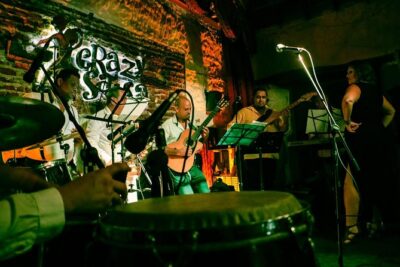
Salsa Tour in Cartagena with admission Ticket to Café Havana
Read our review →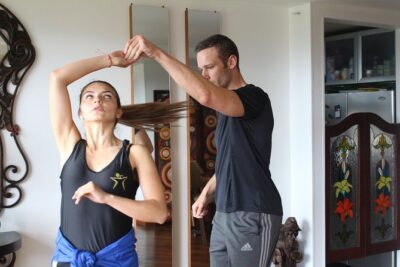
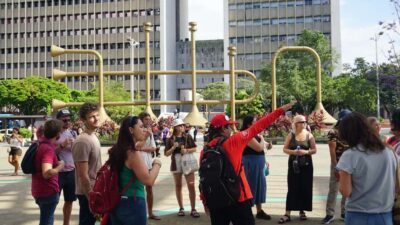
Shared Tour Cali’s Salsa, Graffiti & Resistance Experience
Read our review →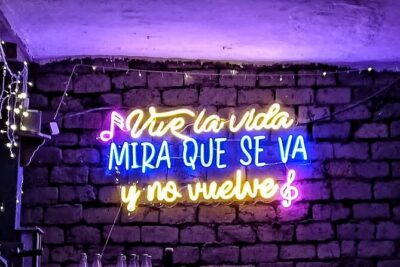

Browse the lists this tour appears in