
Reviewed · HISTORICAL TOURS
Medellin Historic Walking Tour with Expert Guide
Medellín is one of those cities where history is not stuck behind glass, it walks right beside you. This historic downtown walking tour strings together major landmarks, public art, and the story of how the city rebuilt its core. I love the bilingual, certified guide who makes the context easy to follow, and I love that the listed stops include free admission.
One possible drawback to plan for is that accents and speaking speed can vary by guide, so if you struggle with listening, give it your full attention during the more detailed moments. Still, the pacing stays friendly, and the route is designed to help you get your bearings fast.
What I also like is that you end in a practical spot, by Parque San Antonio, where it is easy to grab an Uber or connect at San Antonio Metro Station. And if you have seen guide styles from names like Germán, Carolina, Julio, Sussie, Julie, Paul, or Pablo, you will recognize the focus on storytelling plus a bit of humor, not just facts.
Key highlights you will feel on the walk
- A timeline you can walk: Old Medellín starts at the train station, then moves into modern reinvention.
- Botero all around: Plaza Botero and Parque San Antonio bring Fernando Botero’s ideas into public space.
- Social urbanism made visible: You see how Medellín turned streets and plazas into community space.
- Public art in everyday places: Pedro Nel Gómez frescoes and major sculptures shape how you read the city.
- Short indoor break: Palacio Nacional is a chance to reset for coffee and restrooms.
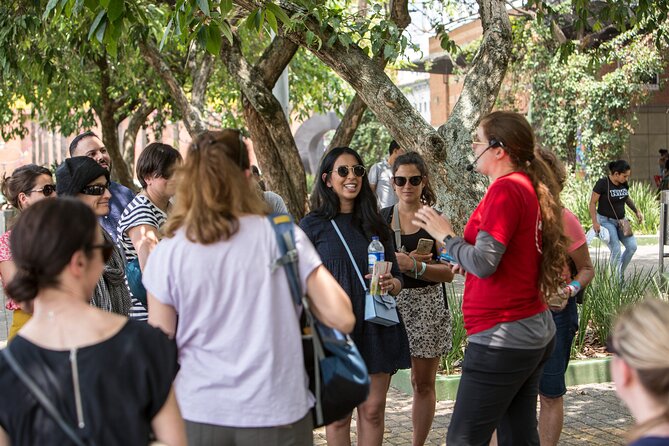
- Small group feel: Maximum 18 people keeps it personal enough to ask questions.
A 3-hour Medellín timeline you can walk, not just read
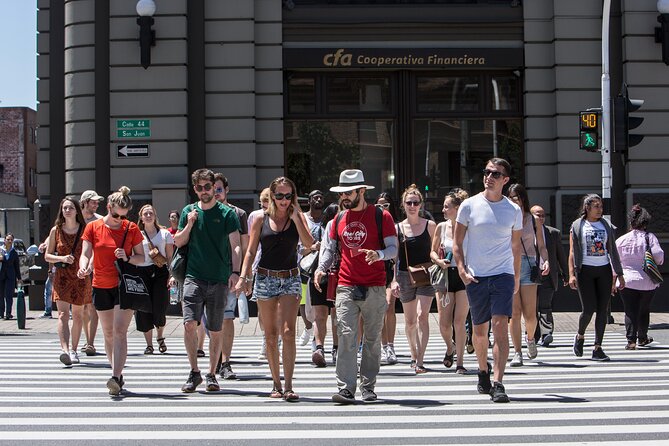
This tour works because it treats downtown like a living chapter book. You start with places that explain where Medellín’s modern identity took off, then you move into the civic and cultural center where art, architecture, and public space say something about resilience.
In just about three hours, you get an organized sweep of Medellín’s “why.” Not only what things look like, but why locals care. That matters because downtown Medellín can feel like a lot at once: a mix of old infrastructure, new priorities, art, and the reality of social change.
The pacing is intentionally short at each stop, usually around five to twenty minutes, with a longer pause at Palacio Nacional. That means you can cover many points without turning the day into a stamina test. It also means the guide has time to connect the dots instead of rushing through a checklist.
Price and value: what $16 covers (and why it is fair)
The price is $16.00 per person for an approximately three-hour guided walk, and this is a popular format that stays affordable compared with many “downtown highlights” tours elsewhere.
Here is what makes the value real:
- You get a bilingual tour guide (so you are not stuck guessing as you move between concepts and locations).
- You receive a group picture as part of the experience.
- You get restaurant and activities recommendations, which is useful on a day when you are already in the center of town.
- Admission is free at the listed stops, including major landmarks on the route.
Also, the tour typically books about 10 days in advance on average. That is a sign it is not just a casual walk that people forget about. If you are traveling during a busier period, grabbing your spot earlier helps.
Bottom line: you are paying for interpretation and local context, not for expensive entries or a private driver. That is exactly the kind of value I like in a city tour.
More Historical Tours in Medellín
- Shared Tour Historic Center of Medellin with Audio System
★ 5.0 · 523 reviews - Medellín Essential: history & local life on E-bike
★ 5.0 · 459 reviews - Medellín: History & Local Life Essentials Tour on an E-Bike
★ 4.9 · 130 reviews
Where you start in La Candelaria, and why the ending at San Antonio matters
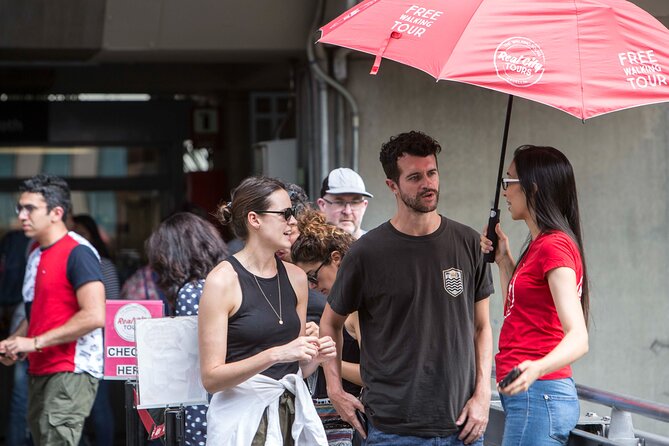
You meet at Free Walking Tour Medellín, Real City Tours, Cra. 51 #41-76, in La Candelaria. This is a sensible place to start because La Candelaria is already a hub for people who are moving through downtown.
The tour ends at Parque De San Antonio, Cl 44 #50. You finish near a police station, which makes it easy to get an Uber, and it is also close to San Antonio Metro Station.
That practical ending is not a small detail. In cities where walking tours end somewhere inconvenient, you end up spending time figuring out your next step. Here, the tour is built to help you keep moving with minimal friction.
Stop 1: Edificio del Ferrocarril de Antiooquia, where modern Medellín begins
You start at the Old Medellín Train Station, Edificio del Ferrocarril de Antioquia. The guide frames it as the place where the modern city started.
Even if you have seen train stations before, this one hits differently when you treat it as a turning point. It is not just a historic building, it is a symbol of how movement, trade, and infrastructure helped shape Medellín’s identity.
This first stop sets your lens. By the time you reach the later monuments and plazas, you are not only looking at landmarks. You are reading the city’s choices about growth, people, and space.
What to do here: take a moment to look beyond the facade. Notice the scale and the sense of purpose that comes with old transportation hubs.
Stop 2: Centro Administrativo La Alpujarra, context without a lecture
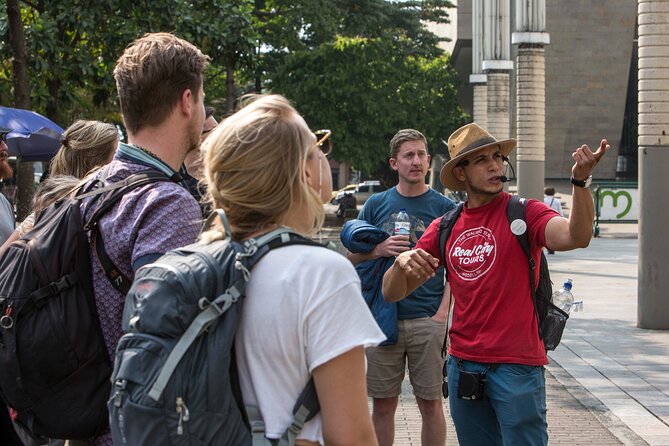
At Centro Administrativo La Alpujarra, your certified guide gives you history and cultural context around the paisa people. This stop is brief, but it is an important bridge.
I like this part of the tour because it prevents later stops from becoming random photo ops. Once you understand how the guide is defining the city and its people, monuments and urban projects start to make more sense.
If you are the type who likes your tour stories with a little opinion, you should be comfortable here. The guide style on this walk often blends facts with interpretation, and it helps to label where perspectives are coming from.
More Walking Tours in Medellín
- Comuna 4 Walking Tour Medellin
★ 5.0 · 217 reviews - Medellin Historic Walking Tour
★ 4.9 · 86 reviews - 2-Hours Street Art Walking Tour in Medellin Comuna 13
★ 5.0 · 54 reviews - Walking tour downtown Medellín
★ 5.0 · 39 reviews
Stop 3: Monumento a La Raza, concrete and bronze with a clear message
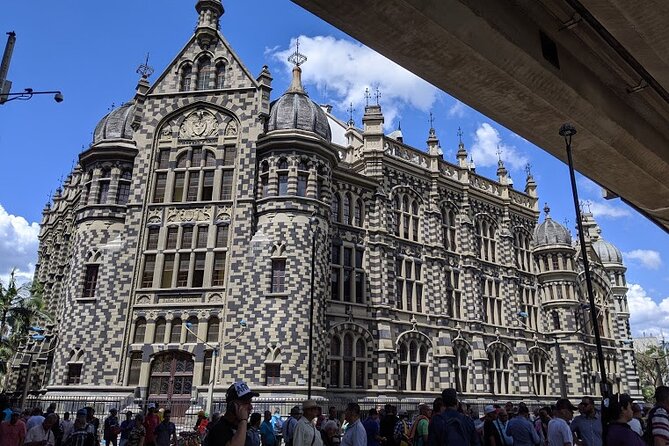
Then you reach Monumento a La Raza, a gigantic monument made by Rodrigo Arenas. It is a major sculpture in concrete and bronze, dedicated to the Paisa people, the locals of Medellín and Antioquia.
This stop works because the guide does not treat it like a photo background. You learn how to read the monument’s meaning and why it matters to the identity of the region.
Practical tip: give yourself a little time to stand back and understand scale. Monuments like this are designed to be felt as much as seen.
Stop 4: Plaza de las Luces Medellín, 300 pillars that change at night
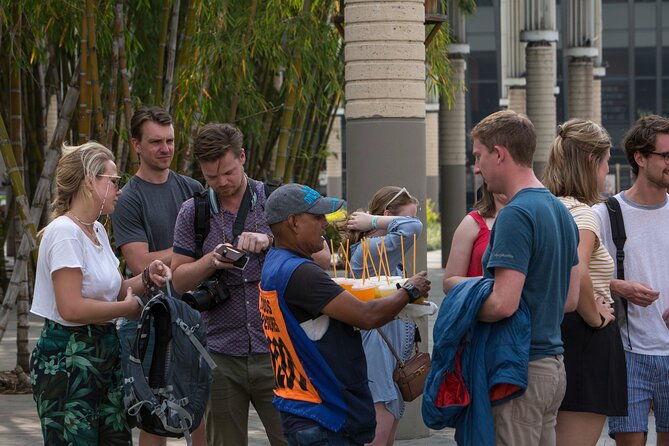
Next is Plaza de las Luces Medellín, a plaza surrounded by 300 pillars that light up at night.
Even during the day, the guide helps you understand what those lights symbolize and why this place is tied to the transformation of Medellín. That is the key. You are not only learning the physical feature, you are learning what it represents in the city’s shift toward a more community-focused downtown.
Why this stop is worth it: it is a reminder that urban change is not always about replacing buildings. Sometimes it is about redesigning public life, adding light, creating safer-feeling paths, and making space for people to gather.
Stop 5: Edificio Vázquez and the Square of Lights, social urbanism made physical
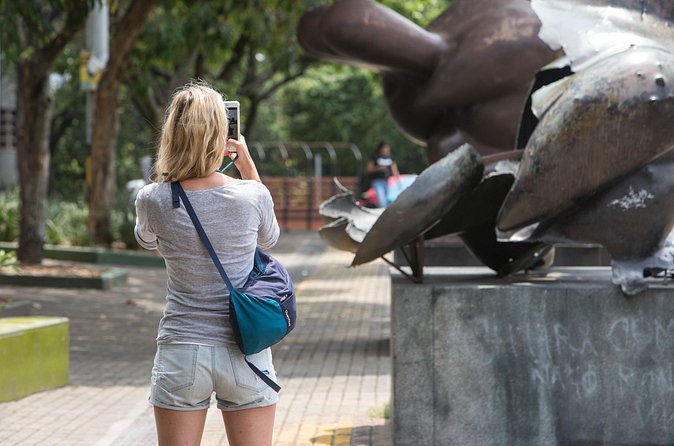
You then move to Edificio Vásquez and the related Vázquez and Carré buildings, tied to the Square of Lights concept. The guide explains the deep significance of these buildings as part of Medellín’s Social Urbanism.
If you only know Medellín from cable cars and hillside neighborhoods, this stop broadens your picture. Social Urbanism is about more than architecture. It is about using planning to reduce inequality and reshape how people experience daily life.
This is a quick stop, but it gives you a useful framework for everything that comes after. You start seeing downtown not as a backdrop, but as a public policy story.
Stop 6: Paseo Carabobo, from noisy and polluted to a pedestrian green tunnel
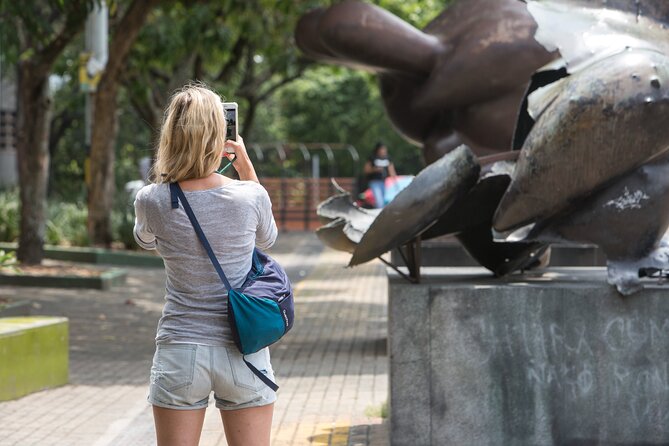
Paseo Carabobo is where the tour becomes more street-level and human. The guide explains how the area used to be polluted and noisy, and how it is now a green tunnel and pedestrian boulevard.
You walk through the “pumping heart” of downtown, full of color, people, and street vendors. Even if you never buy anything, this part helps you understand the city as it is lived, not just historic or symbolic.
What I like about this stop: it is tangible proof of the tour’s bigger theme, Medellín reinventing public space. You can literally see the shift from vehicle-focused streets to pedestrian-focused zones.
Stop 7: Centro Comercial Palacio Nacional, a 1920s building with an unusual past
Centro Comercial Palacio Nacional is a standout architectural stop, dating back to the 1920s. The guide explains that it used to house courts and even a jail.
Now it operates as a shopping mall, and the upper floors feature art galleries. You visit the building and get a break, with time to buy coffee and use the restroom.
This pause is practical. After walking outside and hearing heavy context at monuments, it helps to reset your feet and your brain for a bit.
Also, the building’s history adds a useful contrast. A former place of justice and confinement, turned into a place where you browse, rest, and look at art. That is the kind of city transformation the tour keeps pointing to.
Stop 8: Galería de Arte Palacio Nacional, local art in a focused space
At Galería de Arte Palacio Nacional, you have a chance to see a large collection of local art in the city.
This stop is short, but it adds depth to the earlier public art stops. Instead of only seeing sculptures and civic monuments in plazas, you also get the feeling of local artists collected under one roof.
If you like art but do not want a full museum day, this tour gives you a taste without turning into an all-day schedule.
Stop 9: Iglesia de la Veracruz, the contradictions of modern society
The next stop is Iglesia de la Veracruz. The guide uses it to discuss contradictions in modern Colombian society by pointing to the reality in front of what some argue is the city’s second oldest church.
This is one of those moments where the tour encourages you to pay attention to the present, not just the past. The building is a focal point, but the message is about how people interpret history and how modern life shapes what you notice and value.
If you want a tour that treats culture with nuance, this stop helps.
Stop 10: Plaza Botero, 23 sculptures and the idea of Medellín’s “resurrection”
At Plaza Botero, the guide connects Fernando Botero’s role to Medellín’s resurrection. You learn about his art and then walk through the 23 sculptures he donated to the city.
This is where public art becomes a street-level identity marker. Botero’s sculptures are instantly recognizable, but what matters is the guide’s explanation of why these pieces are part of the city’s recovery story.
If you have seen Botero elsewhere, you will notice that here he is not only an artist. He is a civic presence, something Medellín adopted as part of its public language of resilience.
Pro tip for photos: move slowly along the plaza edges. The sculptures are spaced to give you different angles and sight lines depending on where you stand.
The main art museum area and the Belgian architect connection
After Plaza Botero, you will also be shown the main Art Museum in Medellín and hear why its building looks halfway built, including a connection to a Belgian architect.
This stop is mostly about understanding architectural intention and the story behind why the building doesn’t look like a finished, clean line. Even without deep technical detail, it helps you see how cities grow in phases and how design decisions stick around in the public eye.
If you enjoy architecture stories, this is a good moment to ask questions, because it is the kind of explanation that helps you read what you are seeing.
Stop 11: Parque Berrío area, Pedro Nel Gómez frescoes by the Metro and police station
Next you reach Estación de Policía Parque Berrío, where between the police station and the metro station Parque Berrío you can find frescoes painted by Pedro Nel Gómez.
The guide also explains the significance of the Metro system to the paisa people.
This is another place where the guide connects art and infrastructure. You are looking at murals, but you are also learning how public transport changes a city’s rhythm. The Metro is not only a way to get somewhere, it is part of how people think about modern Medellín.
If you are trying to understand why cities invest in systems, not just buildings, this is the stop that ties it together.
Stop 12: Parque Berrío, the oldest square and the folk music spirit
From there, you spend time at Parque Berrío. The guide frames it as Medellín’s oldest square, even though it is not colonial anymore.
The key point here is how the old-school spirit lives on, including in the shape of folk music. This is a short stop, but it adds a cultural layer to the more structural stops you have already seen.
I like this because it prevents the tour from becoming all concrete and bronze. You get a sense of how tradition continues in downtown life.
Stop 13: Parque San Antonio, the Birds of Peace after 1995
You finish at Parque San Antonio, where you will see the Birds of Peace by Fernando Botero.
The guide explains how these birds became symbols of resilience and resurrection for the city after the bombing of 1995.
This ending gives you emotional closure to a tour that has been pairing art with civic change. You end with a symbol that is simple to recognize and heavy in meaning.
It also sets you up nicely logistically. Your tour ends at Parque De San Antonio near a police station, so leaving the area is easy by Uber or via San Antonio Metro Station.
Who this tour fits best, and who might want a different pace
This Medellín Historic Walking Tour is a great fit if you:
- Want a downtown orientation fast, without getting lost in random sights.
- Enjoy public art, especially Botero sculptures and civic monuments.
- Like history explained in a way you can connect to what you are standing in front of.
- Prefer guided conversation in a small group, with a bilingual guide and time for questions.
You might consider something else if:
- You want long museum time and quiet galleries.
- You do not like walking in town, even though the pace is spread across short stops.
- You have a strong preference for only one language, since the guide is bilingual and the explanations shift naturally as the group moves.
Should you book this Medellín historic walking tour?
Yes, if you want a smart, budget-friendly way to understand downtown Medellín. For $16, you get a bilingual guide, a small-group format, free-entry stops, and the kind of linking story that turns landmarks into meaning. It is also a good choice when you want art and architecture, but only have a half-day window.
I would say book it early if your schedule is tight, since it is often booked around 10 days in advance. And bring an open mind about interpretation, because this tour mixes facts with the city’s point of view on what matters.
FAQ
How long is the Medellín Historic Walking Tour?
It lasts about 3 hours.
What does the tour cost?
The price is $16.00 per person.
Where do I meet the guide?
You start at Free Walking Tour Medellin – Real City Tours, Cra. 51 #41-76, La Candelaria, Medellín.
Where does the tour end?
You finish at San Antonio Park, Cl 44 #50, Parque De San Antonio, with a nearby police station and easy Uber access, or you can reach San Antonio Metro Station.
Is admission included at the stops?
The listed stops on the route have free admission.
Is there a bilingual guide?
Yes, the tour includes a bilingual tour guide.
What is included besides the guided walk?
You get a group picture, plus restaurant recommendations and activities recommendations.
Is lunch included?
No, lunch is not included.
How big is the group?
The maximum group size is 18 travelers.
When will I receive confirmation?
Confirmation is received at the time of booking.
Is the tour near public transportation?
Yes, it is near public transportation.
FAQ
Does the tour allow service animals?
Yes, service animals are allowed.
Is the tour suitable for most travelers?
Most travelers can participate.
Should you book this tour if you care about history, art, and city planning?
If that is your interest, book it. This walk concentrates on how Medellín’s identity was built, how public art shapes civic space, and how urban projects changed the experience of downtown, all in a compact 3-hour format. If you are only looking for one museum or long indoor time, you may prefer a different day plan.
Recently reviewed around Medellín
- Private ATV Adventure 2 hours★ 5.0 · 4 reviews
- Guatape Tour from Medellin (Shared and Private Tour)★ 5.0 · 4 reviews
- Skip the Line: Museum of Antioquia Admission Ticket★ 4.5 · 4 reviews
- Flavors of eternal spring★ 4.0 · 4 reviews
- Coffee Tour – All inclusive – Medellín★ 4.0 · 4 reviews
- Paragliding Over Medellín + Gopro & Photos + Private transport.★ 5.0 · 4 reviews
- Shared Tour Commune 13 and Metro Cable La Aurora de Medellin★ 4.5 · 4 reviews
- Medellín Spa: Hydrotherapy & Themed Massage with Teppanyaki★ 5.0 · 4 reviews
Historical Tours, compared.
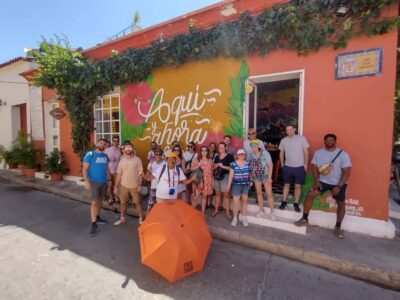
Historic Center and Getsemaní Shared Walking Tour
Read our review →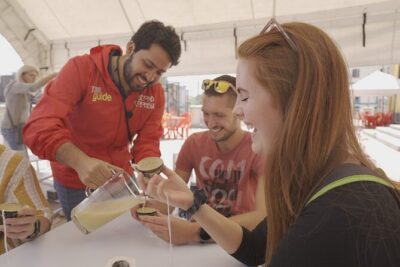
Shared Tour of the Historic Candelaria in Bogotá
Read our review →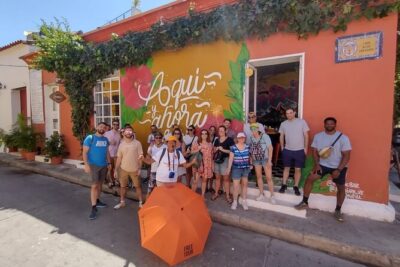
Historic Center & Getsemaní Shared Tour in Cartagena
Read our review →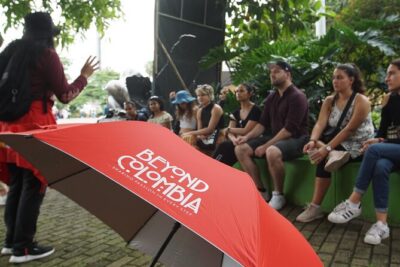
Shared Tour Historic Center of Medellin with Audio System
Read our review →
Medellín Essential: history & local life on E-bike
Read our review →
Bogota Shared Gastronomy Tour in the Historic Center
Read our review →
Shared Tour of the Historical and Cultural Center of Cali
Read our review →Browse the lists this tour appears in