
Reviewed · GETSEMANÍ
Historic Center & Getsemaní Shared Tour in Cartagena
This tour is interesting because it does not treat Cartagena like a postcard. You move from the walled downtown into Getsemaní, and the guide threads together legends, human stories, and street culture in one practical walking route.
I love the way the stops are linked to real places with big meaning, from Pedro de Heredia and the Torre del Reloj area to the Sanctuary of San Pedro Claver. I also like the structure and pace, about 2 to 3 hours with a maximum of 25 people, so you can keep up without feeling lost.
The main drawback is simple: it is a walking tour, and Cartagena heat can hit hard. One more thing to watch is your tolerance for a guided format. If you prefer total freedom, you might find a structured loop a bit rigid.
Key highlights you should care about
- Two neighborhoods in one shot: Historic Center fortifications plus Getsemaní street life, ending in Plaza del Pozo
- Enslavement history placed in context: Torre del Reloj area and the enslavement route through Porto Carrero and Candilejo streets
- Art and memory side by side: Museo de Arte Moderno Cartagena with the Gold Museum and Emerald Museum highlights
- A powerful stop with clear purpose: San Pedro Claver, Slave of the Slaves, tied to human rights
- Guides who keep energy up: Names like Robert, Legxy, and Alvaro come up again and again for engaging hosting
- A fun closing vibe: Callejón Ancho and Calle San Juan with salsa and African champeta sounds
Entering Cartagena’s Historic Center, then switching gears in Getsemaní
Cartagena is a city of layers. This tour is a smart way to catch them quickly because you are not just looking at walls. You are hearing why those walls exist, how commerce shaped daily life, and how Afro-Caribbean culture keeps shaping the streets you walk on.
You’ll start in La Matuna (Cl. 32 #84-1) and finish in Getsemaní at Plaza del Pozo. The shared group max is 25, and each stop is short, so the tour feels like a sequence of meaningful waypoints rather than one long lecture.
Also, the ticket situation is good for value. The itinerary lists admission ticket free for the stops, which means you are paying mostly for the guide and the walking route rather than adding museum fees at every corner.
More Historical Tours in Cartagena
- Cartagena: Historic Center and Getsemaní Shared Walking Tour
★ 4.9 · 2,716 reviews - San Basilio de Palenque History Tour
★ 5.0 · 301 reviews - Cartagena: Cultural tour Bazurto Market Adventure
★ 5.0 · 200 reviews
The meeting point and how to avoid start-time stress
Most people underestimate how much time it takes to find the correct corner, especially on a first day. This tour’s start is specific: Cl. 32 #84-1 in La Matuna, and the end is Plaza del Pozo in Getsemaní.
A practical tip: give yourself extra minutes at the meeting point. One guest noted the Google Maps pin was slightly off, so showing up early keeps you from doing that frantic half-run through the neighborhood.
Once you’re with the group, confirmations are sent at booking time. The tour is also near public transportation, and service animals are allowed, which helps if you have mobility or assistance needs.
Camellón de los Mártires (Plaza de Cervantes): the pre-Spanish thread
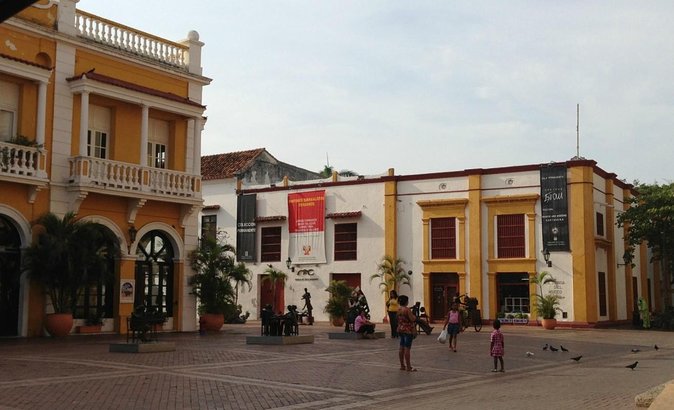
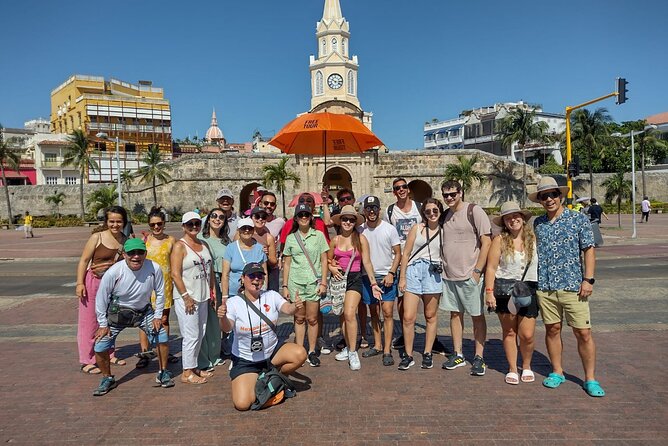
The tour begins with a quick intro at Camellón de Los Mártires, Plaza de Cervantes. In about 10 minutes, you set the baseline for what Cartagena was before the Spanish arrival and what changed during that arrival period.
Why this matters: it prevents the common tourist mistake of treating the city like it began with colonization. You get a reminder that indigenous people lived here, shaped life here, and were affected immediately by the coming shift in power.
If you like context, this first stop helps you understand the later story beats. You’ll be walking through spaces that were built and repurposed, and this early grounding makes the rest of the route click.
Torre del Reloj and the “Golden Key” area: the city’s timing and power
Next you move toward the Torre del Reloj, described as the Golden Key of Cartagena. You pass through the Plaza del Ecuador and the area before Plaza del Esclavo, then the guide sets up the enslavement route through Porto Carrero and Candilejo streets.
This stop is short, but it is heavy. The tower is a landmark, but you are using it as a navigational anchor for a darker history that is easy to miss when you only focus on pretty facades.
One thing I appreciate about this approach is that the tour does not pretend history is only one tone. You go from an origin story to an area used within the system of slavery, so you learn to read the city in full, not only the “best angles.”
More of Getsemaní:
- Private Walking Tour in Cartagena Walled City & Getsemaní
★ 5.0 · 1,357 reviews - Cartagena Antigua & Barrio Getsemani group with audio system
★ 5.0 · 658 reviews - Getsemani neighborhood in group: art and culture with Audio System
★ 5.0 · 447 reviews - Cartagena: Walled City and Getsemani Shared Walking Tour
★ 4.5 · 352 reviews
Portal de los Dulces: where gendered labor shows up in architecture
From there, the tour heads to Portal de los Dulces, a symbol of female activity in times of slavery, with descendants who still continue traditions.
Why this is a standout: it flips the lens from only political leaders and military buildings to the people who worked, sold, cooked, carried, and kept daily life going. It also offers a cultural bridge, connecting past labor to present practice.
Drawback to consider: if you dislike complex topics on a walking tour, you might feel the emotional load here. The route’s strength is honesty, but not everyone wants that so early in the walk.
Plaza de la Aduana and the Municipal Hall: commerce, including enslaved people
The route continues to Plaza de la Aduana, historically important for the commercialization of merchandise, including that of enslaved people. You also see important buildings like the Municipal Hall.
This is one of the places where Cartagena’s architecture becomes a record. When you understand that plazas were nodes of trade, the streets stop feeling random. You start seeing how movement and economic decisions connected directly to human lives.
If you are the type who likes “why this street exists” details, this stop will reward you. It also pairs well with the next museum and human rights focus, because it makes it easier to understand how the city profited and how later generations tried to reckon with that profit.
Museo de Arte Moderno Cartagena: art stops that connect to identity
Then comes Museo de Arte Moderno Cartagena. The itinerary frames it as an exponent of Caribbean and Latin American art from the 50s, and it also references the Gold Museum and Emerald Museum, with indigenous pieces from the Colombian Caribbean and emerald stones associated with celebrity use.
What you should expect: you are not just “seeing a museum building.” You are getting a quick guided window into how regional identity gets displayed through art and objects people associate with value.
One practical note: museum interiors can vary in how long you actually spend depending on the day’s flow. The itinerary keeps each segment around 10 minutes, so treat it as a curated glimpse rather than a long independent museum visit.
Sanctuary of San Pedro Claver: faith, memory, and human rights
Next is the Sanctuary of Saint Peter Claver, known here as Slave of the Slaves. You’ll see the church architecture and the museum-monastery that bears his name, described as the headquarters of human rights.
This is the moment when the tour becomes more than history. You’re standing in a place tied to moral purpose and activism, which adds weight to everything you just heard about commerce and enslavement routes.
If you want to learn Cartagena’s story in a way that respects both suffering and resilience, this stop is one of the best anchors on the route. It also gives your feet a break from the sun if you’re able to stay under shade while the group regathers.
Baluarte de San Ignacio and Plaza Bolívar: forts, pirates, and independence
The tour then moves to Baluarte de San Ignacio, a bastion built to defend the Bay of Souls from pirate attacks. You learn the history behind the walls of Cartagena, and then you head toward Plaza Bolívar.
Plaza Bolívar is where pirate and corsair feats come back into the narrative, using the bastion visit as a reference point for Spanish military constructions and strategies. You’ll also see the homage to a precursor of Independence, plus a chance to refresh.
Why I like this section: it keeps the fun in the history without losing accuracy. You can appreciate fortifications and maritime tactics, then connect them to why Cartagena’s wealth and power attracted conflict in the first place.
Parque Centenario and the old railway station feel
After the fort and square, you get a breather at Parque centenario. The itinerary describes it as one of Cartagena’s “lungs,” formerly the railway station, and as a relic of Tropical Dry Forest.
This stop also includes a chance to spot animals mentioned in the tour description, like sloths, squirrels, and iguanas, plus lots of shade if the day cooperates.
This is a good place to catch your breath and reset your water plan. One practical suggestion from past visitors was bringing water and a hat, because heat can feel oppressive on open streets. Parque Centenario is where you get rewarded for that effort.
Barrio Getsemaní: umbrellas, graffiti, and a street culture you can feel
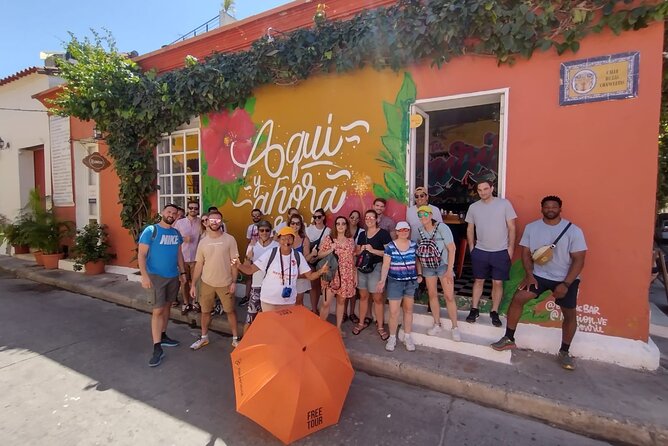
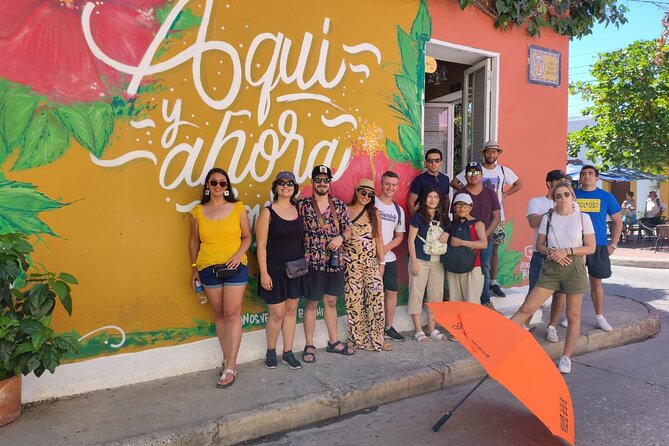
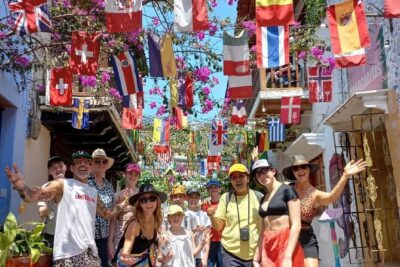
Now the tour shifts into Getsemaní. You walk through one of the most colorful cultural corridors described for Getsemaní, with umbrellas as a symbol of advertisement, graffiti, and unique architecture.
This is where you start to feel Cartagena as a living place rather than only a monument. Getsemaní is known for its street identity, and the tour uses short, high-impact walking sections to show you how that identity is written onto walls and storefronts.
If you like photos, this is also your best stretch. Just remember that the tour ends at a public square, so keep your belongings secure and avoid lingering too long away from the group.
Callejón Ancho and the end on Calle San Juan: salsa and champeta
The final stretch brings you to Plaza de La Trinidad and through Callejón Ancho, then you end along Calle San Juan to the sound of salsa and African champeta. The route also includes passing by the church and square of the Holy Trinity before you reach the end point.
This ending is practical and cultural. You finish in the kind of street environment where you can keep going on your own, grab a snack, or ask your guide what to do next.
Past guests have highlighted that some guides keep helping after the official tour, including walking people to a local lunch spot. If you get a guide who does that, it turns a good tour into a smoother first day in Cartagena.
Guides and group dynamics: why it feels better than a random walking loop
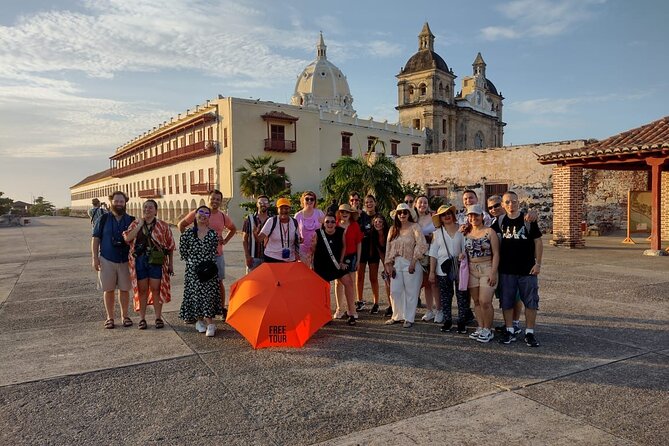
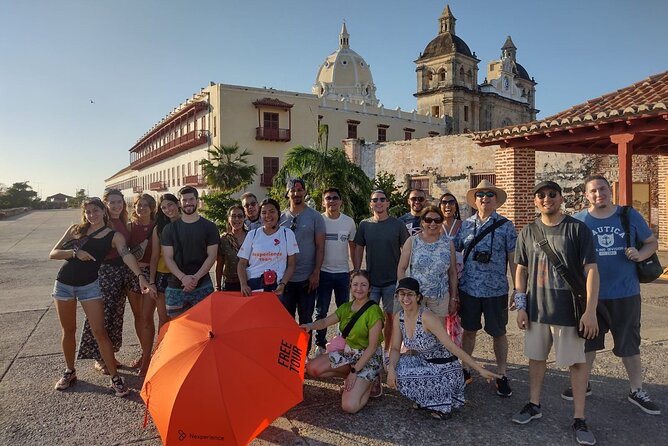
This tour is shared, but it tries to stay manageable. The max of 25 helps, and multiple guide names keep showing up in positive experiences.
For example, Robert is praised for making the route work even in pouring rain, with energy that kept the group from wanting to cut it short. Legxy comes up again for a strong vibe, clear English, and even dancing as a fun bonus. Alvaro and Camilo Jose are also mentioned for keeping the stories flowing in a way that makes Cartagena feel understandable fast.
Here is what I take from that, as advice for you: on a tour like this, the guide matters as much as the route. If your goal is to leave with real context, pick a time you can show up fresh, and ask questions early. The best moments tend to happen when you engage.
One consideration from the less positive side: if you dislike guided storytelling, you might feel bored with the pace. Also, one review mentioned a situation where a staff member asked for a name to verify payment even after online booking. That is not something I can confirm will happen to you, but it’s smart to keep your booking confirmation handy.
Price and value: what $11.70 gets you in Cartagena time
At $11.70 per person for roughly 2-3 hours, you’re buying something that can save you hours of guessing. The tour covers a tight loop from the Historic Center into Getsemaní, touching towers, plazas, a sanctuary, a museum stop, and a large park.
Because the itinerary lists admission ticket free at each stop, the value feels focused on interpretation rather than paying for entry after entry.
Is it a luxury price? No. But for an organized route with a real guide and a satisfying finish in Getsemaní, it is a solid deal. If you treat it as an orientation tour, you can use that context all week as you explore on your own.
Timing tips: heat, rain, and when to show up
Cartagena weather is not subtle. If the sun is brutal, you’ll feel it during the open stretches between major landmarks. One tip you can use immediately is to bring water and a hat, and to plan your day so you are not doing this after a long midday walk without a break.
Rain is also part of the game. Even with heavy rain, one guide managed to keep things enjoyable and keep the tour going fully. That suggests the group moves with purpose, even when conditions are messy.
One more timing note: the tour requires good weather, and if it gets canceled due to poor weather, you should expect a different date or a full refund. If your schedule is tight, book earlier rather than later.
Who this tour fits best
You’ll likely love this tour if you want:
- A fast introduction to both walled Cartagena and Getsemaní street culture
- History explained in a walking format, with stops tied to specific buildings
- A guide who keeps energy up, including humor and interactive moments like dancing
This tour may be less ideal if:
- You want a totally self-paced explore with no structure
- You get frustrated when the route focuses on hard topics like slavery and commerce tied to it
- You are traveling with very small kids, especially if you prefer shorter legs and lots of stops
Should you book this shared Historic Center and Getsemaní tour?
Book it if you want a smart first step. This is one of those tours that helps you read the city fast. You’ll learn why certain plazas matter, why the Torre del Reloj area sits in the same story as slavery routes, and why San Pedro Claver is a turning point in the narrative.
Skip it only if you know you dislike guided walking and structured explanations. If you’re the type who likes to ask questions and soak up local context, $11.70 is a fair price for the time it saves and the perspective it gives.
FAQ
How much does the Historic Center & Getsemaní shared tour cost?
It costs $11.70 per person.
How long is the tour?
The duration is about 2 to 3 hours.
Where does the tour start and where does it end?
It starts at Cl. 32 #84-1 in La Matuna, Cartagena de Indias, and ends at Plaza del Pozo in Getsemaní.
Is this a small group tour?
Yes. The tour has a maximum of 25 travelers.
Are admission tickets included for the stops?
The itinerary lists admission ticket free for the stops included in the tour.
How early should I book?
On average, it is booked about 25 days in advance.
Will I get confirmation after booking?
Yes. You will receive confirmation at the time of booking.
Is free cancellation available?
Yes. You can cancel for a full refund up to 24 hours before the experience starts.
What if the tour is canceled due to weather?
If it is canceled due to poor weather, you will be offered a different date or a full refund.
Are service animals allowed and is it near public transportation?
Service animals are allowed, and the meeting point is near public transportation.
Recently reviewed around Cartagena
- Trendy Cartagena photo/ Video Tour★ 2.9 · 4 reviews
- Playa Blanca Baru from Cartagena City Center★ 4.0 · 4 reviews
- Sunset in Cartagena Bay with Boat Dances and Bar★ 5.0 · 4 reviews
- Taste Cartagena: Street Food and Full City Tour with Expert Guide★ 4.5 · 4 reviews
- Colombian Fruits and Paila Ice Cream Tasting★ 5.0 · 4 reviews
- Private Transfers Airport and Hotels in Cartagena★ 5.0 · 4 reviews
- private tours cartagena de indias★ 4.5 · 4 reviews
- Mud Volcano and Day Trip in Hotel with Lunch★ 5.0 · 4 reviews
Getsemaní, compared.
Historic Center and Getsemaní Shared Walking Tour
Read our review →
Private Walking Tour in Cartagena Walled City & Getsemaní
Read our review →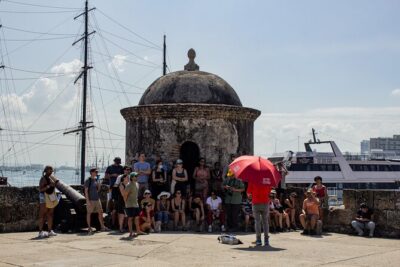
Cartagena Antigua & Barrio Getsemani group with audio system
Read our review →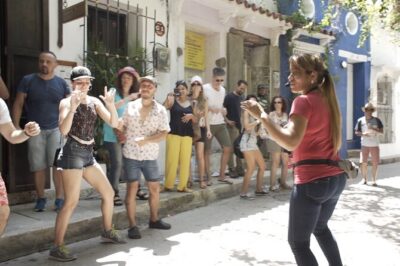
Getsemani neighborhood in group: art and culture with Audio System
Read our review →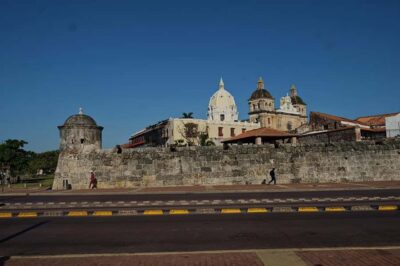
Cartagena Private Tour of the Walled City & Getsemani
Read our review →
Street Food Tour in Cartagena Walled City and Getsemani
Read our review →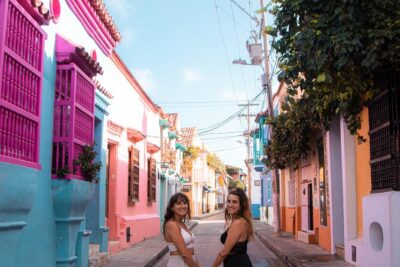
Private Walking Tour in Walled City and Getsemani Cartagena
Read our review →Browse the lists this tour appears in