
This Medellín experience stands out because it tackles the Pablo Escobar story in real places, not just a slide show. You walk through sites tied to the pain drug trafficking caused, then you see the parts of the legend that still show up in neighborhoods and murals.
I like two things a lot. First, the tour leans into victims-first storytelling at Parque Memorial Inflexion, so you are not only hearing the capo myth. Second, the pacing is practical, with an air-conditioned vehicle and stops that fit into a focused 4 to 5 hours.
One drawback to consider: this is emotional and heavy content. You spend time at a cemetery and at locations tied to death and hiding, so if you want a light, entertainment-style tour, this will not be your vibe.
Key highlights you should know
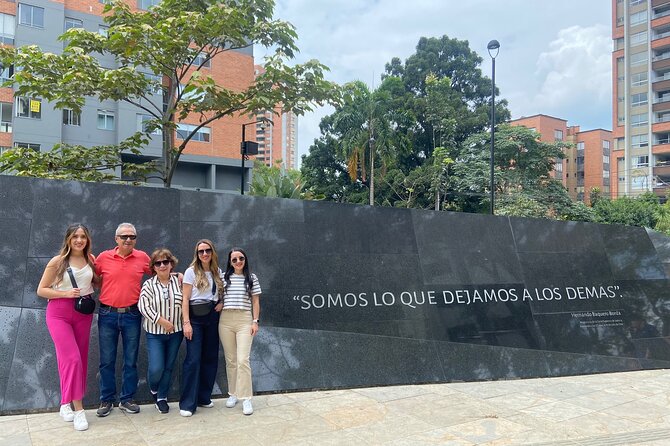
- Victims-first approach at Parque Memorial Inflexion, built in 2019 to replace the old Monaco building
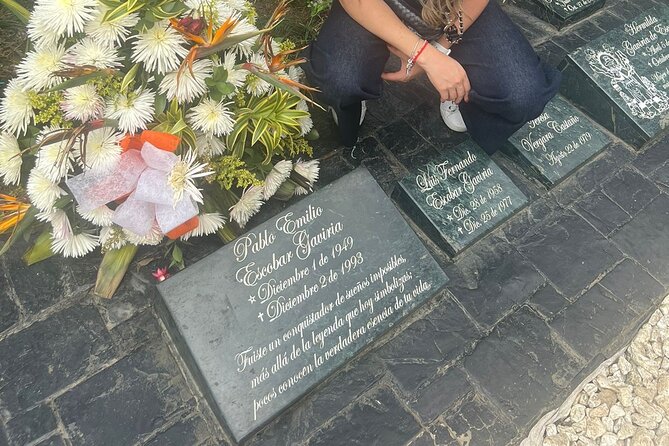
- Cemetery stop at Cementerio Jardines Montesacro, including Pablo Escobar’s tomb and those of associates and relatives
- Los Olivos location tied to hiding and the moment he died, with a relatively short on-site time
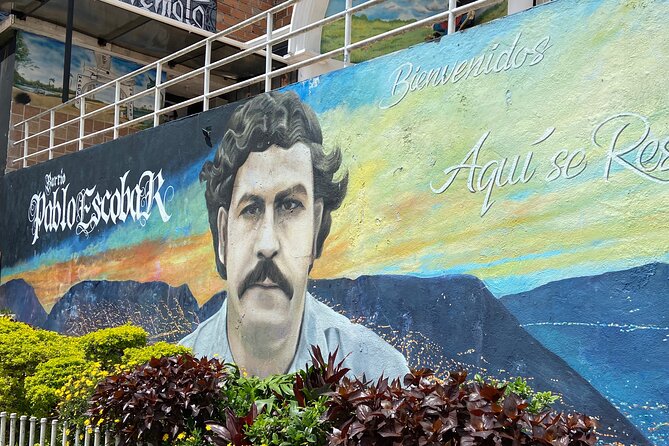
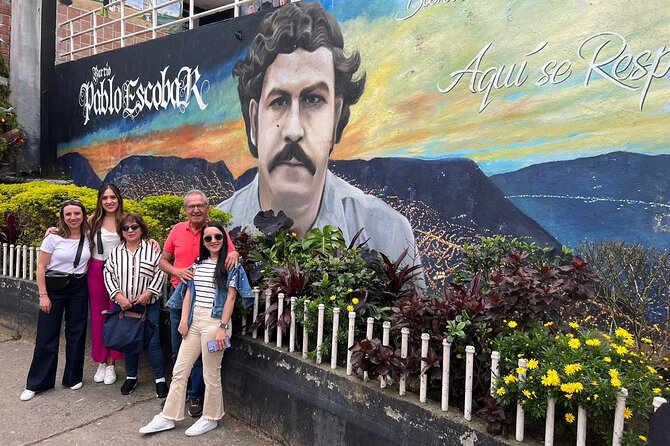
- Barrio Pablo Escobar visit to see a mural and a small photographic museum, plus time to take photos and read
- English-speaking guidance and a private setup where it is only your group
Why this Pablo Escobar tour feels different in Medellín
If you are going to spend money and time on an Escobar-themed tour, you want two things: accuracy and context. This one earns its spot because it does not treat him like a movie character. It frames the story through the people affected by drug trafficking, then it lets you look at the physical places that kept the story alive.
The biggest shift is how the narrative is handled. At Parque Memorial Inflexion, the guide explains the Escobar era from the perspective of victims. That changes your whole mindset before you ever step into the cemetery. You go from names and dates to impacts and losses.
Then the tour gets more complicated, in a way that is honest to Medellín. You do not just see crime-related sites, you also see how he became part of local identity, including a neighborhood he built and a mural that remains there. It is not “good” or “bad” in a neat box. It is the real human mess that happens when power meets violence.
More Historical Tours in Medellín
- Shared Tour Historic Center of Medellin with Audio System
★ 5.0 · 523 reviews - Medellín Essential: history & local life on E-bike
★ 5.0 · 459 reviews - Medellin Historic Walking Tour with Expert Guide
★ 5.0 · 399 reviews
Tour snapshot: price, timing, and what you actually get
At $85.53 per person and about 4 to 5 hours, this tour is priced like a mid-range guided experience for Medellín. What makes it feel fair is that you are not only paying for a guide, you are paying for transportation comfort, entry (where it applies), and a set route with defined timing.
Here’s the practical rundown of the value:
- English guidance for a group setting
- Mobile ticket for easy check-in
- Air-conditioned vehicle, which matters in a city where you can lose time waiting or sweating between stops
- Accident insurance, a calm safety detail you will appreciate later
- Admission included only at the Barrio Pablo Escobar stop, while the other featured sites are listed as free
The tour is also set up as private for your group, which can be a big deal if you hate being herded or interrupted. And according to the info provided, most travelers can participate, service animals are allowed, and it is near public transportation.
Getting started at Parque de El Poblado
You begin at Parque de El Poblado and the tour ends back at the same meeting point. That loop matters because it reduces stress. You are not coordinating multiple end points or figuring out how to get home after a long, emotionally intense walk and vehicle rides.
The area around El Poblado is convenient for many visitors, and the tour description notes it is near public transportation. Translation: you should be able to get to the start without a major headache, even if you are not using a private car.
Stop 1: Parque Memorial Inflexion and the Monaco building story
Your first major stop is Parque Memorial Inflexion, where the focus is explicitly on victims. The park was built in 2019 to replace the old Monaco building tied to Pablo Escobar. That replacement detail is more than trivia. It signals a shift from glamor or notoriety toward remembrance.
What you should expect here is a guided walkthrough centered on the human cost of drug trafficking. The guide tells the Pablo Escobar story from the perspective of victims, which gives you a different emotional starting line than most Escobar tours.
Why this stop is worth your time:
- It gives you context before you see more locations.
- It makes the tour feel grounded, not like you are just chasing notoriety.
- It is admission free, so you are not paying twice for basic entry while already paying for the guiding and transport.
Possible consideration: because it is memorial-focused, it can feel solemn and intense. If you need a steady mental pace, take a minute before you move on.
A different kind of day out of Medellín:
- Medellin: Comuna 13 Graffiti Tour, Cable Car & Street Food
★ 4.8 · 9,046 reviews - Comuna 13 Graffiti Tour with Street Food
★ 5.0 · 7,503 reviews - Guatapé Tour: Piedra del Peñol with Boat Tour, Breakfast, Lunch
★ 5.0 · 7,035 reviews - Day Trip To Guatapé with ,Breakfast, Lunch and Boat Ride
★ 5.0 · 2,996 reviews
Stop 2: Cementerio Jardines Montesacro and the reality of the tombs
Next up is Cementerio Jardines Montesacro, with time set aside for transportation and then time at the cemetery itself. This is the stop most people remember because it is the most direct confrontation with death in the story.
The information given is clear: it includes the tomb of Pablo Escobar, along with some of his associates and relatives. That matters. It is not only about one man as a myth. It places him in a broader family and criminal network reality.
What this stop tends to do to the group:
- It forces you to slow down. There is less room for “story mode” and more time for “what is this place, really?”
- It can feel uncomfortable, which is often the point.
A practical note: the on-site time is limited, so you will not have hours to linger and read every detail. You get what the guide can responsibly cover in the time available. If you want to ask questions, this is a good place to do it, but keep in mind the atmosphere stays respectful.
Since the cemetery stop is listed with free admission, the value here is mainly in how the guide frames what you are seeing and how you connect it back to the larger story.
Stop 3: Los Olivos, the hideout, and the place he died
After the cemetery, the tour moves to Los Olivos. This neighborhood visit is described as the last place used by Pablo Escobar to hide from the police, and it is also where he died.
The stop is shorter on-site, with time allocated for displacement. In plain terms, this portion is about recognizing and understanding the location rather than spending a long time wandering.
Why it helps to keep your expectations realistic:
- You will get a guided explanation, not a long, film-accurate recreation.
- The emotional impact can be strong, especially when the guide connects the geography to the final phase of the hunt.
This stop is also a reminder that the Escobar story is not abstract. It happened in real streets, real buildings, real corners. Even when you cannot fully reconstruct the events, you can feel how power and fear shaped where people lived and moved.
If you are sensitive to intense stories, mentally pace yourself here. Short duration does not mean it is light.
Stop 4: Barrio Pablo Escobar, mural, and the small photographic museum
The final stop is Barrio Pablo Escobar, and it is the most visually specific part of the experience. The tour describes it as a neighborhood Pablo Escobar built to help the poorest population of Medellín. In the same area, you can see a mural in his honor and a small photographic museum.
This is where the tour becomes most complex. A neighborhood built to help people and a figure associated with violence can coexist in the same physical space. That is uncomfortable, but it is also one of the reasons this tour can feel more honest than a simple “villain only” narrative.
What you will get at this stop:
- A guided visit to the mural area
- Time for the small photographic museum
- Time to absorb how the story is remembered, not just how it happened
The museum and related admission are described as included here, with 1 hour 20 minutes allocated for this last part. That longer time makes sense. It is visually and emotionally denser than the earlier segments. You are not just listening, you are looking and reading your way through the visual record.
Possible drawback: because this stop touches a local honoring, it can feel jarring after cemetery and memorial sites. If you want a consistently victims-only approach, this end may feel like a tonal shift. But that shift is part of what makes the full story make sense.
The guide makes the difference, and Alexis is a big reason why
One name comes up strongly: Alexis. Across the experiences you are seeing reflected in guide feedback, Alexis is described as professional, friendly, and thorough with the history of Pablo Escobar.
What I think you will notice during the tour is how the guide uses photos and family connections to add detail. That matters because Escobar stories can turn vague fast. Here, you get more specificity, including images connected to families and people linked to him, and references shown through photos that mention places like Hacienda Nápoles.
A good guide does two things:
- They manage the tone. They keep you respectful at memorial and cemetery sites.
- They manage your understanding. They connect the dots so you finish the tour knowing what you just saw and why it mattered.
If you are the type who likes questions, bring them. A private setup where it is just your group often makes it easier to ask follow-ups without feeling rushed.
How to handle the emotional weight without tuning out
This is not a “laugh and snack” tour. It includes a memorial honoring victims, a cemetery with Escobar’s tomb, and a neighborhood tied to hiding and death. You should go in knowing you will feel something.
Here are a few ways to get the most out of it without getting overwhelmed:
- Expect short, concentrated stop times. You are not going to do slow sightseeing. You are going to learn and move.
- Pay attention to perspective shifts. When the story changes from victims to place-based legend, notice how the guide explains it.
- Give yourself a quick reset between stops. Even 30 seconds can help you absorb what you just heard before the next site.
Also, you might find yourself wanting to talk afterward. That is normal. Escobar is one of those subjects where people have strong opinions. Try to base your takeaway on the places and the framing you experienced, not on random internet soundbites.
Price and logistics: why $85.53 can feel like good value
Let’s talk value like a grown-up, not like a brochure.
You are paying for:
- 4 to 5 hours with a guided route
- Air-conditioned vehicle
- Accident insurance
- English service
- Admission included at the final stop (Barrio Pablo Escobar)
- A setup that is private for your group, which can reduce the annoyance factor
What is not included is simple: souvenirs.
A tour like this can go sideways if it is overpriced for what you get or if it feels rushed. This one is structured with defined time blocks, and the inclusion of vehicle and insurance makes the ticket feel more complete than a walking-only experience. And because the first stops are listed as admission free, your money is mostly going toward guiding and transport, which is exactly what you want.
If you are traveling solo, the private-group format might still be worth it if you value a calmer experience. If you are traveling with friends or family, it becomes an easy shared spend.
Who this tour suits best
This tour is a good fit if you:
- Want an organized way to understand Escobar’s story through real locations in Medellín
- Prefer a guide to provide context, especially at sensitive sites
- Like learning through photos and family-linked details, not just street names
- Are comfortable with serious material and want it handled respectfully
It might not be the best choice if you:
- Want a purely “history facts and fun photos” outing
- Get uncomfortable with cemetery and death-related context
- Prefer a light, non-emotional neighborhood stroll
Should you book the history tour in Medellín?
I’d book it if you want a guided route that takes the Escobar story seriously and keeps you anchored to place and context. The combination of Parque Memorial Inflexion (victims-first), the cemetery stop, and then the Barrio Pablo Escobar mural and photo museum gives you the kind of contrast that helps you understand how a legend can stay in public memory.
Before you hit the book button, decide how you feel about heavy topics. If you can handle emotional weight with a respectful mindset, this tour can be an effective, well-structured way to learn. If you need a breezy day, pick something else.
FAQ
How long is the history tour in Medellín?
It lasts about 4 to 5 hours.
Where does the tour start and end?
It starts at Parque de El Poblado in Medellín and ends back at the same meeting point.
Is the tour offered in English?
Yes, it is offered in English.
What is the price per person?
The price is $85.53 per person.
What’s included in the tour?
Included features are an air-conditioned vehicle and accident insurance. Admission at the Barrio Pablo Escobar stop is also included.
Which stops have free admission?
Parque Memorial Inflexion, Cementerio Jardines Montesacro, and Los Olivos are listed as free admission. The Barrio Pablo Escobar stop has admission included.
Is this a private tour?
Yes. It is private, and only your group will participate.
Is there a mobile ticket?
Yes. A mobile ticket is included.
What is the cancellation policy?
Free cancellation is available. You can cancel up to 24 hours in advance for a full refund, based on the local start time.
Are service animals allowed?
Yes, service animals are allowed.
Recently reviewed around Medellín
- Coffee Tour – All inclusive – Medellín★ 4.0 · 4 reviews
- Paragliding Over Medellín + Gopro & Photos + Private transport.★ 5.0 · 4 reviews
- Shared Tour Commune 13 and Metro Cable La Aurora de Medellin★ 4.5 · 4 reviews
- Night Out Gay Bar Crawl in Medellin★ 4.0 · 4 reviews
- Medellín Spa: Hydrotherapy & Themed Massage with Teppanyaki★ 5.0 · 4 reviews
- White Water Rafting Near Medellin★ 5.0 · 4 reviews
- Bilingual private transport to the airport.★ 4.5 · 5 reviews
- African Music Roots Private Tour in Comuna 13, Medellin★ 5.0 · 5 reviews
Historical Tours, compared.
Historic Center and Getsemaní Shared Walking Tour
Read our review →
Shared Tour of the Historic Candelaria in Bogotá
Read our review →
Historic Center & Getsemaní Shared Tour in Cartagena
Read our review →
Shared Tour Historic Center of Medellin with Audio System
Read our review →
Medellín Essential: history & local life on E-bike
Read our review →
Medellin Historic Walking Tour with Expert Guide
Read our review →
Bogota Shared Gastronomy Tour in the Historic Center
Read our review →Browse the lists this tour appears in