
Reviewed · HISTORICAL TOURS
Historical Tour of Cartagena
This experience is interesting because it ties together Cartagena’s public spaces, monuments, and neighborhood vibe in one smooth, walkable loop. You get guided stops at major squares, plus a turn through Getsemaní where the walls do the talking.
I especially like the quality of the guide. One review singled out Alvarito for strong English and clear, practical explanations of what you’re looking at, and that is exactly what you want in Cartagena’s dense historic center. I also like that it keeps the pace tight, with short, focused stops so you see a lot without feeling stuck.
One possible drawback is simple: it’s still a walking tour through multiple plazas and streets. You’ll want decent shoes and a moderate fitness level, and the tour depends on good weather.
Key things you’ll notice on this Cartagena tour
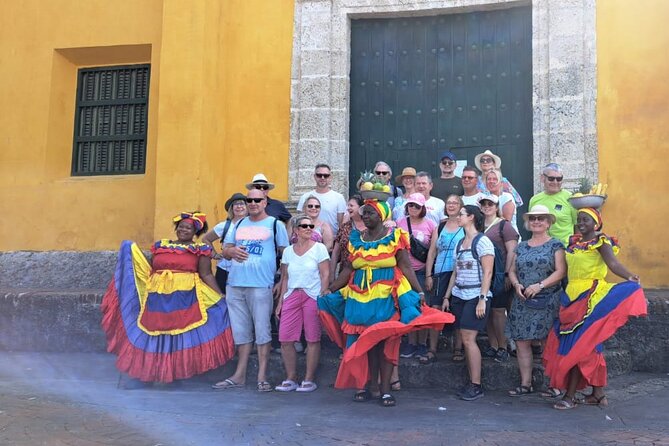
- Torre del Reloj start, with an intro that sets context fast so the rest makes sense
- Major plaza circuit, including Plaza de Los Coches and Plaza de la Aduana
- City founders and cultural icons, from Don Pedro de Heredia to Simón Bolívar and Gabriel García Márquez
- Botero art on the route, including Gertrude near Plaza de Santo Domingo and the cathedral area
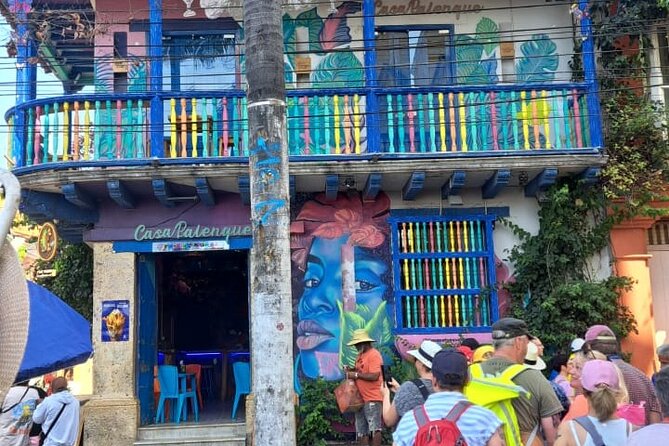
- Getsemaní street art photography moments, especially along Calle de la Sierpe
- A nature break at Parque centenario, where you can spot animals like titi monkeys and sloth bears
Cartagena on Foot, 2 Hours 30 Minutes, Real City Energy
If you only have a short window in Cartagena and you want your day to feel organized, this walking tour is a smart move. It’s priced at $45 per person and runs about 2 hours 30 minutes, which is the kind of timeframe that fits between a beach plan and dinner plans in the old city.
The tour also feels designed for first-timers. You start at a clear landmark, Torre del Reloj, and then the route threads through well-known plazas. By the time you reach Getsemaní, the city is no longer a list of sights, it’s a lived-in place with changing moods.
The big win is the guide. The reviews highlight Alvarito specifically, and I love that because it signals you’re not just paying for someone to point at buildings. You’re getting the why behind what you’re seeing, and that is the difference between a photo walk and a meaningful walk.
More Historical Tours in Cartagena
- Cartagena: Historic Center and Getsemaní Shared Walking Tour
★ 4.9 · 2,716 reviews - Historic Center & Getsemaní Shared Tour in Cartagena
★ 5.0 · 620 reviews - San Basilio de Palenque History Tour
★ 5.0 · 301 reviews
From Torre del Reloj to Plaza de Los Coches, the Tour Sets the Tone
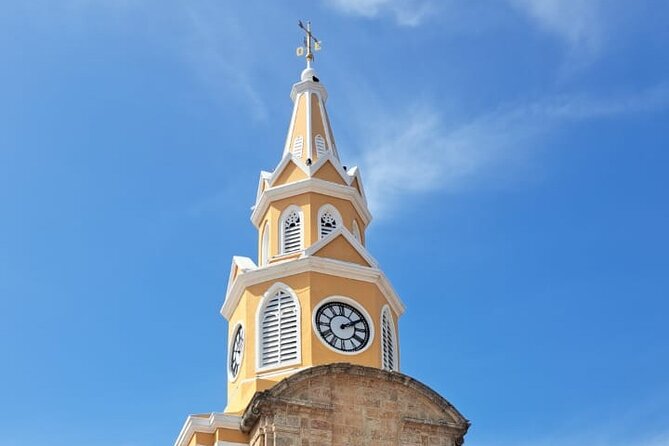
The tour begins at the Monumento Torre del Reloj near Boca del Puente in El Centro. Your accredited guide meets you here and gives a quick intro to the route, so the next stops are easier to follow. It’s brief, but that’s on purpose. Cartagena works better when you get your bearings early.
From there you head to Plaza de Los Coches. This is one of the emblematic squares in the historic center, and it’s a good place to notice how the city blends civic life and heritage. You’ll also see the portal of sweets, plus a monument tied to Don Pedro de Heredia, the founder of Cartagena. It’s a classic “stop for context” moment.
Practical tip: because you start outdoors and then move from plaza to plaza, plan to keep your phone charged and your hat handy. Even if it’s cloudy, Cartagena sun can still sneak up on you.
Plaza de la Aduana and the Mayor’s Office, Where Power Looks Formal
Next up is Plaza de la Aduana, the Customs Square. This one hits a theme you’ll see all over Cartagena: official authority and trade history sitting in the middle of everyday streets.
The square is described as the largest in the city and includes the Mayor’s Office and the mansion where the founder of Cartagena lived. You’ll also find a monument in tribute to Cristóbal Colón, the figure tied to the European discovery narrative.
What I like about this stop is that it’s visual. You’re not just hearing dates. You’re looking at spaces that feel designed for governance and commerce, even if you’re just standing there for a few minutes.
A small consideration: since the tour keeps each stop to around 10 minutes, if you’re the kind of person who wants to linger with a camera for 30 minutes at every angle, you might feel slightly rushed. If you like momentum, though, this structure is a plus.
Plaza de San Pedro Claver, Shopping, Craft, and Character
Then the tour moves to Plaza de San Pedro Claver. Here, the name matters because you’ll find the church connected to the same figure, and the square carries its own energy. The stop also includes plenty of storefronts, including restaurants, jewelry stores, and places that sell crafts.
Your guide will point out avant-garde works that adorn the square. That’s a helpful detail because it tells you to look beyond the “old” part of Cartagena. Even in the historic center, the city keeps adding modern layers.
If you’re shopping for something small, this is a practical window. You’ll pass through areas where local businesses are set up, so you can decide quickly if you want to browse further later.
A different kind of day out of Cartagena:
- Cartagena Island Hopping: 5-Stop Rosario Islands Tour with Lunch
★ 4.5 · 4,903 reviews - Cartagena: Rosario Islands Catamaran with Lunch and Snorkel
★ 4.5 · 2,479 reviews - Full-Day Rosario Islands Including Barú, Bocachica & Playa Blanca
★ 4.0 · 1,729 reviews - Tour De Palenque, Road to Emancipation.
★ 5.0 · 1,678 reviews
The Portal of Queens Since 1934, and Why It’s More Than Photos
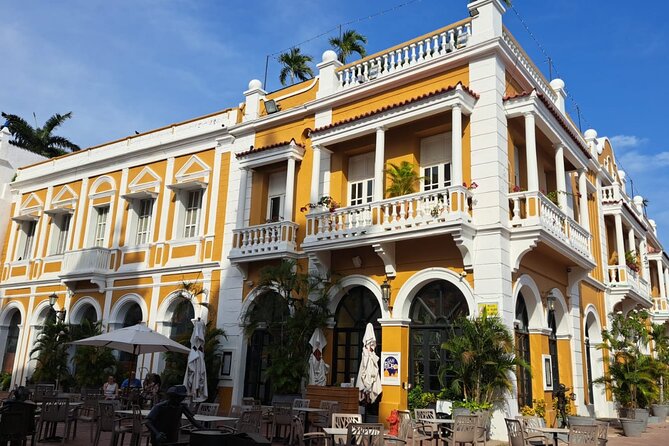
One of the more curious stops is the National Beauty Contest – Colombia area, where your guide brings you to the portal of the queens. You can appreciate photos of queens that Colombia has had since 1934, planted in the ground.
This stop works because it gives you a shortcut to pop culture. It reminds you Cartagena is not only about colonial architecture. It also participates in national stories, entertainment traditions, and public celebration.
If you like quirky details, this will feel like a nice change of pace from monuments and church facades.
Plaza de Bolívar, Simón Bolívar, Gabriel García Márquez, and a Nearby Inquisition Museum
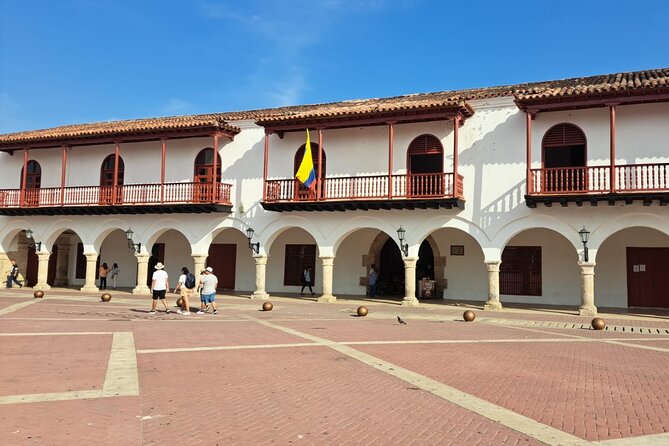
Next you arrive at Plaza de Bolívar. This is an urban park style square and one of the best resting points in the route. You get vegetation and a sense of calm compared to the hotter, tighter street corners.
The square centers on a monument to Simón Bolívar, plus a statue of Gabriel García Márquez. That pairing is one of the city’s clever reminders: Cartagena isn’t only a military or colonial story, it’s also literary and cultural.
The tour notes that you’re right in front of the museum of history inquisition. Even if you don’t go in, the location matters, because it helps you understand how these plazas sit next to different layers of the city’s past.
Practical tip: this is a good time to pause, drink a bit of water, and plan what you want from the rest of the walk. If you’re getting tired, this plaza gives your legs a break.
Plaza de Santo Domingo and the Fernando Botero Connection
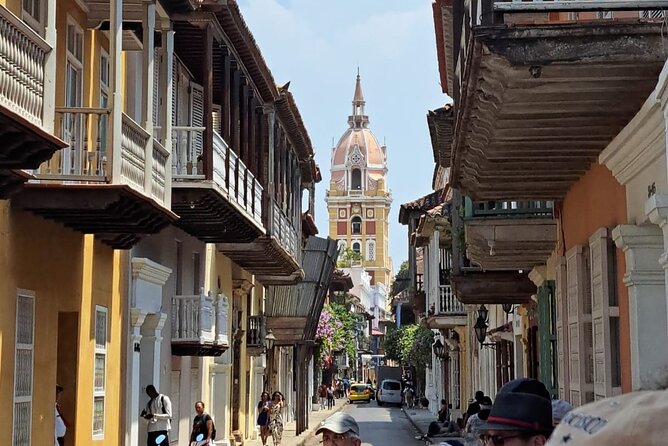
After the calm, the tour turns cheerful again at Plaza de Santo Domingo. This is described as popular and lively, with bars, restaurants, jewelry stores, and shops around the square.
Here, the guide points out artwork by Fernando Botero, specifically Gertrude. Botero’s style is instantly recognizable, and it’s one reason Cartagena attracts art lovers beyond architecture.
If you’re unsure how to spot Botero work from a distance, this is where a guide helps. The tour structure gives you a chance to focus on one specific piece rather than scanning everything at once.
Catedral de Santa Catalina de Alejandría, Catholic Cartagena at Street Level
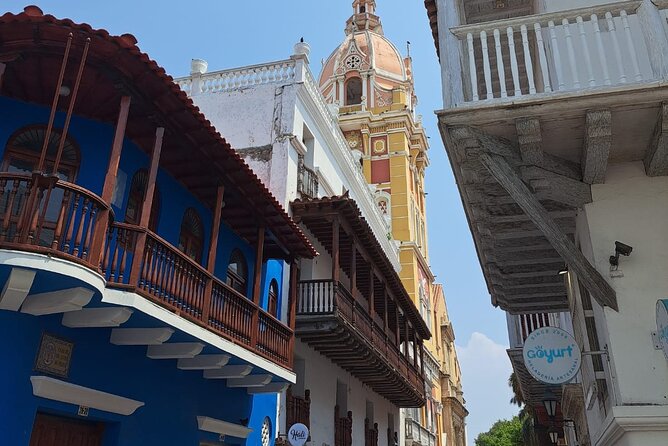
Next is Catedral de Santa Catalina de Alejandría. This is a major stop in the historic center, and it’s placed in the itinerary right after a very social square, so the mood shifts from shopping and conversation to sacred space.
The tour also mentions admiring Botero work at this point, again connected with Gertrude. If you care about art, don’t just take a quick exterior photo. Stand a minute and let your guide point out where the piece is placed and how it fits in the surrounding scene.
Even if you’re not religious, cathedral stops are useful. They show how a city organized its identity, and they often frame some of the most central pedestrian routes.
Plaza de la Proclamación, Governorate, and Pope John Paul II
Then you reach Plaza de la Proclamación. This is another architectural highlight, with the Governorate and a statue of Pope John Paul II.
This stop is a good reminder that Cartagena’s public spaces don’t only reflect colonial power. They also reflect later political and religious symbolism. Having it pointed out makes the plaza feel less random.
Roma Street, Colonial Balconies, and a Busiest-in-the-Historic-Center Feel
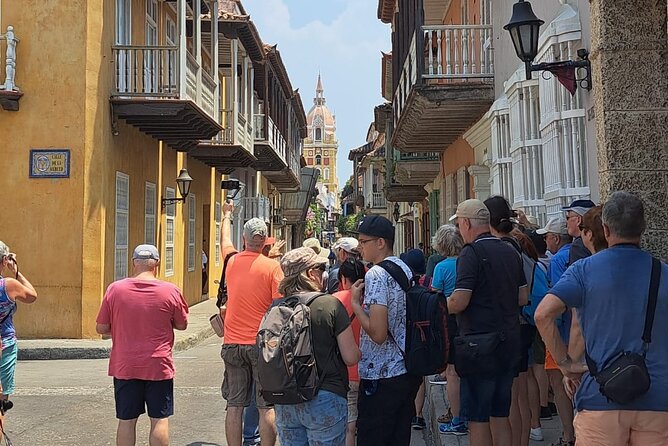
After that, your guide continues along Roma Street, described as one of the busiest streets in the historic center. You’ll see colorful colonial houses with high balconies and attractive facades.
This section of the walk is where you shift from “plaza sightseeing” to “street reading.” A good guide helps you notice details you might otherwise miss, like how balconies, facades, and street width shape the feel of the neighborhood.
A tip for this part: keep your pace steady, and try to glance up even if you’re walking quickly. Cartagena rewards that habit.
Parque centenario, French-Style Grounds, Obelisk, and Animals You Might Spot
The tour moves to Parque centenario, described as a French-style park with an obelisk. This is your nature and animal break, and it also gives your feet a slightly different kind of terrain.
The tour mentions observing biodiversity, including animals such as monkey titi, sloth bear, and quantities of birds typical of the Colombian Caribbean coast.
Even if you don’t see every animal, the value is in changing environments. After hours in plazas and streets, this kind of park stop helps you reset.
Calle de la Sierpe in Getsemaní, Graffiti, Benderines, and Photo Moments
From the park, the tour heads into Calle de la Sierpe, one of the emblematic streets in the Getsemaní Quarter. This is where Cartagena gets louder in the best way.
The tour’s main attraction here is the benderines hanging with the countries of the world, surrounded by graffiti and urban art. Your guide sets you up with chances to take photos of murals and facades that feel lively and full of character.
If you’re building your Instagram grid or just want memorable street shots, this is a standout stretch. It’s also the clearest contrast with the older civic plazas earlier in the walk.
Plaza de La Trinidad, Nightlife Energy and Fast Food Smells
Next is Plaza de La Trinidad, described as the heart of the Getsemaní district. This is a square full of life and charm, where locals and tourists gather. The tour also notes fast food sales with strong aroma and flavor.
I like this stop because it brings you back to everyday Cartagena. You can think of the first half as the city’s public face, and this part as the city’s social pulse.
If you’re sensitive to crowds or noise, come here with the expectation that it’s lively. You’ll also want to watch where you step. This is street life, not a museum floor.
Callejón Ancho, Wide and Narrow, and the Neighborhood View
The tour continues to Callejón Ancho, a wide alley and narrow alley combo. Here the emphasis shifts again. You’re meant to observe popular life of native people of Getsemaní and see neighborhood life plus valuable architectural legacy.
This is a good finishing stretch because it shows how daily routines and historic structures coexist. If you’ve been collecting photos, it also gives you a last chance to capture those real-life textures that make Getsemaní feel different.
The tour ends with your accredited guide giving you instructions and recommendations to finish your day on your own.
Price and Logistics: What $45 Buys You Here
Let’s talk value. $45 for about 2.5 hours is reasonable in Cartagena, especially because you’re covering a mix of major plazas, a cathedral area, a park, and Getsemaní street art. This isn’t one isolated attraction. It’s a network of stops in one loop.
The tour includes an accredited professional guide, and the itinerary notes admission tickets are free at each stop. That means you can focus on walking, listening, and looking rather than budgeting for entry fees throughout.
What’s not included is simple: soda or pop water. Bring your own water or plan to buy along the way. Also, the tour has a limit of 30 travelers, which I like because it tends to keep the experience from turning into a moving crowd.
Weather matters too. The experience requires good weather, so if Cartagena is wet and stormy, you should expect the operator to adjust or refund as needed.
Who Should Book This Walk (And Who Might Prefer Something Else)
This is a great pick if you want a guided way to connect Cartagena’s main squares and the Getsemaní street-art vibe in one morning or afternoon block. It’s especially strong for first-timers who feel overwhelmed by how much there is to see.
It also fits well if you care about getting more from your photos. The guide helps you spot what to photograph, like Gertrude and the Getsemaní mural stretches on Calle de la Sierpe.
If you hate walking or prefer long sits at each attraction, you might find the 10-minute rhythm a little tight. If you’re a slow explorer, consider pairing this with one separate stop later where you can linger.
Should You Book This Historical Tour of Cartagena?
I’d book it if you want structure, an English-speaking guide like Alvarito, and a route that mixes monuments with real neighborhood life. The biggest reason to choose this one is that you get explanations that help you understand what you’re looking at, not just where to stand for a picture.
I’d skip it if you’re traveling with limited mobility or you want a longer, stop-by-stop museum style experience. This walk is designed for moderate fitness, and it works best as a short, efficient city orientation.
If you’re excited to see Cartagena on your own after the tour, this is exactly the kind of day-trip backbone that helps. You’ll finish with recommendations and a clearer sense of where to head next.
FAQ
How long is the Historical Tour of Cartagena?
The tour lasts about 2 hours 30 minutes.
How much does it cost?
The price is $45.00 per person.
What’s included in the price?
It includes an accredited professional guide.
Is water or soda included?
No. Soda/pop water is not included.
Where does the tour start and end?
It starts at the Monumento Torre del Reloj near Boca del Puente in El Centro, Cartagena de Indias. The tour ends in the El Centro area near a big screen TV at Cl. 32 #8202.
Does the tour run in any weather, and what about cancellation?
The tour requires good weather. If it’s canceled due to poor weather, you’ll be offered a different date or a full refund. It also has free cancellation, and you can cancel up to 24 hours in advance for a full refund.
Recently reviewed around Cartagena
- Trendy Cartagena photo/ Video Tour★ 2.9 · 4 reviews
- Playa Blanca Baru from Cartagena City Center★ 4.0 · 4 reviews
- Sunset in Cartagena Bay with Boat Dances and Bar★ 5.0 · 4 reviews
- Taste Cartagena: Street Food and Full City Tour with Expert Guide★ 4.5 · 4 reviews
- Private Transfers Airport and Hotels in Cartagena★ 5.0 · 4 reviews
- Colombian Fruits and Paila Ice Cream Tasting★ 5.0 · 4 reviews
- private tours cartagena de indias★ 4.5 · 4 reviews
- Mud Volcano and Day Trip in Hotel with Lunch★ 5.0 · 4 reviews
Historical Tours, compared.
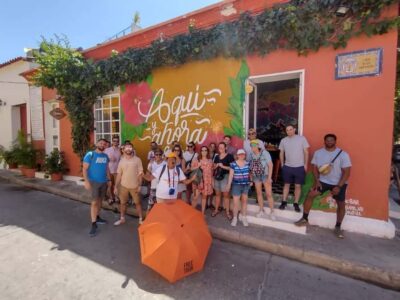
Historic Center and Getsemaní Shared Walking Tour
Read our review →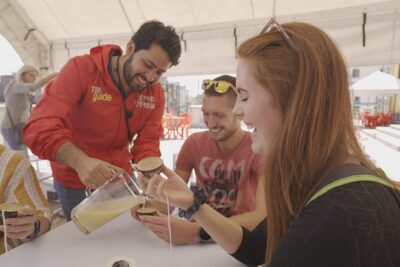
Shared Tour of the Historic Candelaria in Bogotá
Read our review →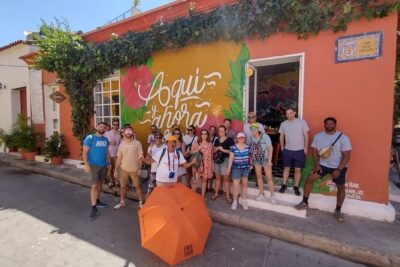
Historic Center & Getsemaní Shared Tour in Cartagena
Read our review →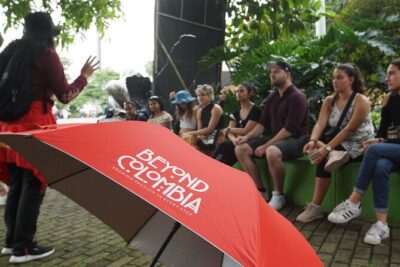
Shared Tour Historic Center of Medellin with Audio System
Read our review →
Medellín Essential: history & local life on E-bike
Read our review →
Medellin Historic Walking Tour with Expert Guide
Read our review →
Bogota Shared Gastronomy Tour in the Historic Center
Read our review →Browse the lists this tour appears in