
Reviewed · LA CANDELARIA
Shared Tour of the Historic Candelaria in Bogotá
La Candelaria is where Bogotá’s past and present bump into each other, brick by brick. This shared historic walk strings together famous landmarks and everyday street life so the city’s politics, culture, and legends start to make sense fast. I especially love how the tour links pre-Columbian gold to Colombia’s later political turning points.
I also like the way the walk builds in short, satisfying breaks to taste local favorites, not just look at sights. The one drawback to keep in mind is pacing: it’s a steady walking tour with brief stops, so if you want lots of time inside each place, you may feel a bit rushed.
Key highlights before you go
- Gold Museum opener with admission ticket handled for you
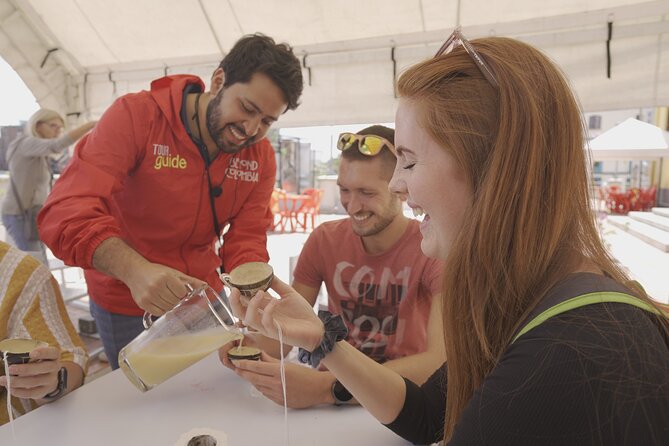
- Short tastings in real plazas like empanadas, fruit drinks, hot chocolate with churros, and coffee
- City-shaping stories tied to Jorge Eliécer Gaitán and the Plaza de Bolívar area
- Major art and culture stops including the Botero Museum and Teatro Colón
- A practical tour map to help you keep exploring after the walk
- Good guide variety in English and Spanish, with guides like Jeff, Sergio, Leo, and Natalia noted for clear storytelling
Why La Candelaria feels like a living textbook in Bogotá
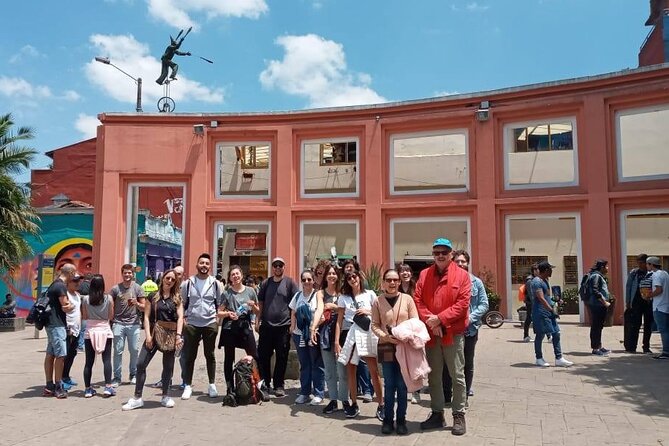
If Bogotá is a book, La Candelaria is the introduction chapter, plus the footnotes. You walk from deep time (pre-Columbian goldwork) into more recent history (assassinations, political institutions, and public memory). The result is a tour that gives you context you can carry into the rest of your trip, not just a checklist of buildings.
What makes this route work is that it doesn’t treat “history” like something behind glass. It explains why certain squares matter, why certain monuments were placed where they were, and how the city’s old political heart still shapes what people see and do today. I also like that the guide keeps the pace friendly enough to take photos, while still moving you through the full circuit in about three hours.
More Historical Tours in Bogotá
- Bogota Shared Gastronomy Tour in the Historic Center
★ 5.0 · 264 reviews - Bike Tour in Bogota Historical Sites and Fruit Market
★ 5.0 · 171 reviews - Shared Tour of Bogota’s Historic Downtown (La Candelaria)
★ 4.7 · 100 reviews
Price and value: what $13 really covers on this city-core walk
At $13 per person for an about 3-hour shared walk, you’re paying for three things that add real value: a certified professional guide, organized timing, and a free tour map you can use later. Museum entrances are handled for at least the Gold Museum stop (admission ticket is free), and the itinerary is built around places where a guide can explain what you’re seeing.
What you should not count on is a full meal or a long sit-down experience. Lunch and tips are not included. That’s normal for this type of tour, but you’ll want to plan your day so you’re hungry enough for snacks and coffee stops, yet not expecting a full lunch break.
Also, because this is connected to a free walking tour model, the amount you pay in advance is treated as the suggested gratuity for the guide’s work (with a platform commission). In plain terms, you’re not paying for “tickets,” you’re paying for the guiding and the route.
Where you start and how the 3 hours usually feel on foot
You meet at the Gold Museum in Santa Fé at Cra. 5 #15-82. The walk ends at the Gabriel García Márquez Cultural Center at Cl. 11 #5-60.
The best way to enjoy a tour like this is to treat it like a guided orientation walk. It’s not built for lingering. Most stops run around 10 to 15 minutes, which is enough to learn what matters, take a couple of photos, and then move on. If you like asking questions, it helps to do it while you’re standing near the place being discussed, since the schedule moves on whether you’ve finished writing notes or not.
If your Spanish is limited, you can still do well. The program includes guides who run the tour in English (names like Jeff show up), and others who guide in Spanish (names like Leo are mentioned). So you can pick based on your comfort level, but either way you’ll get a lot of explanation, plus practical pointers for what to look at afterward.
Stop-by-stop: from the Gold Museum to the city’s political center
More of La Candelaria:
- La Candelaria, Monserrate and Museums Bogotá Private City Tour
★ 5.0 · 1,567 reviews - Bogotá: Guided La Candelaria Walking Tour
★ 4.8 · 1,229 reviews - Bogota + Monserrate Private City Tour, Museums, Candelaria.
★ 5.0 · 1,015 reviews - Walking Tour in La Candelaria Bogotá
★ 5.0 · 859 reviews
1) Gold Museum first: pre-Columbian gold and cultural meaning
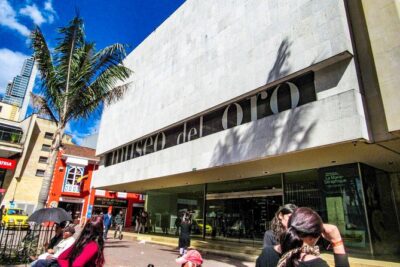
The tour kicks off at the Museo del Oro. This is where you get pulled away from the idea that gold is just decoration. The guide explains how pre-Columbian goldsmiths worked and why these pieces mattered to indigenous cultures in Colombia.
Because the admission is handled as free, you don’t start the day worrying about ticket hassles. It’s also a smart opener: if you’re going to understand Colombia’s identity beyond the modern skyline, starting with deep cultural roots makes everything that follows land better.
Practical note: museums can be visually intense. Go in expecting short orientation time, not a full museum day.
2) Santander Park: shade, monuments, and a breather in the historic center
Next comes Santander Park, described as a green lung in the historic center. This stop is built for atmosphere and explanation. You’ll get a refreshing tropical fruit juice and then learn how the park fits into the city’s fabric, plus see some iconic monuments.
I like this kind of mid-tour pause. It breaks the pattern of constant walking and gives you a chance to reset your brain before the tour shifts back into plazas, politics, and more people-watching.
3) Plazoleta del Rosario: empanadas, legends, and old-town tradition
At Plazoleta del Rosario, the tour leans into street-level culture. You’ll try empanadas and hear legends and anecdotes tied to the square and its role in Bogotá.
This is one of those stops that works whether you’re a foodie or not. The food is the hook, but the storytelling is what makes it stick. You’ll leave understanding that squares are social stages, not just postcard backdrops.
4) Jorge Eliécer Gaitán monument: politics that still echoes
Then you reach the monument to Jorge Eliécer Gaitán, a political leader assassinated in 1948. The guide talks about what happened and why it mattered for Colombia’s later history.
This stop can be the most intense part of the walk, depending on your tolerance for political discussion. If you came to Bogotá mainly for architecture or cafe culture, you might find this section heavy. If you’re curious about how modern Colombia got shaped, it’s also one of the most important.
5) La Concordia Market Square: scents, produce, and a seasonal fruit taste
After monuments, the tour moves to District Market Square La Concordia. This stop is all about senses: the smell of food, the mix of local products, and the fast rhythm of market life.
You’ll get a taste of fresh seasonal fruit. This is a good moment to ground everything you just learned in something ordinary and real. It’s also helpful if you’re trying to understand daily life in the historic center, not only the famous buildings.
6) Plaza del Chorro de Quevedo: folklore plus a hot drink
Plaza del Chorro de Quevedo is one of Bogotá’s emblematic spots. Here, you’ll hear the legend connected to the water jet. The guide also brings in a local comfort food drink experience, with liquid tamale served hot.
I like ending a food-and-folklore section with something warm. It takes the edge off the walking and makes the story feel more like part of life than a history lecture.
7) Universidad de La Salle: why institutions show up in the city map
Next is Facultad Ciencias del Hábitat – Universidad de la Salle. This is shorter, about 10 minutes, and it’s about educational roots and the role of the university in training professionals.
It’s not the flashiest stop, but it’s a useful reminder that “culture” isn’t only museums. Schools and institutions help shape what kind of public life a city becomes.
Museums and architecture: Botero, the Mint, and Teatro Colón
The Botero Museum and hot chocolate with churros
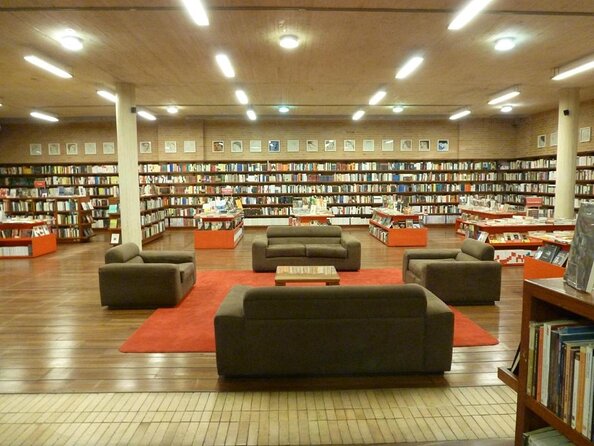
At Museos del Banco de la República, you get a look at works by Colombian sculptor Fernando Botero. Botero’s style is instantly recognizable, so even a quick visit feels satisfying.
Then comes a classic Colombian treat, hot chocolate with churros. It’s a great pairing because it makes the museum stop feel like part of a real outing, not an obligatory “see this, move on” schedule.
The Coin and Bill Production Museum: money history you can actually picture
You also stop at the Coin and Bill Production Museum, known as the Mint. You’ll learn about the history of currency in Colombia, connected to the historic building where coins of New Granada were minted.
This is one of those topics you might ignore on your own, but with a guide, it turns into a tangible story about state power, trade, and everyday life. Even if you’re not into finance, it’s easier to understand the country when you learn how people used money and how systems evolved.
Teatro Colón: Latin America stage power, in street-level view
Finally, you’ll see Teatro Colón Bogotá. This theater is described as one of the most important in Latin America, and the stop focuses on architecture and history.
Even if you can’t tour inside on the walk, you’ll leave with enough context to appreciate why the building matters when you see it from the street. It also helps you connect the arts stop to the broader theme of Bogotá as a cultural hub.
Plaza de Bolívar and La Puerta Falsa: the heart plus the comfort food
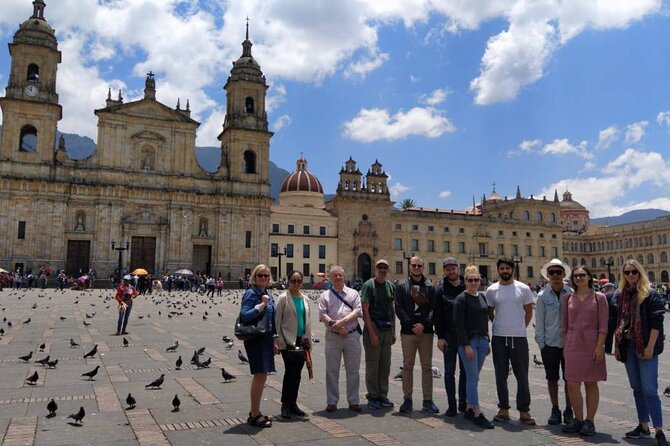
Plaza de Bolívar: where Bogotá’s big institutions cluster
No La Candelaria walk feels complete without Plaza de Bolívar. You’ll look at the Primate Cathedral, the Palace of Justice, and the National Capitol.
This is where your earlier political stop starts to pay off. You’re not just hearing names and dates. You’re standing in the space where public authority is meant to be seen and felt.
You’ll also get Colombian coffee at one of the cafes surrounding the square. It’s a good chance to slow down slightly and take in the scale of the setting.
La Puerta Falsa Restaurant: traditional dishes without pretending it’s gourmet
The tour then heads to La Puerta Falsa for traditional dishes, such as chocolate tamale or changua. This stop is designed as an authentic meal-style tasting, still short enough to keep the tour on track.
If you’re the type of traveler who wants to try classic Colombian comfort food early in your trip, this is a strong finish. If you’re picky about textures or you dislike hot soups, you can decide how adventurous you want to be at this stop.
Finishing at the Gabriel García Márquez Cultural Center
The walk ends at the Centro Cultural Gabriel Garcia Marquez. This is a fitting close for a route that blends politics, culture, and storytelling. Even if you only spend a short time here, you’ll have the feeling that the tour is pointing you toward a deeper literary Bogotá, not just an older architectural one.
The practical benefit is timing. Ending at a cultural center can make it easier to plan your next move, since you’re in an area where you can continue exploring at your own pace.
What makes the guides shine, and how to get more from the experience
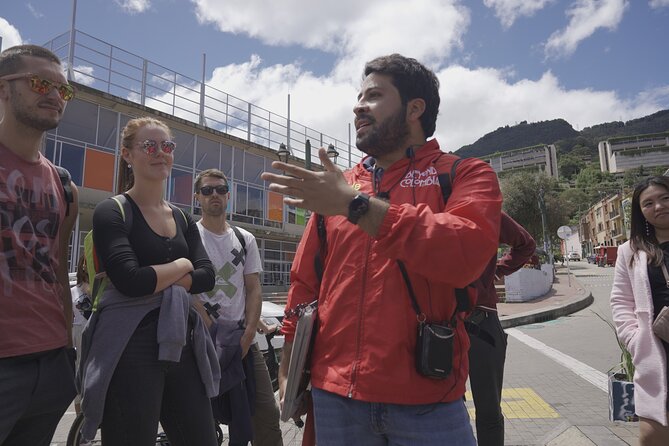
The strongest repeated thread is how guides shape the walk from information into understanding. People highlight clear explanations, good pacing, and the fact that guides answer questions and adapt to the group’s energy.
You’ll also want to pay attention to how different guides bring their own angle. Names mentioned include Jeff, Leo, Rafa, Hector, Byron, Sergio, Natalia, Daniel, Cami, Santiago, and Erik. That matters because it suggests you may get either English or Spanish guidance and different teaching styles, but the goal stays consistent: connect what you see to what it means.
To get the most out of it, I recommend you ask one question during the most relevant stop. For example: ask about why a monument was placed where it is, or how a square functioned socially. Those questions land best while you’re still standing in the exact place being discussed.
Who should book this La Candelaria walk
This tour is a good match if:
- You want a fast orientation to Bogotá’s historic center with context.
- You like a mix of museums, plazas, and local food stops.
- You prefer guided storytelling that connects politics and culture.
- You want a free tour map to help you keep going on your own later.
It might be less ideal if:
- You hate walking for around three hours with brief stops.
- You strongly prefer art or architecture only, with minimal politics.
- You’re expecting a slow-paced museum day. This is a street-and-story route.
Quick practical advice before you go
Wear comfortable walking shoes. Bring your curiosity, not your checklist. Keep an eye on the guide’s instructions so you stay with the group, since the route moves from stop to stop on a set rhythm. And plan your meal timing around snacks and coffee. This walk can make you hungry again, right after you finish it.
Should you book this Historic Candelaria walking tour?
Yes, if you want a smart first sweep of Bogotá that helps you understand what you’re looking at. The value is in the guide-led context, the free museum admission at the start, the tour map for self-exploration, and the mix of local tastes that keep the route grounded in everyday life.
Book it sooner rather than later in your trip. If you start here, you’ll recognize key places later and your other visits will feel more meaningful, not just scenic.
FAQ
How long is the Historic Candelaria shared walking tour?
It lasts about 3 hours.
What is the price per person?
The price is listed as $13.00 per person.
What does the tour include?
It includes a certified professional guide and a free tour map. The itinerary also features included food and drink tastings at multiple stops.
Are any museum tickets included?
Admission for the Gold Museum stop is listed as free.
Is lunch included?
No. Lunch is not included.
What about tips?
Tips are not included.
Where does the tour start and end?
It starts at the Gold Museum (Cra. 5 #15-82, Santa Fé, Bogotá) and ends at the Gabriel García Márquez Cultural Center (Cl. 11 #5-60, Bogotá).
Can I cancel for a full refund?
Yes, free cancellation is available up to 24 hours in advance for a full refund.
Is the group small?
The tour lists a maximum of 4 travelers.
Recently reviewed around Bogotá
- Visit and live a colombian coffee plantation (group tour)★ 4.5 · 4 reviews
- Villa de Leyva Food Tour at Sunset★ 5.0 · 4 reviews
- Private Coffee Tour in Cachipay★ 5.0 · 4 reviews
- Tour Nocturno de Tejo y Salsa en Bogotá★ 5.0 · 4 reviews
- Bike Tour in Bogota★ 5.0 · 4 reviews
- Hike to the Rocky mountains of Sutatausa Private Day Tour★ 5.0 · 5 reviews
- Andrés Carne de Res Chía: VIP Entry with Cover & Welcome Cocktail★ 5.0 · 5 reviews
- Salt Cathedral Tour along with the Legendary Lake Guatavita★ 5.0 · 5 reviews
La Candelaria, compared.
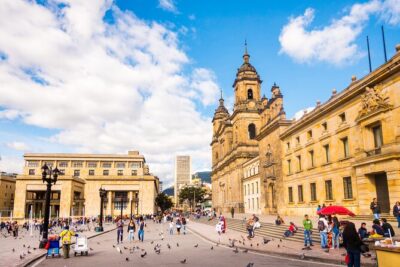
La Candelaria, Monserrate and Museums Bogotá Private City Tour
Read our review →
Bogota + Monserrate Private City Tour, Museums, Candelaria.
Read our review →
Private Tour in Bogota : Monserrate, Museums and Candelaria
Read our review →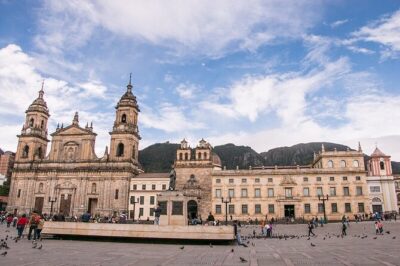
Private Bogotá Tour: Candelaria, Gold Museum, Optional Monserrate
Read our review →Browse the lists this tour appears in