
Reviewed · LA CANDELARIA
Shared Tour of Bogota’s Historic Downtown (La Candelaria)
Walking Bogotá’s historic center, La Candelaria, is interesting because you’re not just sightseeing. You’re tracing how a capital is built, broken, and rebuilt, with major monuments, street art, and the stories behind them all in one 3-hour stroll. La Candelaria turns history into something you can point to.
I especially like the way this tour connects the big moments to real places, like Bolívar Square and the events around El Bogotazo. I also love the cultural stops that make the past feel lived-in, from chicha at Concordia market to the graffiti and murals in El Embudo alleyway, with guides like Juliana and Lorenzo bringing the storytelling to life.
The main consideration is the pace. This is a walking tour of about 7 km, and it can involve uphill stretches and crowds in popular areas, so it’s not the best fit if you need lots of mobility support.
Key Highlights You’ll Feel on This Walk
- The origin story of Bogotá as Colombia’s capital, tied to what you see in the streets
- Bolívar Square’s buildings and symbolism, explained in plain, practical context
- El Bogotazo and Jorge E. Gaitán, plus other modern shocks that reshaped the city
- Chicha as heritage, with a tasting when available at Concordia market
- Graffiti as resistance at El Embudo alleyway, with attention to technique and meaning
- Botero’s Museum area and Cultural Square, so art history connects to city history
Entering La Candelaria, Where Bogotá’s Story Shows Up in the Side Streets
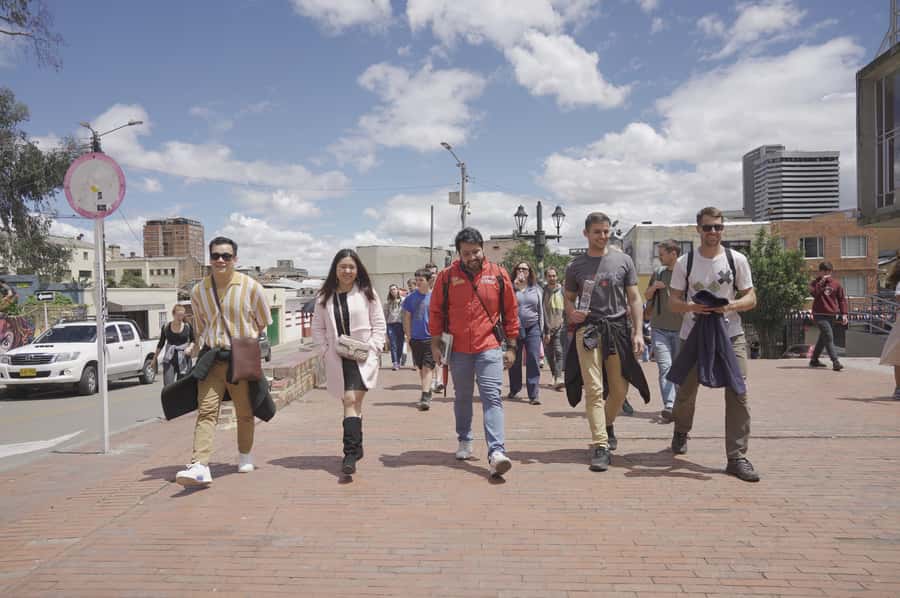
If you’re new to Bogotá, La Candelaria is the place to start. It’s compact enough to walk, but full enough that you can feel different eras layering over each other. You’ll move through essential historic downtown streets while your guide builds a timeline that’s easier to remember because you’re seeing the landmarks in front of you.
This tour is also built for curiosity. Rather than a checklist of photos, you get explanations that connect power, religion, and colonial change to the modern city organization you see today. And because it’s designed to be accurate and objective, it helps when you reach heavy topics like 1948 unrest.
A walking format has one big advantage: you learn the city’s rhythm. You’re not trapped inside a vehicle watching the scenery blur past. Instead, you learn where things are and why they matter, which makes the rest of your trip easier.
More Historical Tours in Bogotá
- Shared Tour of the Historic Candelaria in Bogotá
★ 5.0 · 1,551 reviews - Bogota Shared Gastronomy Tour in the Historic Center
★ 5.0 · 264 reviews - Bike Tour in Bogota Historical Sites and Fruit Market
★ 5.0 · 171 reviews
The Start Near Museo del Oro and How to Make the First 10 Minutes Count
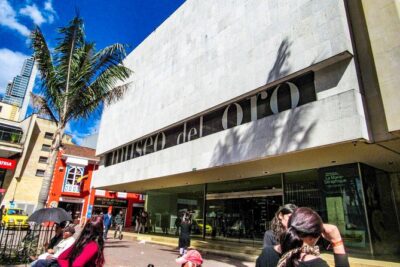
You meet right in front of the Museo del Oro with Beyond Colombia guides using red umbrellas. That’s a helpful anchor. When you arrive, look for the umbrellas and confirm your group name with your guide, then you’ll get oriented fast.
From the beginning, the tour sets expectations: come ready to walk, listen, and ask questions. You’ll also get a wristband at the end of the experience that can unlock benefits and discounts with recommended partners for lunch, coffee, and souvenirs. That means the tour doesn’t just teach you history, it helps you spend your time and money smarter afterward.
Practical note: this is a shared tour, so you’ll move at a group pace with resting stops. If you’re the type who likes to linger, plan on letting the guide guide your timing.
Bolívar Square, Bogotá’s Capital Identity, and the Buildings You’ll Never Unsee
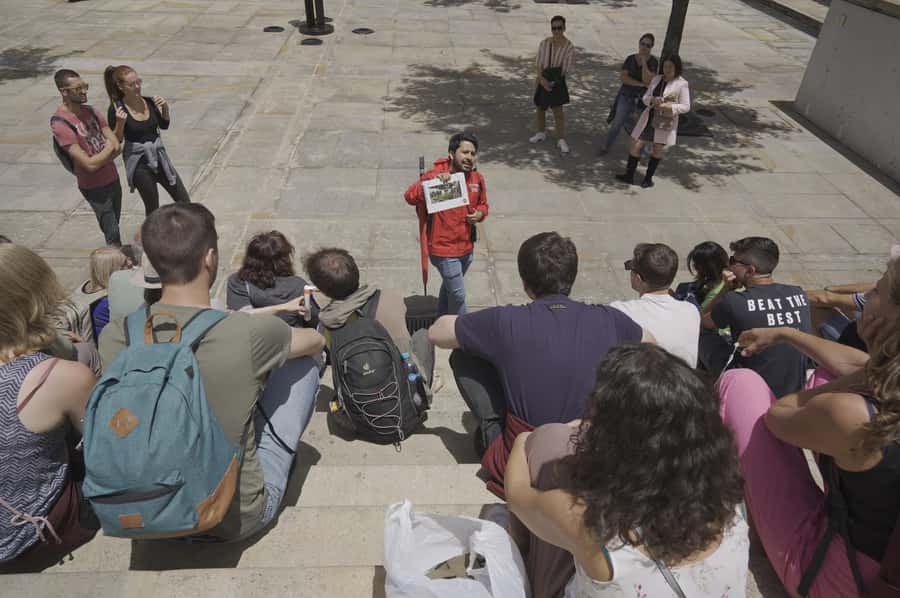
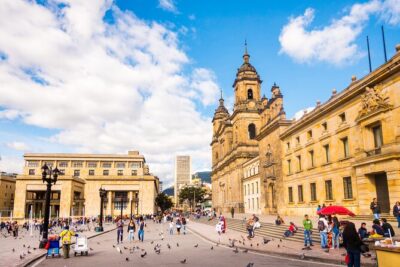
Bolívar Square is where many first-time visitors want to stand, and this tour gives you the why behind the what. You’ll learn about Bogotá as the capital of the country, and how the identity of the city is tied to the symbolism in the surrounding architecture.
What makes this stop work is the balance. You’re not just getting names and dates. You’re getting how the places functioned and what they represented as the city grew. That includes the history behind the buildings around the square, so later, when you spot similar political architecture elsewhere, you’ll recognize the pattern.
If you enjoy architecture and civic spaces, this is one of the most satisfying parts. And if you’re more of a street-level person, you still get value because the guide connects the square to the deeper political story Colombia lives with.
El Bogotazo and Justice Palace Siege, When History Leaves Scars in Plain Sight
Some city tours skip the darkest chapters because they’re uncomfortable. This one doesn’t. Instead, it approaches them with context and careful framing so you understand the stakes without getting pushed into a single viewpoint.
You’ll cover the Bogotazo riot of 1948, known as El Bogotazo, and talk about Jorge E. Gaitán. You’ll also hear about the Justice Palace siege. These aren’t just horror-show facts. The guide explains how these events shifted the city’s reality and how that kind of disruption changes institutions, public trust, and everyday life.
This matters for your trip because Bogotá can feel like a city of layers. If you don’t know what shaped those layers, you might see monuments and neighborhoods without understanding the emotional weight they carry. Even if you never feel the same reaction twice, you’ll still carry a stronger sense of place.
Also, it helps that the tour promises not to take sides. When the topic is political and painful, neutrality is not a small thing. It keeps the conversation focused on what happened and why it mattered.
More of La Candelaria:
- La Candelaria, Monserrate and Museums Bogotá Private City Tour
★ 5.0 · 1,567 reviews - Bogotá: Guided La Candelaria Walking Tour
★ 4.8 · 1,229 reviews - Bogota + Monserrate Private City Tour, Museums, Candelaria.
★ 5.0 · 1,015 reviews - Walking Tour in La Candelaria Bogotá
★ 5.0 · 859 reviews
Chorro de Quevedo, the Foundation Square Feeling, and Myth That Still Shapes People
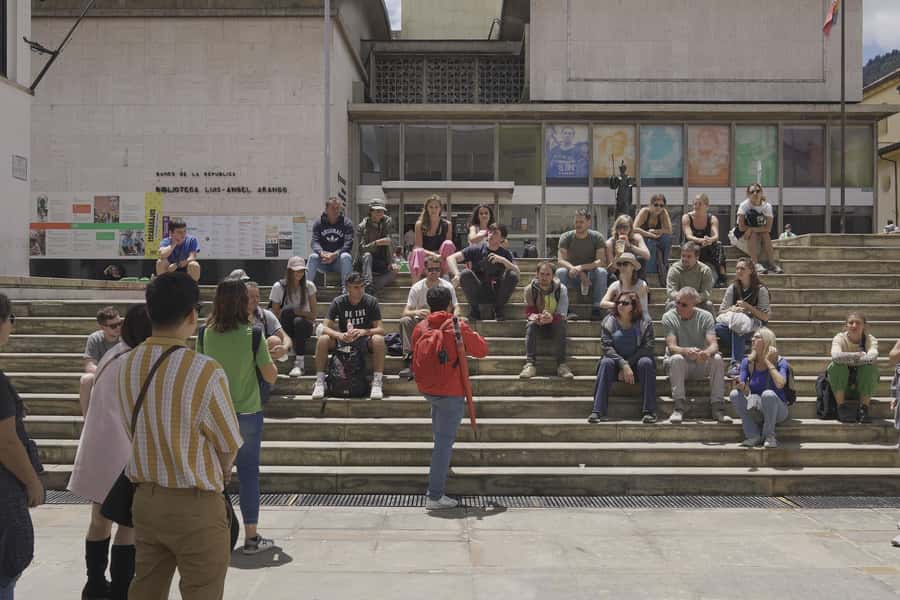
As you move away from the major political heart, the tour shifts into the city’s everyday logic. One key stop is Chorro de Quevedo, a foundation square where you start to understand Bogotá as a living city, not only a stage for presidents and revolts.
You’ll also hear about the myth of El Dorado. Even if you already know the legend, the guide ties it to the wider context of Spanish arrival and what that meant for new civilization building. That helps the myth feel less like a bedtime story and more like part of a real historical mindset.
This section is valuable if you want context that makes later discoveries click. You’ll begin to see how symbols, rumors, and power all move together in Latin American history.
Concordia Market and the Chicha Tradition, What You Should Actually Expect
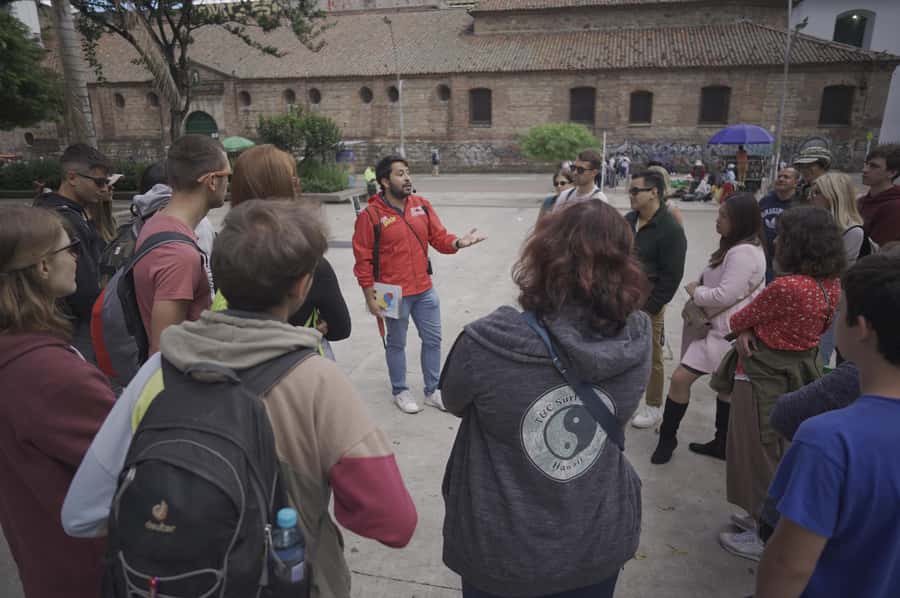
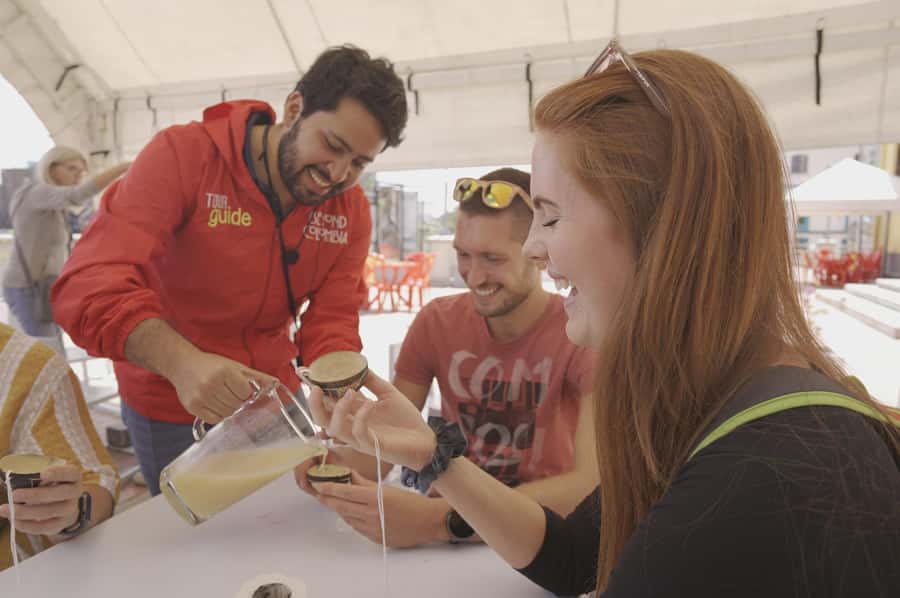
One of the most distinctive parts of this tour is the attention to food and heritage. You’ll spend time around the Concordia market and talk about chicha as an ancestral drink and as cultural heritage. The tour includes a chicha tasting when available, which is a big plus if you want more than a lecture.
How to think about the tasting: it’s not “just a sip.” The point is cultural context. Chicha sits at the intersection of tradition, community, and identity, and the guide frames it that way. If you’re open-minded, this can be one of those moments where history becomes tangible.
One more practical reality: taste is personal. If you’re sensitive to strong flavors, you might want to treat the tasting like a small cultural sample rather than a promise of your new favorite drink.
The tour also touches on an informal emerald market. Even if you don’t buy anything, you’ll learn why these local trades matter and how they connect to Colombia’s broader economic story.
El Embudo Alleyway Graffiti, Murals, and Why Street Art Works Here
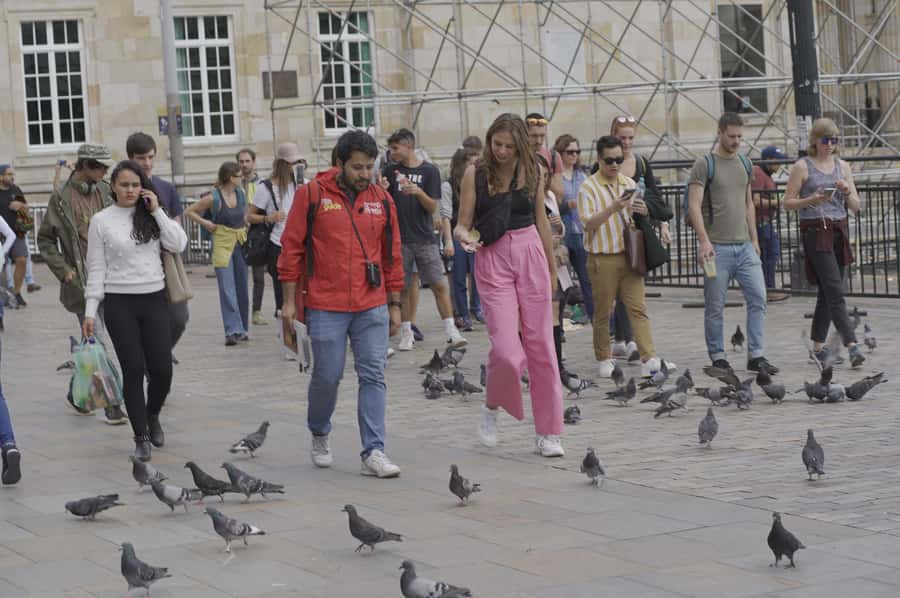
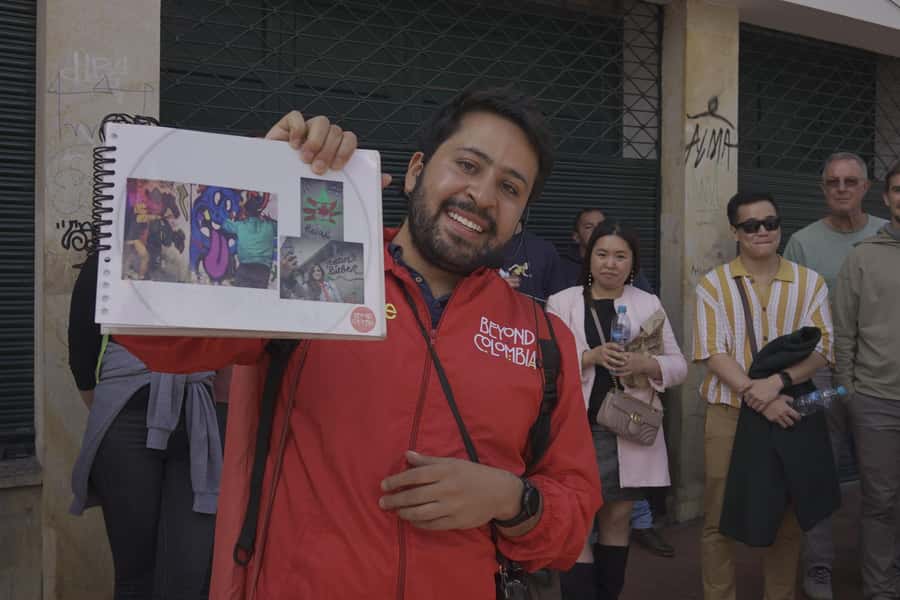
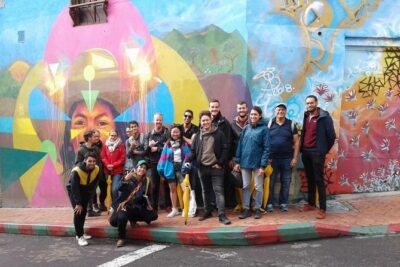
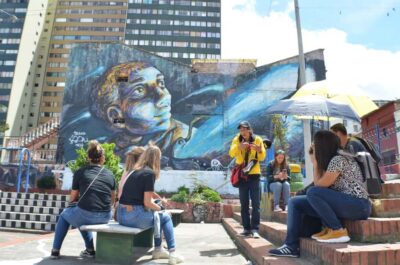
Bogotá’s street art is not random decoration. In the El Embudo alleyway area, you’ll see iconic graffiti tied to the Candelaria identity. The guide explains influence, technique, and resistance, which changes how you look at the walls.
This is one of the parts I’d recommend even if you usually ignore murals. The reason is the framing. You learn what artists are responding to, and you start understanding that walls in this city can act like newspapers, memory boxes, and arguments all at once.
And because it’s a walking stop, you don’t just catch the mural from one angle. You get time to orient, notice details, and connect it to nearby history. That makes the art stick.
Botero’s Museum Area, the False Door, and How Symbols Get Reused
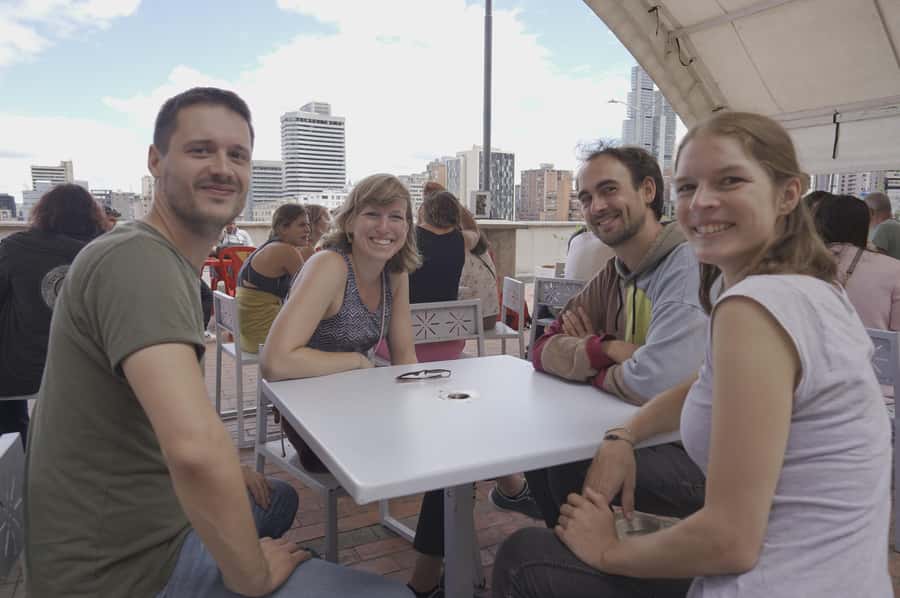
Later in the route, the tour brings you toward Botero’s Museum and the Cultural Square, plus a stop tied to the False Door. The key value here is not only what you see, but how you’re taught to read symbols.
Botero’s presence in Bogotá is part art, part cultural conversation, and part civic identity. Even without going deep into museum time, the tour helps you understand why his work connects to the idea of place and representation.
The False Door concept is another example of symbol logic. It helps you understand how architecture and storytelling mix in historic centers. When you recognize symbolism, you start seeing similar design choices elsewhere in Latin America, not just in Bogotá.
The Local Food Angle, Where the Wristband Helps After the Tour
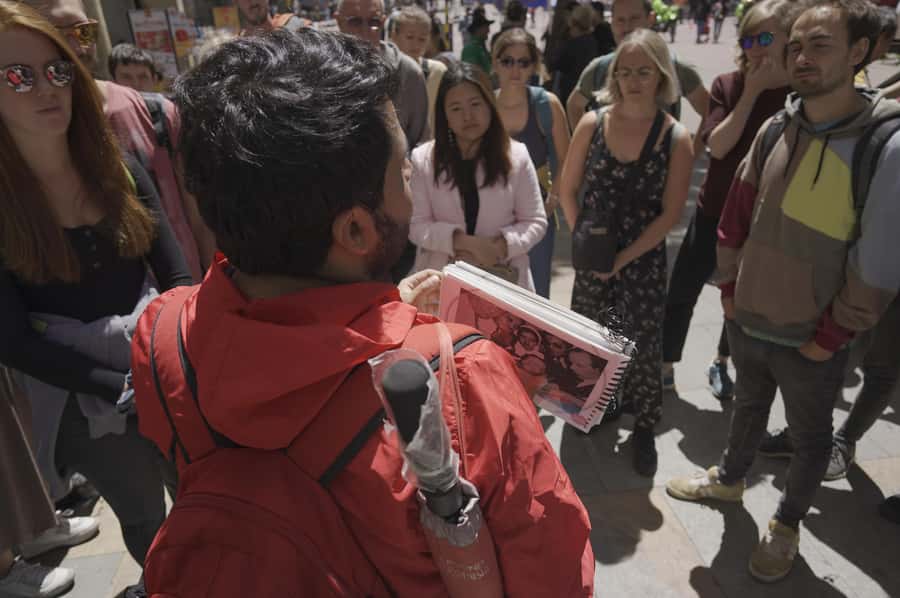
You won’t be eating all the way through the tour, but you do get practical pointers. The experience includes recommendations of local allies where you can have lunch, buy coffee, souvenirs, and more. Then you receive benefits and discounts with those partners if you show the wristband given at the end.
That matters because food decisions in a new city are where people waste time. You’re not guessing blindly. You’re getting suggestions that match the route and the vibe of the neighborhood you just walked through.
There’s also a mention of a local gastronomic alley. The tour doesn’t turn it into a full meal stop, but it gives you a sense of where to go next if you want snacks or a simple sit-down.
Price, Pace, and Logistics That Actually Affect Your Day
Let’s talk value, because $13 for a 150-minute walking tour is not a typical “just a quick look” price. What you’re really paying for is expert storytelling and a guided path through essential historic downtown areas, plus an English-speaking guide and a short list of recommendations for food and coffee after.
You also get a set structure: sightseeing of essential places in Candelaria, objective historical framing, and a tasting when chicha is available. Tickets or entrances are not included, so you’re not forced into extra costs mid-walk.
The pace is the trade-off. You should expect to walk about 7 km. The tour also includes resting stops, but it’s still a commitment. And because it’s a shared tour, crowd density can matter. If you dislike busy streets, you might feel it more during popular segments.
Weather is another factor. The tour notes you should bring water, comfortable shoes, and sun protection. And it signals that you need a rainproof plan, since conditions change.
Who This Tour Is Perfect For (and Who Should Skip It)
This is a strong match for you if:
- You want a first-time Bogotá experience that focuses on La Candelaria and explains the “why,” not just the “where”
- You like walking tours where the city becomes a classroom
- You’re curious about both major historical events and street-level culture like graffiti
- You want chicha tasting when it’s available, and you enjoy food as culture, not only as calories
You should think twice if:
- You have mobility constraints. The tour is not suitable for mobility impairments or wheelchair users.
- You don’t do well with long walks. About 7 km is the baseline.
- You want a museum-heavy day with lots of entrances. Tickets are not included, and the focus stays outside and in the streets.
Should You Book This Bogotá Historic Downtown Tour?
If you want a meaningful introduction to Bogotá, I’d book it, especially for your first or second day. You’ll come away with clearer mental map of the city, plus history that connects to what you can see right now: Bolívar Square, El Bogotazo, chicha at Concordia, and graffiti in El Embudo.
But be honest about your body and your style. This is a walking plan. Wear comfortable shoes, bring water and sun protection, and set expectations for crowds at historic stops. If you do that, you’ll likely feel like you got far more than “just a tour,” you’ll feel like you learned how the city thinks.
FAQ
Where do I meet for the La Candelaria Historic Downtown tour?
You meet right in front of the Museo del Oro with the Beyond Colombia guides carrying red umbrellas.
How long is the tour?
The tour lasts about 150 minutes, which is roughly 3 hours.
Is chicha tasting included?
Chicha tasting is included when available.
Does the price include entrance tickets or museum entry?
No. Tickets or entrances are not included, and the tour won’t take you to places with sudden extra charges.
What language is the tour conducted in?
The tour has a live English-speaking guide and also operates in Spanish.
Is this tour suitable for wheelchair users or mobility impairments?
No. It is not suitable for people with mobility impairments or wheelchair users.
Recently reviewed around Bogotá
- Visit and live a colombian coffee plantation (group tour)★ 4.5 · 4 reviews
- Villa de Leyva Food Tour at Sunset★ 5.0 · 4 reviews
- Private Coffee Tour in Cachipay★ 5.0 · 4 reviews
- Tour Nocturno de Tejo y Salsa en Bogotá★ 5.0 · 4 reviews
- Bike Tour in Bogota★ 5.0 · 4 reviews
- Hike to the Rocky mountains of Sutatausa Private Day Tour★ 5.0 · 5 reviews
- Andrés Carne de Res Chía: VIP Entry with Cover & Welcome Cocktail★ 5.0 · 5 reviews
- Salt Cathedral Tour along with the Legendary Lake Guatavita★ 5.0 · 5 reviews
La Candelaria, compared.
La Candelaria, Monserrate and Museums Bogotá Private City Tour
Read our review →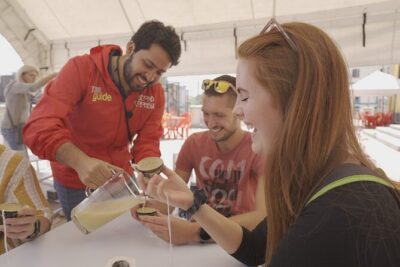
Shared Tour of the Historic Candelaria in Bogotá
Read our review →
Bogota + Monserrate Private City Tour, Museums, Candelaria.
Read our review →
Private Tour in Bogota : Monserrate, Museums and Candelaria
Read our review →Browse the lists this tour appears in