
Reviewed · GETSEMANÍ
Cartagena: Historic Center and Getsemaní Shared Walking Tour
Cartagena’s Historic Center and Getsemaní feel like two different chapters of the same book, and this walking tour connects them fast, with stories that run from conquest and colony life to independence and today’s street culture. It is led by lively guides such as Legacy, Robert, and Álvaro David, and the best part is how the walk makes the city’s details feel human, not like random monuments.
I love that you get a clear thread through the Walled City’s walls, plazas, and churches, including the darker chapters of slavery and how the city was shaped by that system. I also love the way the tour lands in Getsemaní with salsa and African champeta, so you leave with both context and energy.
One possible drawback: it is a long-ish walk at street level, so you’ll want comfortable shoes and smart sun protection, since you spend plenty of time outdoors.
Key highlights you will notice right away
- A guided history route that connects the conquest, colony, and independence story to specific streets and landmarks
- The slavery-era geography of plazas and routes around the Historic Center, told with respect
- San Pedro Claver and the Church complex tied to human rights
- San Ignacio Bastion and the defensive logic behind Cartagena’s walls, including the pirate threat
- Getsemaní in color with umbrellas, graffiti, and a lively music finish
- Shade and pacing that guides often manage well, even with big groups
Setting off in Cartagena: why the walls matter more than you think
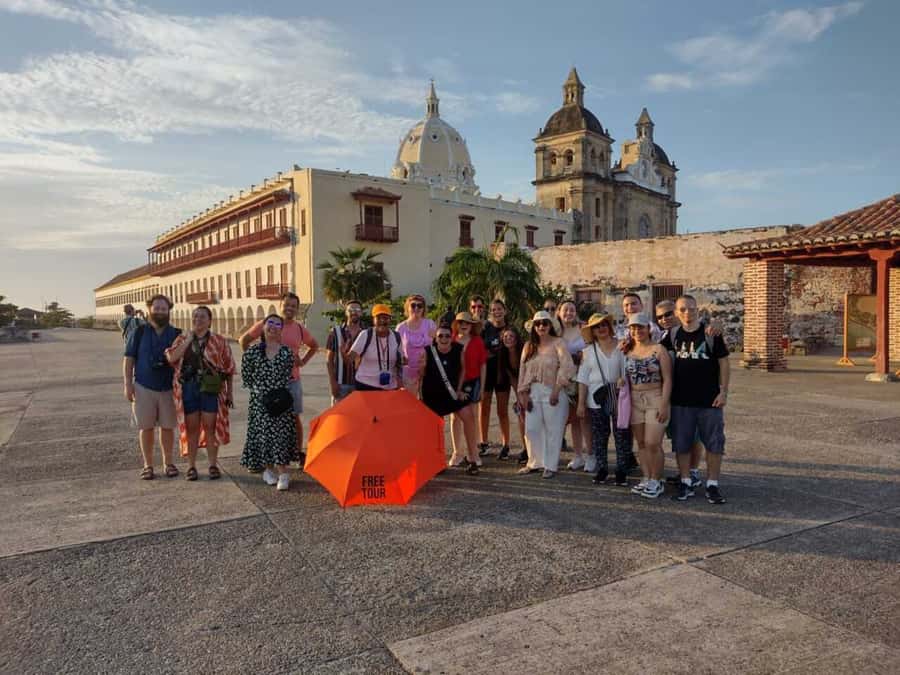
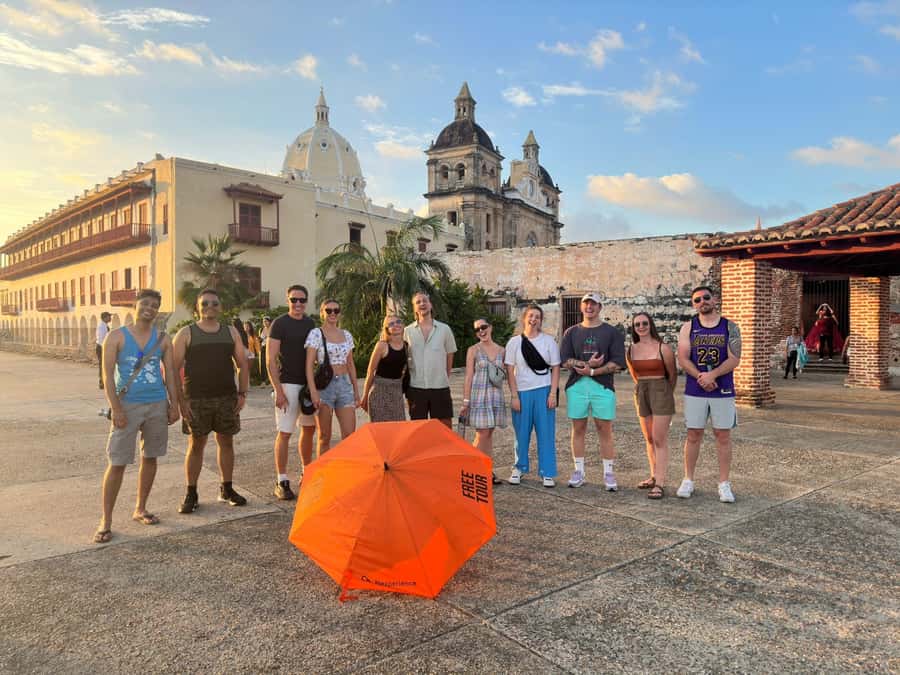
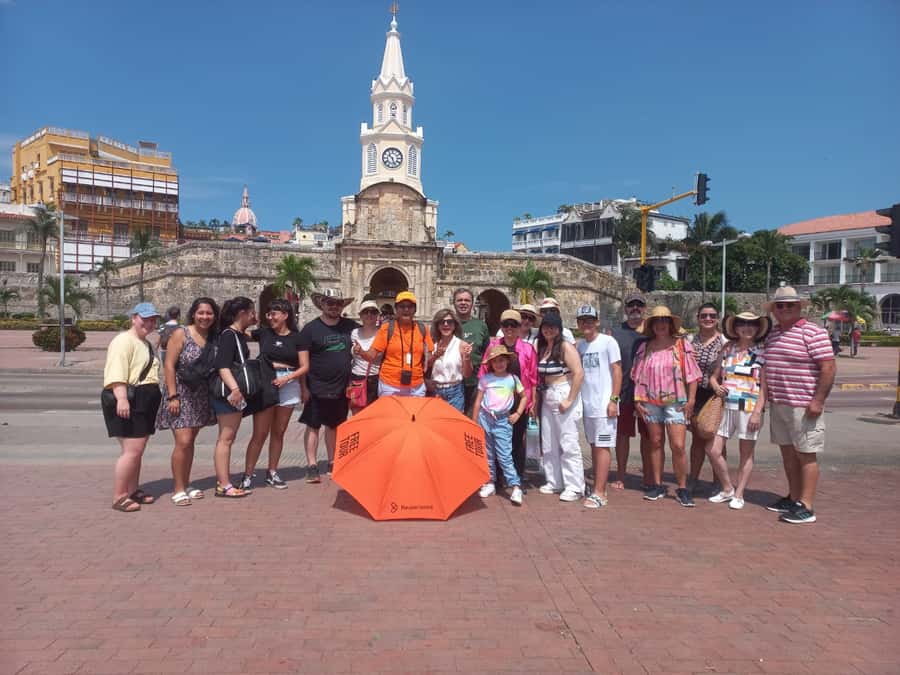
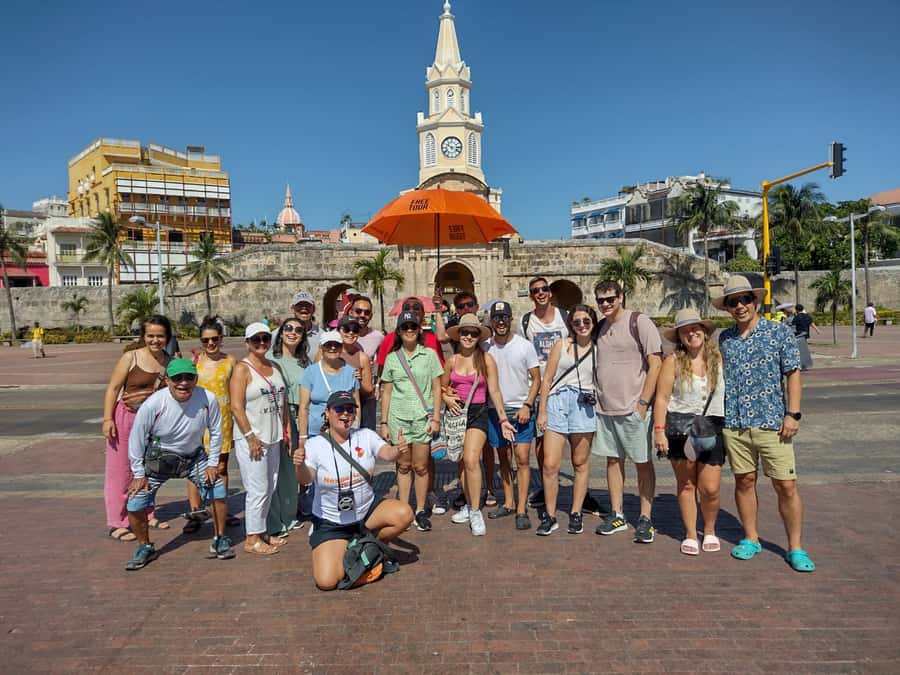
You start at Plaza Cervantes, right in front of the Clock Tower, and that location is a good clue to how the tour thinks. Cartagena’s old downtown was built to control movement, trade, and power, so the “best sightseeing” is not just what you see, it is why these streets and buildings ended up exactly where they did.
From the jump, your guide frames the city as a mix of eras and influences. You’ll hear about the indigenous peoples present before and during the Spanish arrival, then the Portuguese and Spanish colonial world that followed. And because Cartagena is also a literary city, the Nobel Prize author Gabo shows up through references to One Hundred Years of Solitude, giving you another lens for understanding how myths and memories stick around.
The tour stays practical, too. You are walking from plaza to plaza, so you are not stuck in a museum for the full 150 minutes. You’ll cover a lot of ground in a short time, but the format still allows your guide to slow down at the spots that have real meaning.
More Historical Tours in Cartagena
- Historic Center & Getsemaní Shared Tour in Cartagena
★ 5.0 · 620 reviews - San Basilio de Palenque History Tour
★ 5.0 · 301 reviews - Cartagena: Cultural tour Bazurto Market Adventure
★ 5.0 · 200 reviews
Plaza Cervantes and the Clock Tower, a fast start with big symbolism
The Clock Tower area is known locally as the Golden Key of Cartagena, and your first stop helps you read the city like a map. You move from Camellón de Los Mártires to Plaza Cervantes, then toward Plaza del Ecuador and Plaza del Esclavo.
This is where the tour starts doing something that most quick tours skip. Instead of treating plazas like photo backdrops, you learn what people used those spaces for, and how power played out in public. Even if you have never heard the names before, the way the route is explained makes the city’s layout feel logical.
If you are arriving in Cartagena for the first time, this kind of orientation matters. You’ll get a “mental GPS” for the Walled City, which makes the rest of your trip easier, especially when you return later on your own.
Walking the enslavement route around Porto Carrero and Candilejo
One of the tour’s strongest parts is how it places the painful history into the actual geography of the Historic Center. You’ll hear about the movement of enslaved people through routes that connect places like Porto Carrero and Candilejo streets.
This is not a vague lecture. Your guide points to landmarks and explains how the system operated in daily life, including the fact that commerce was part of the process. You are shown how the city’s economy and architecture supported a brutal social order.
I appreciate that this topic is handled with care. The route format forces you to see the scale of the story because you are literally walking through the spaces where it unfolded. If you want Cartagena history but you also want it to be honest, this is a tour that does that work.
Plaza del Dulce and the women’s work you can still feel today
The tour then shifts into something equally important: daily life and social roles. You pass the Portal de Los dulces, described as a symbol of female activity during slavery, and your guide explains how those traditions left traces that still show up today.
This part is a reminder that history is not only battles and presidents. It is markets, labor, and what people carried from one generation to the next. It also helps you understand why Cartagena’s culture feels both proud and layered.
If you are the type of traveler who likes to learn how local communities lived, not just ruling powers, this stop will click.
More Walking Tours in Cartagena
- Private Walking Tour in Cartagena Walled City & Getsemaní
★ 5.0 · 1,357 reviews - Cartagena: Walled City and Getsemani Shared Walking Tour
★ 4.5 · 352 reviews - Playa Morena Beach Club Whith Lunch And Walking tour of fort San Fernando
★ 5.0 · 218 reviews - Historic and Movie Bike or Walking Tour
★ 5.0 · 189 reviews
Plaza de la Aduana and the Municipal Hall, power on display
Next comes Plaza de la Aduana, where the commercialization of merchandise, including goods related to enslaved people, is part of the story. The guide connects this plaza to significant civic architecture like the Municipal Hall.
This is a good section to pay attention to the details. Your guide is teaching you a skill: how to look at old buildings and ask what they were used for. When you can do that, a city becomes much more than a set of pretty streets.
Art stops you can plan around: Modern Art, Gold, and Emerald Museums
Cartagena’s art and museum scene is part of the city’s identity, and the tour uses that fact smartly. You hear about the Museum of Modern Art and you get pointers related to the Gold Museum and Emerald Museum.
Even if you do not enter every museum on this walk, you leave with enough direction to decide later. If you are the kind of person who likes to match history with objects, you’ll likely want to come back and spend time inside at least one of these places. If you prefer street life, you can skip museum time and still feel like the tour gave you a useful cultural map.
San Pedro Claver: the church complex and the human rights connection
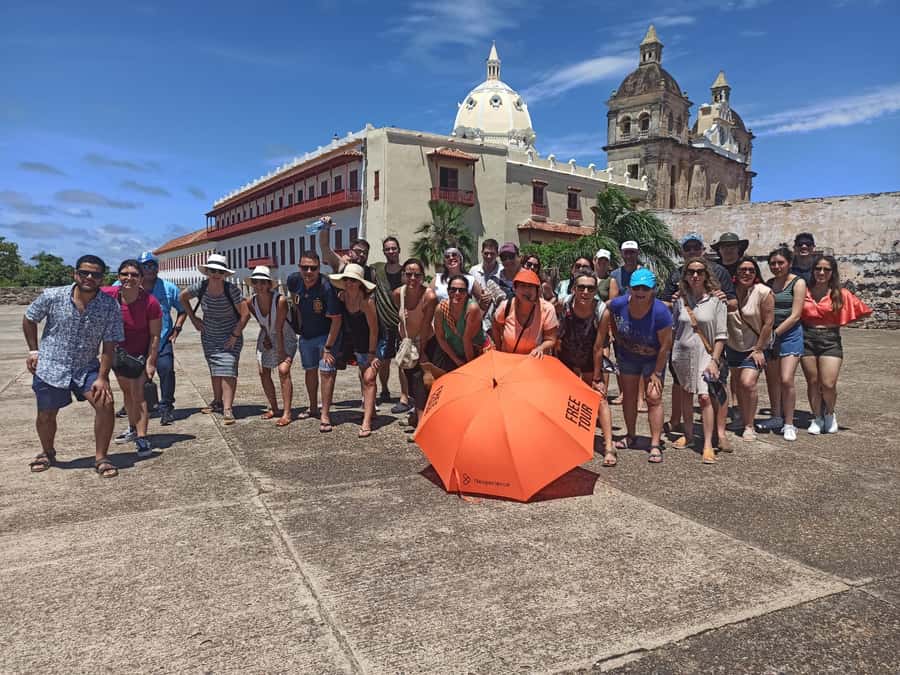
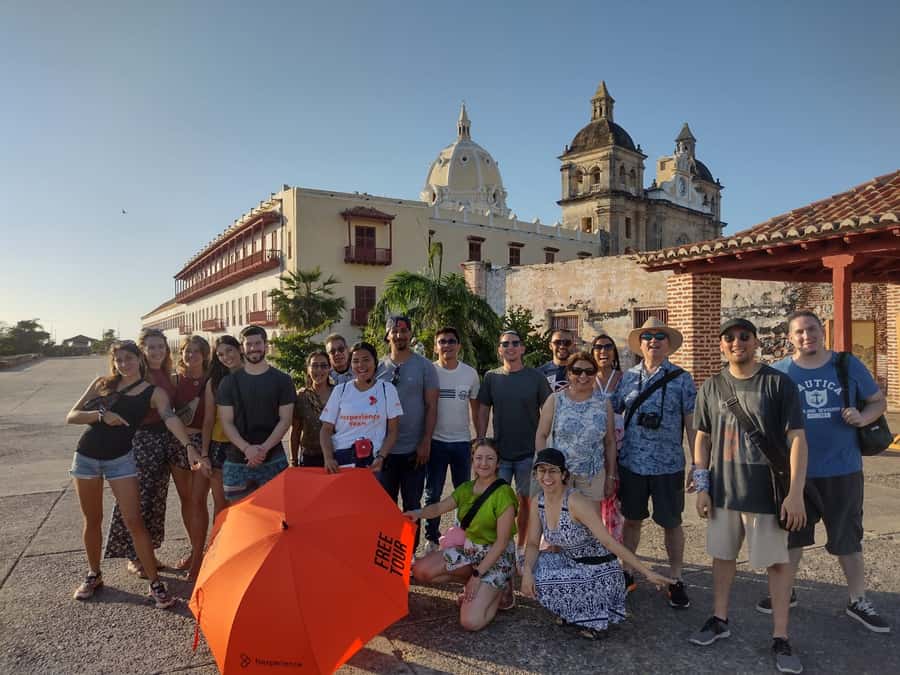
Religion is a big part of Cartagena’s architecture, and the tour gives you a centered stop at San Pedro Claver, also known as Slave of the Slaves. You see the church and museum-monastery complex tied to his legacy, and you learn how it connects to human rights.
This moment is more than a religious landmark. It is a pivot point in the tour, from the story of suffering to the story of response, advocacy, and moral weight. It helps the tour avoid the common problem of “history tourism” that only shows pain without explaining meaning.
If you want to understand Cartagena as a city that remembers, not just a city that sells souvenirs, this is the part that makes the tour feel grounded.
San Ignacio Bastion and why pirates shaped the walls
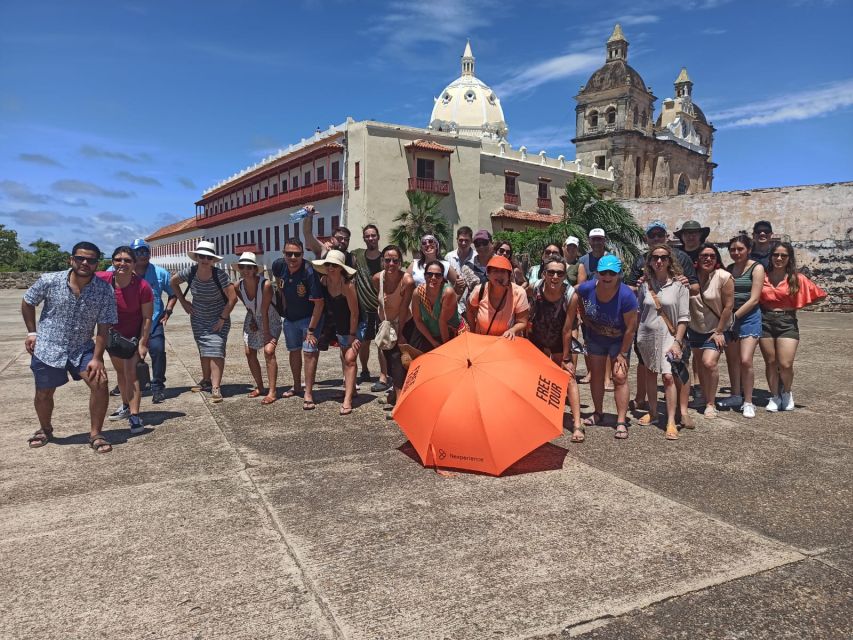
Then you go to San Ignacio Bastion, described as built to defend Cartagena’s bay, sometimes called the Bay of Souls, from pirate attacks. This is where your guide translates military design into plain language.
You’ll hear how Spanish military constructions and strategies influenced the city’s defensive layout. Bastions are not just rocks and angles, they are tools for controlling sightlines and movement. When you stand where the fortifications were meant to work, the walls start making sense instead of just looking impressive.
This is also a great stop for photos, but do not rush it. If you let your guide explain the defensive logic, the views feel earned.
Plaza Bolívar and the refresh pause you actually need
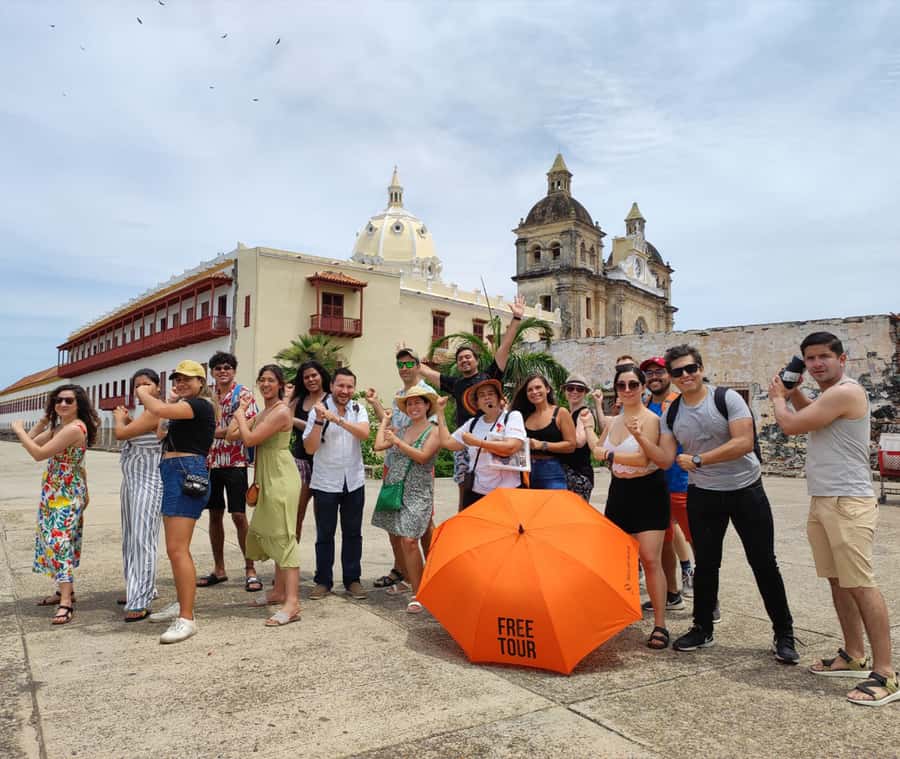
After the fort area, the tour reaches Plaza Bolívar, in homage to a precursor of independence. This also works as a natural breather.
I like the placement of this pause. It breaks up the heavier historical content and gives you a chance to reset your head before the tour turns toward Getsemaní culture. And since you are still walking, it is a helpful time to drink some water and refocus.
Centennial Park, old railway bones, and animals you might spot
Next comes Centennial Park, described as the former railway station and a relic of tropical dry forest. Your guide uses this green space to give you a break from the streets while keeping you inside the city story.
One of the nicest details from real tours is that guides often take advantage of this pause. People have shared that you might spot wildlife like monkeys, sloths, and iguanas, plus other animals in the area. Even if you do not catch everything, the park still gives you shade and a different view of Cartagena.
This is also where comfortable shoes pay off. The ground can be uneven, and the tour works better if you can walk without thinking about your feet.
Getsemaní’s corridor: umbrellas, graffiti, and a new social rhythm
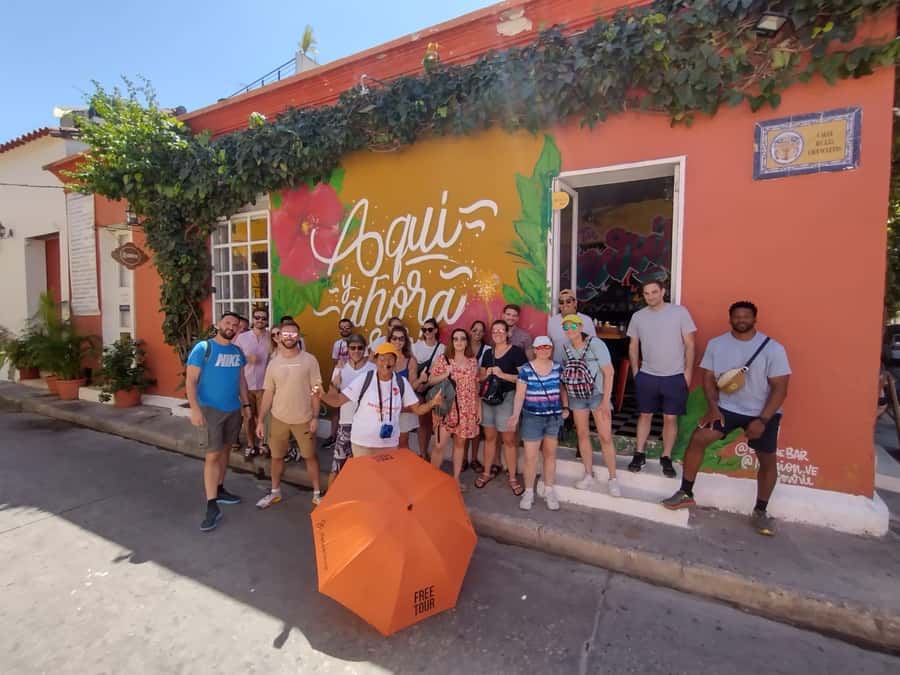
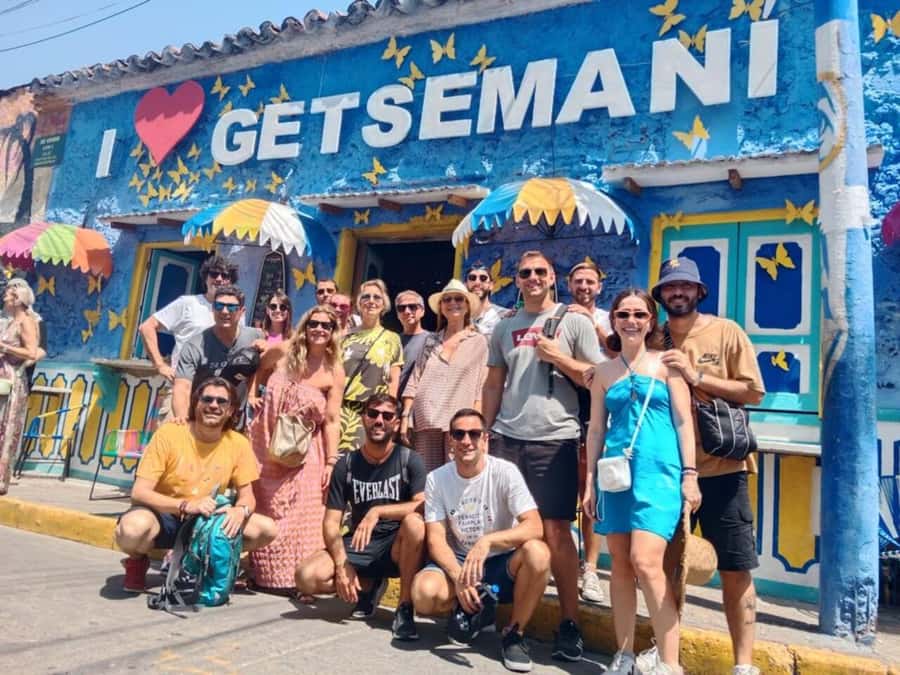
Then the tour shifts neighborhoods into Getsemaní, a cultural corridor known for umbrellas, graffiti, and unique architecture. Your guide explains the umbrella symbol as tied to advertisement and street identity, which changes how you see what might otherwise look like décor.
Getsemaní is also where the tour’s tone changes in a good way. Instead of just history and walls, you get to feel the living city: music, pride, and the way different communities blend. You’ll hear about salsa and champeta, and the guide ties those styles to Cartagena’s social evolution, not just sound.
If you want Cartagena that feels alive today, this neighborhood section is where it happens.
Callejón Ancho to Calle San Juan: ending with salsa and champeta
The final leg goes through Callejón Ancho and ends around Calle San Juan, where you can feel the sound of salsa and African champeta.
This ending matters because it wraps history into culture, so you do not leave feeling stuck in the past. It is also a confidence booster. After the tour, you know your way back through key areas, and you have a sense of what to follow when you hear music in the streets.
Price and what $12 buys you in time, context, and local guidance
At about $12 per person for roughly 150 minutes, this tour is strong value if your goal is a first serious orientation to Cartagena. For one ticket you get:
- Walled City landmarks and the logic behind them
- A guided route that includes the harsh parts of Cartagena’s history
- A cultural finish in Getsemaní with music themes
- A guide who can answer questions in real time and often gives practical pointers
You also avoid a common cost trap in Old Town. Rather than piecing together separate paid tours or trying to self-drive the story with only guidebooks, you get a narrative route built for walking. That saves money and stress.
One more practical note: food and drinks are not included, so you should plan your meals around your timing. Bring sunscreen, and if you tend to get hot easily, start hydrating early.
What to bring, and how to make it a smooth 150 minutes
This tour is not long on paper, but Cartagena heat and sun can make it feel longer. I suggest:
- Wear comfortable shoes
- Bring sunscreen
- Dress in weather-appropriate clothes
- Keep an eye out for shade breaks, since guides often try to keep groups in cooler spots
If you are carrying a phone for photos, consider a small battery plan too. You’ll take pictures at bastions and plazas, and you’ll want your battery for later restaurant hunts and directions.
Who this shared walking tour fits best
This tour fits you well if you want a balanced introduction that includes both beauty and hard history. It is especially good for:
- First-time visitors who need a map of the Walled City’s meaning
- Travelers who like storytelling that connects plazas to people and systems
- Anyone who wants to understand Cartagena’s cultural mix, including Caribbean miscegenation and how it shows up in music like salsa and champeta
- Families too, since guides have shown they can keep an eye on younger participants while still talking to adults
If you hate walking, or you only want light entertainment, you may find parts of the slavery and colonial sections heavy. In that case, you might prefer a shorter, more focused sightseeing tour.
Should you book this Cartagena Historic Center and Getsemaní tour?
Yes, if you want the fastest way to understand why Cartagena looks the way it does, and why it feels the way it feels. This is one of those tours where the route is the lesson, from the Clock Tower area to San Pedro Claver, then out into Getsemaní’s music and street identity.
Skip it only if you cannot handle long outdoor walking, or if you prefer history told in a purely cheerful way. Cartagena has pain in its past. This tour respects that reality and still gives you a lively ending.
FAQ
How long is the tour?
The tour lasts about 150 minutes.
Where do I meet the guide?
Meet at Plaza Cervantes and Camellón de los Mártires, in front of the Clock Tower. Look for the orange umbrella.
What areas are covered during the tour?
You cover the Historic Center, including the Walled City areas, and you also visit the Getsemaní neighborhood.
Is food or drinks included?
No. Food and drinks are not included.
What languages is the tour offered in?
The guide speaks English and Spanish.
Is this tour wheelchair accessible?
Yes, the tour is listed as wheelchair accessible.
What should I bring?
Bring comfortable shoes, sunscreen, and comfortable clothes suitable for the weather.
Does the tour include tips?
The experience is described as a walking tour where your tip is already paid.
What kind of history and culture will I learn?
You’ll hear about conquest, colony, and independence, the history behind the walls, and cultural themes like salsa and champeta, plus references to social order in the city.
More of Getsemaní
- Cartagena Antigua & Barrio Getsemani group with audio system
★ 5.0 · 658 reviews - Getsemani neighborhood in group: art and culture with Audio System
★ 5.0 · 447 reviews - Cartagena Private Tour of the Walled City & Getsemani
★ 5.0 · 227 reviews - Street Food Tour in Cartagena Walled City and Getsemani
★ 4.5 · 137 reviews
Recently reviewed around Cartagena
- Trendy Cartagena photo/ Video Tour★ 2.9 · 4 reviews
- Playa Blanca Baru from Cartagena City Center★ 4.0 · 4 reviews
- Sunset in Cartagena Bay with Boat Dances and Bar★ 5.0 · 4 reviews
- Taste Cartagena: Street Food and Full City Tour with Expert Guide★ 4.5 · 4 reviews
- Colombian Fruits and Paila Ice Cream Tasting★ 5.0 · 4 reviews
- Private Transfers Airport and Hotels in Cartagena★ 5.0 · 4 reviews
- private tours cartagena de indias★ 4.5 · 4 reviews
- Mud Volcano and Day Trip in Hotel with Lunch★ 5.0 · 4 reviews
Getsemaní, compared.
Private Walking Tour in Cartagena Walled City & Getsemaní
Read our review →
Cartagena Antigua & Barrio Getsemani group with audio system
Read our review →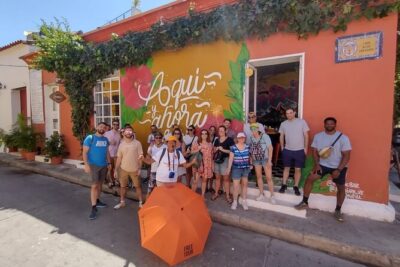
Historic Center & Getsemaní Shared Tour in Cartagena
Read our review →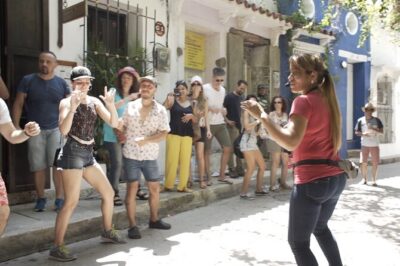
Getsemani neighborhood in group: art and culture with Audio System
Read our review →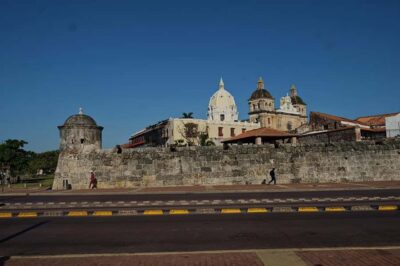
Cartagena Private Tour of the Walled City & Getsemani
Read our review →
Street Food Tour in Cartagena Walled City and Getsemani
Read our review →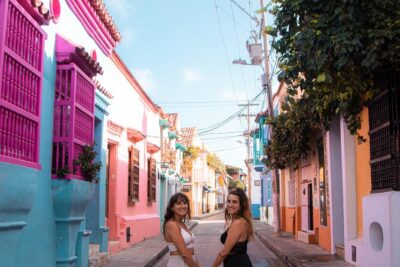
Private Walking Tour in Walled City and Getsemani Cartagena
Read our review →Browse the lists this tour appears in