
Reviewed · GRAFFITI TOURS
Walls of Wonder: Immersive Journey through Distrito Graffiti
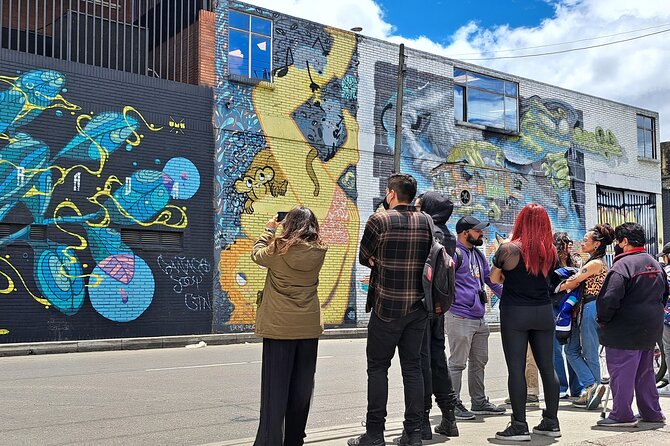
Bogotá has plenty of street art, but this walk is special because it treats murals like stories. You move from wall to wall in a working-city pocket and watch how artists use color, realism, and symbolism to talk about identity, politics, and the environment.
I love the guided context. Guides like Jay, Jahir, Camilo, and Jeff explain what you are seeing and why it matters, and they answer questions in a way that works even if you are new to graffiti. I also love the sheer variety, from mini stencils of workers to a giant hyper-real portrait and huge industrial-scale murals. The only real consideration is logistics: this is a walking tour, and it is not recommended for travelers with limited mobility.
You also get strong value for $25. The tour runs about 1 hour 30 minutes, keeps the group small (max 15), and the stops are set up so you can focus on the art without worrying about paid entrances. Just bring water and plan for a lot of standing and looking up.
Key things I’d prioritize before you go
- A small-group route capped at 15 people, so questions stay easy.
- Political and cultural explanations that connect murals to Colombian realities, not just aesthetics.
- Real artists, real styles, including Belgian artist Jaune and Colombian artist Guache.
- Big-to-small scale mix, from four-story realism to tiny worker stencils.
- Free admission at each mural stop, so you pay for the guide, not tickets.
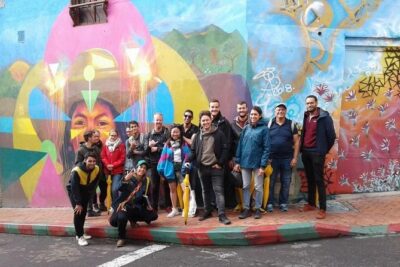
- A practical ending, with a final group photo and art-minded takeaways about how city change happens.
Walls of Wonder in Bogotá, where street art meets real city life
This is the kind of street art tour that makes you look twice at a city you thought you already understood. Bogotá’s murals are not just decoration. Here, the walls act like public pages, where artists translate ideas you can’t always say out loud into images you can walk up to.
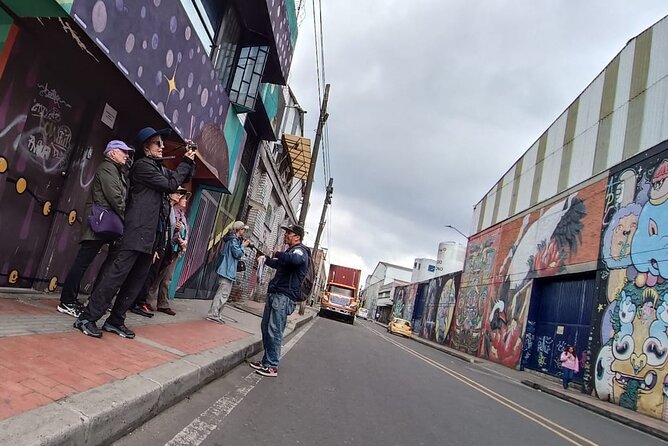
The route is compact enough to feel focused, but it still covers enough ground to show the range of the Bogotá street art scene. You get giant wall work, smaller stencil detail, and murals that use symbolism you can interpret in your own way after the guide points you to the clues.
Also, the tour is in English, based on past guests’ experiences. That matters because graffiti can be visual and still complex, and good interpretation turns your photos into real understanding.
More Graffiti Tours in Bogotá
- Graffiti Tour: a fascinating walk through a street art City
★ 5.0 · 1,074 reviews - Graffiti Tour in La Candelaria Bogotá
★ 5.0 · 315 reviews - Bogotá: La Candelaria Graffiti & Urban Art Guided Tour
★ 4.7 · 250 reviews
The first murals: Distrito Grafiti and the idea of public voice
You start at the Distrito Grafiti area, where you get the big picture behind the project. The point is showcasing diverse international voices, but also doing it on huge wall surfaces where the art becomes part of daily movement, not a museum detour.
Right away, you’ll learn how these murals are meant to be read. That reading skill becomes your superpower for the rest of the walk, because you start noticing layers: technique, subject, and the social message underneath.
Even though this is early in the tour, guides set expectations clearly here, and that is one reason people rate the experience so highly for newcomers. It is less like a random photo stop and more like a guided decoding session.
Soplascol sas: the artist as a character, not just a maker
At Soplascol sas, you get a mural showing a graffiti artist in a hoodie, cap, and carrying spray cans and rollers. On the surface, it looks like a straightforward tribute to the craft. But the image also works like a statement: street art is made by real people, using real tools, in a street-level environment.
This is a great stop if you like seeing craft skills represented. You are not only looking at the final design, you are looking at the role of the artist as someone with routine, gear, and a visible presence in the city.
Eds Terpel San Andres: coca symbolism and the line between coca and cocaine
One of the more thought-provoking stops is Eds Terpel San Andres, where a coca plant emerges from a skull. The guide’s explanation matters here, because the symbolism could be easy to misread.
What you take away is the distinction between coca and cocaine, and how cultural context changes the meaning of the plant in art. This is the kind of mural where the conversation shifts from visual impact to ethics, history, and how public narratives get shaped.
A different kind of day out of Bogotá:
- Bogotá Bike Tour
★ 5.0 · 3,329 reviews - Bogota: Bicycle City Tour
★ 4.9 · 2,156 reviews - Zipaquirá: Salt Cathedral Group Tour with Pickup
★ 4.8 · 1,606 reviews - La Candelaria, Monserrate and Museums Bogotá Private City Tour
★ 5.0 · 1,567 reviews
TEXTILES FACTORY TEXTRAMA: wild style and the “vandal” origin story
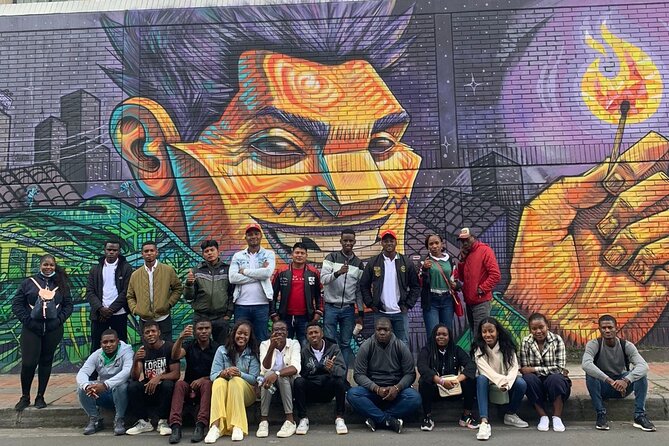
At TEXTILES FACTORY TEXTRAMA, you explore wild style graffiti as abstract art. The writing itself can look chaotic until you learn how wild style works, then it starts to feel like visual rhythm.
The guide also brings in the origins argument, that graffiti was once labeled as vandalism. In this district, the message becomes that the community and the city have roles in what gets recognized, preserved, and turned into legitimate public expression.
This stop is a good reminder that style is not just style. Techniques often carry a social timeline, and the district is built to show that evolution.
Kr 54 – Cl 5C: Belgian stencils for the workers people overlook
Next is Kr 54 – Cl 5C, where you see realistic-style mini stencils of workers like builders and cleaners. This is a smart pivot from big flashy murals to a more careful, human-scale way of seeing.
You’ll learn these are created by the Belgian artist Jaune. What makes it meaningful is the subject matter. Instead of focusing only on celebrities or dramatic figures, the stencils point to jobs that keep the city running, but usually get ignored.
If you love street art that respects everyday labor, you’ll likely spend extra time here. The details are easy to miss if you are only rushing for photos.
Metalfischer: a uterus made of water and the frailejon plant
At Metalfischer, the mural shows a uterus made of water, inspired by the frailejon plant found in Colombia’s highland wet ecosystems. The concept sounds unusual, and that’s the point.
You’ll connect the imagery to a theme of growing equity, and you’ll hear how local ecology can become body symbolism and social meaning at the same time. A mural like this makes you slow down. It is not asking for one quick interpretation.
This is also a stop created by a local female artist, which adds another layer: the message feels rooted in place, not imported aesthetics.
Centro Creativo Textura: cartoon tucans, indigenous communities, and a jaguar-on-the-arm portrait
Centro Creativo Textura brings a lighter, storytelling side to the route. You see a colorful mural with cartoon tucans and indigenous communities celebrating Colombia’s cultural heritage.
Then you get a realistic portrait of a woman with a small jaguar walking on her arm. The symbolism points to harmony between humans and nature, and the guide helps you connect the cartoon style and the realism as two ways of telling the same cultural truth.
If you like art that feels both playful and grounded, this stop works. It gives your eyes a break from the heavier symbolism while still keeping the meaning on the wall.
LA AREPERIA DC: a black and white mental house on fire
At LA AREPERIA DC, you encounter a giant black and white acrylic illustration. The image shows a character watching their mental house burn, as a metaphor for beliefs being transformed and resilience.
The black and white choice is a huge clue. It strips away distraction so you focus on the internal crisis and the idea of rebuilding. For many people, this is the emotional center of the walk, because it turns abstract mental struggle into a visible scene.
Even if you are not sure what your beliefs are until someone breaks them down, you can still feel what this mural is saying.
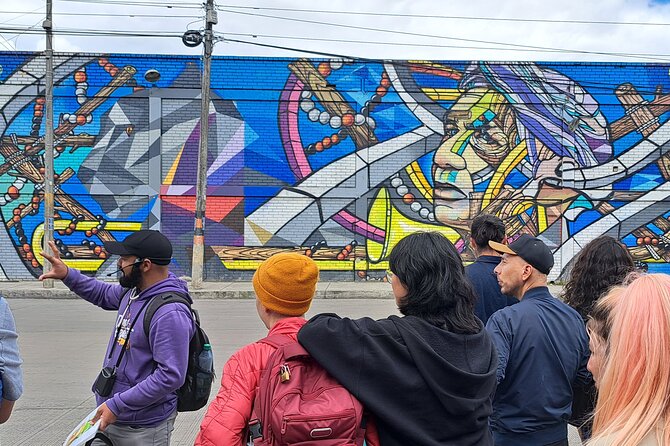
Industrias Proton Ltda.: trombone, rosary, and salsa spirituality
Industrias Proton Ltda. offers a mural of a man playing the trombone with a rosary coiled around the instrument. The message connects spirituality and music, especially salsa.
It’s an elegant idea because it does not treat faith as separate from art. Instead, the rosary becomes part of the instrument, as if devotion and rhythm are the same language.
This is the kind of stop that makes the tour feel genuinely Colombian. You are not just learning art techniques, you are learning how culture behaves in the streets.
TelefonoPostobón Planta San Rafael Industrial: Guache, sentipensar, and plastic in the ocean
At TelefonoPostobón Planta San Rafael Industrial, you get one of the biggest anchors of the whole route.
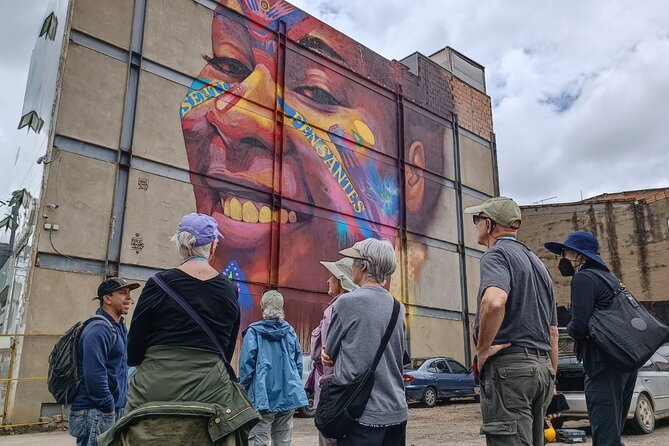
First, there is a giant portrait by renowned Colombian artist Guache featuring an Afro-Colombian woman in his recognizable style. The artwork connects to sentipensar, which blends contemporary and ancestral indigenous philosophy. It’s the kind of concept that can sound theoretical, but the mural makes it feel human: the idea shows up in the face, the posture, and the presence.
Next, you reflect on environmental issues with a mural depicting a plastic bag floating in the ocean, calling attention to pollution and waste. After that, you end this stop with an artwork featuring an old telephone, which triggers nostalgia and reminds you how fast communication changes.
This stop alone can change how you see street art. It holds multiple themes in one industrial wall setting: identity, philosophy, environment, and technology.
COMTUCAR S.A.S: a four-story hyper-real old man by Sabotaje al Montaje
COMTUCAR S.A.S is the tour’s scale shock. You see a four-story-tall hyper-real portrait of an old man created by Spanish artist Sabotaje al Montaje.
This is not graffiti-as-tagging. It is portraiture as public monument. The realism forces you to walk closer, tilt your head, and realize you are standing next to a face built at giant size.
And because it’s so tall, it does something practical too. It helps you gauge distance and layout of the neighborhood, which makes the rest of the walk feel easier to navigate.
FIORENZI CEDI: trains, muralism mixing, and a Brazilian indigenous symbol totem
At FIORENZI CEDI, the murals explore graffiti on trains and how muralism styles coexist on buildings. The guide’s explanation helps you understand the visual politics of art scenes, where different styles compete, overlap, and influence each other.
You also see a giant totem adorned with a Colombian indigenous symbol, created by a Brazilian crew. The artwork uses psychedelic color and directly celebrates indigenous cultures.
If you like the idea of street art as an ecosystem with different communities influencing one another, this stop makes sense fast. It shows that styles are not isolated. They share walls, viewers, and meaning.
Todo Cajas Jemd S.a.s: alien sci-fi, then a school day poem with a bird
Todo Cajas Jemd S.a.s shifts you into imagination. You’ll spot a sci-fi mural of an extraordinary alien creature grasping planets, which invites you to think about the mysteries of the universe.
Then you also see a poetic mural featuring a child with a school bag shaped like a book. A clock marks the beginning of class, and the child looks toward a magnificent bird. The message is learning, time, and wonder.
This is a great stop for families, and also for solo travelers who want the tour to end without feeling only heavy. It gives you something hopeful to carry with your photos.
Inversiones Merlup Sas: group photo and why the art changes how you see Bogotá
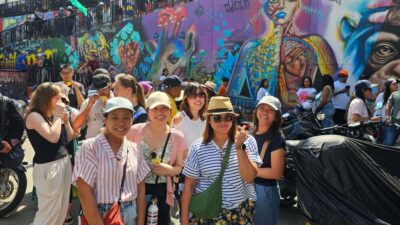
The final stop is where the tour becomes more than just viewing murals. You can take a group picture, and you get inspiring insights about the transformative power of art in Bogotá.
This ending matters because it ties together what you saw earlier. You spent 90 minutes collecting symbols about identity, spirituality, labor, ecology, and belief systems. The wrap-up helps you connect those symbols into one bigger theme: public art shapes public thinking.
By the end, you usually leave with a new habit. You start noticing walls as messages, not blank surfaces.
Price and value: $25 for a guided mural education, not just pictures
At $25 per person for about 1 hour 30 minutes, this is a value deal compared to paying for separate museum entrances or booking multiple short stops.
You are paying for the guide’s framing. And based on the guide names and how people describe their experience, the best part is how they connect the visuals to political history and culture. The route is structured to keep your time efficient, but you still get enough stops to feel you saw a real slice of Bogotá street art.
Food and tips are not included, so budget for a drink afterward. The tour is short enough that you can do it between other plans, but you will still likely want something after you spend the afternoon focused upward.
Who this tour fits best
This walk works especially well if you want:
- A street art tour with meaning, not just aesthetic spotting
- A route that blends political context with modern techniques
- A guided experience that helps novices understand what they are looking at
It may feel less ideal if you have limited mobility, since it is a walking tour and the route is outdoors. On the upside, it is near public transportation, which makes getting there and leaving easier.
The group is capped at 15, so it tends to feel social but not crowded.
Should you book Walls of Wonder through Distrito Graffiti?
If you care about understanding street art in real social context, you should book it. This is one of those Bogotá experiences where the guide’s explanation turns murals into a story you can repeat later.
The strongest reasons to go are the political and cultural insights, the mix of styles and scale, and the consistently high ratings across different guides like Jay, Jahir, Camilo, and Jeff. It is also beginner-friendly, so you do not need to be a graffiti expert.
Only skip it if walking for about 90 minutes is not realistic for you. Otherwise, bring curiosity and a good camera, and get ready to see Bogotá’s walls as public thought.
FAQ
How much does the Bogotá Walls of Wonder graffiti tour cost?
The price is $25.00 per person.
How long is the tour?
It lasts about 1 hour 30 minutes.
Where does the tour start and end?
It starts at Av. de las Américas #50-85, Puente Aranda, Bogotá, Colombia, and it ends back at the meeting point.
How many stops are included in the route?
The tour includes 14 mural stops in the Distrito Graffiti area.
Are admission tickets included?
The stops listed on the route show admission ticket free.
Is food provided during the tour?
No. Food and tips are not included.
Is the tour suitable for most travelers?
Most travelers can participate.
Is the tour recommended for travelers with limited mobility?
It is not recommended for travelers with limited mobility.
What is the group size?
The maximum group size is 15 travelers.
Is confirmation provided after booking, and when?
You receive confirmation within 48 hours of booking, subject to availability.
Can I cancel for a full refund?
You can cancel for a full refund if you cancel at least 24 hours in advance. If you cancel less than 24 hours before the start time, the amount paid is not refunded.
Recently reviewed around Bogotá
- Visit and live a colombian coffee plantation (group tour)★ 4.5 · 4 reviews
- Villa de Leyva Food Tour at Sunset★ 5.0 · 4 reviews
- Private Coffee Tour in Cachipay★ 5.0 · 4 reviews
- Bike Tour in Bogota★ 5.0 · 4 reviews
- Tour Nocturno de Tejo y Salsa en Bogotá★ 5.0 · 4 reviews
- Hike to the Rocky mountains of Sutatausa Private Day Tour★ 5.0 · 5 reviews
- Andrés Carne de Res Chía: VIP Entry with Cover & Welcome Cocktail★ 5.0 · 5 reviews
- Salt Cathedral Tour along with the Legendary Lake Guatavita★ 5.0 · 5 reviews
Graffiti Tours, compared.
Comuna 13 Graffiti Tour, Cable Car & Street Food
Read our review →
Graffiti Tour: a fascinating walk through a street art City
Read our review →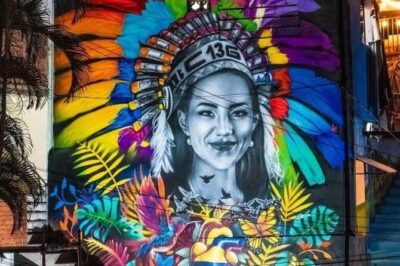
Comuna 13 Tour with Snacks And Your Own Graffiti
Read our review →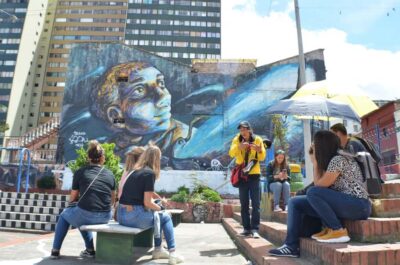
Comuna 13 and Graffiti Guided Tour with a Local
Read our review →Browse the lists this tour appears in