Medellín is one of those cities where the past is not tucked away, it shows up in everyday streets, names, and memories. This Violence & Post-conflict tour takes you on a guided walk from Parque San Antonio to Museo Casa de la Memoria, connecting the city center to the conflict and what came after.
I really like the way the tour keeps the story accurate and objective, so you get context without slogans. I also like that the focus is not just on the trafficking era, but on how people and communities pushed for change, shifting from bullets to words and ideas.
One thing to consider: this is not light material. You’ll cover years of violent dynamics and the city’s ongoing struggle, and you also need to be comfortable walking about 5 km on uneven urban surfaces.
Key highlights if you like your travel with context
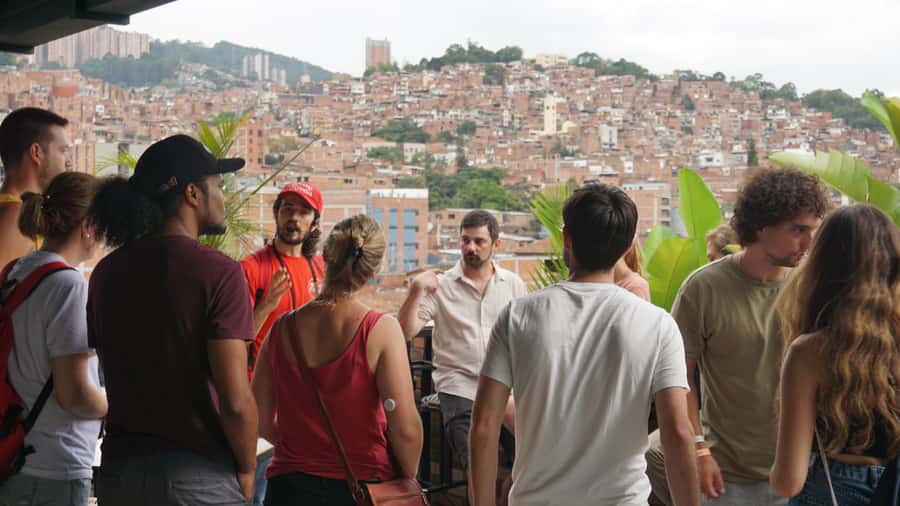
- City-center route, not a Pablo Escobar tour: You focus on violence dynamics and post-conflict change, not one celebrity story.
- Starts at Parque San Antonio, ends at Museo Casa de la Memoria: Two anchor points that bookend the narrative.
- 1982 to 2015 timeframe: You get a long view, including what happened after the Medellín Cartel.
- Urbanization of war in plain language: Guerrillas, paramilitarism, and drug traffic, explained as part of city life.
- Peace and reconciliation, with an urban lens: How agreements and reconciliation efforts look on the ground.
- Guides that teach and engage: Miguel is praised for thorough explanations, and Sebastian is praised for an engaging, friendly style.
A Medellín City-Center Walk Through War, Peace, and What Comes After
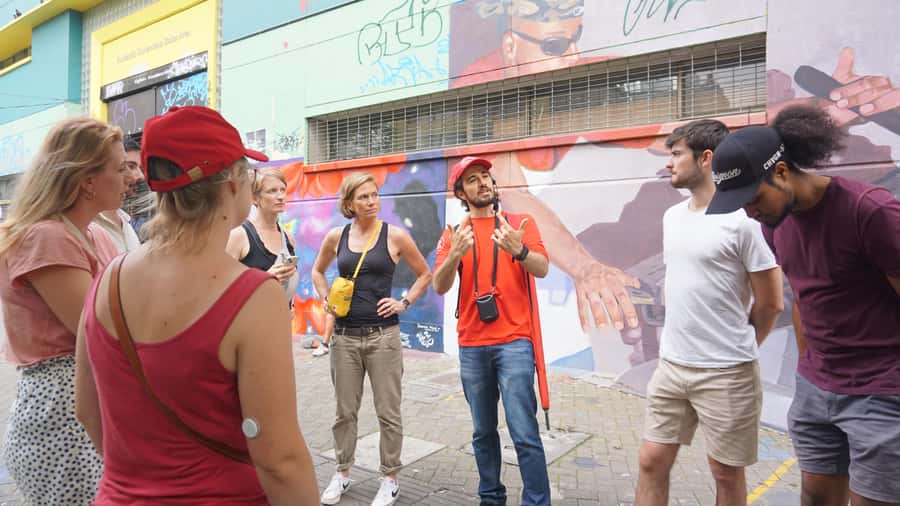
If you only know Medellín from the usual postcard stories, this tour adds the missing layer. It’s a walking route through downtown Medellín where the guide ties everyday places to bigger forces like the drug-trafficking war, social struggle, and the long road to post-conflict change.
You’ll spend roughly 150 minutes on the ground, with a slower pace plus listening stops. And you’ll walk about 5 km, so it’s not a quick photo stroll. It’s designed for people who want a clearer understanding of how the city functions, not just how it looks.
This is also a good sign for expectations. The tour is explicitly not about Pablo Escobar, so if that is what you are hoping for, you should choose another option.
A few more Medellín days worth comparing
- Medellin: Comuna 13 Graffiti Tour, Cable Car & Street Food
★ 4.8 · 9,046 reviews - Comuna 13 Graffiti Tour with Street Food
★ 5.0 · 7,503 reviews - Guatapé Tour: Piedra del Peñol with Boat Tour, Breakfast, Lunch
★ 5.0 · 7,035 reviews
Before You Go: What You Should Be Ready For
First, bring the right mindset. The tour covers difficult topics such as cultural, social, and economic consequences of the drug-trafficking war period, plus how the conflict became part of everyday urban life. The goal is not to shock you, it’s to help you connect causes to outcomes and see why reconciliation is complicated in a city.
Second, bring the practical gear. You’ll want comfortable shoes and comfortable clothes, because you are walking and stopping. Bring water or your preferred hydration method, and consider sunblock if the weather is bright.
Rain happens, so plan for it. Umbrellas and capes are not allowed, but you should bring a rainproof coat. If you’re visiting during the rainy months, mosquito repellent could be useful from March to June.
Last, know the basic rules of the experience. Alcohol and drugs are not allowed, and video or audio recording is not allowed. It’s also not set up for party groups, so expect a respectful, question-friendly atmosphere.
Your Guide and the English That Makes Heavy Topics Work
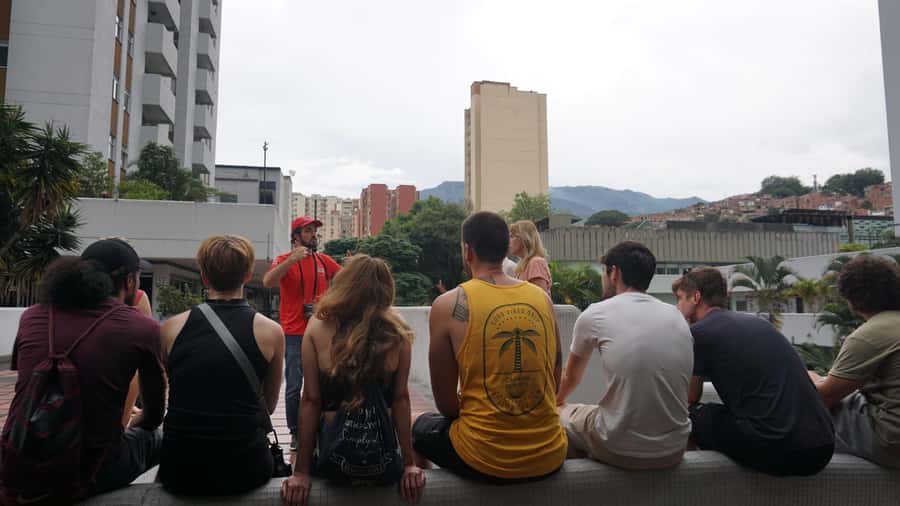
This is an English-speaking tour with a live local guide. What matters here is not just language, it’s how the information is handled. In the feedback I saw, guides like Miguel are praised for being super thorough, with clear explanations that fill in gaps people didn’t know before.
Other guides, including Sebastian, are praised for being both friendly and engaging. That combination matters on a topic like this. When you’re hearing about changes in violence over decades, a guide who can explain patterns and connect them to real human decisions helps you follow the story instead of getting lost.
You’ll also get recommendations for material you can check out later, plus suggestions for Medellín’s cultural offer centered on the places you visit. That’s a smart add-on because it lets you keep learning after the walk ends.
Parque San Antonio Start Point: Getting Your Bearings in Medellín
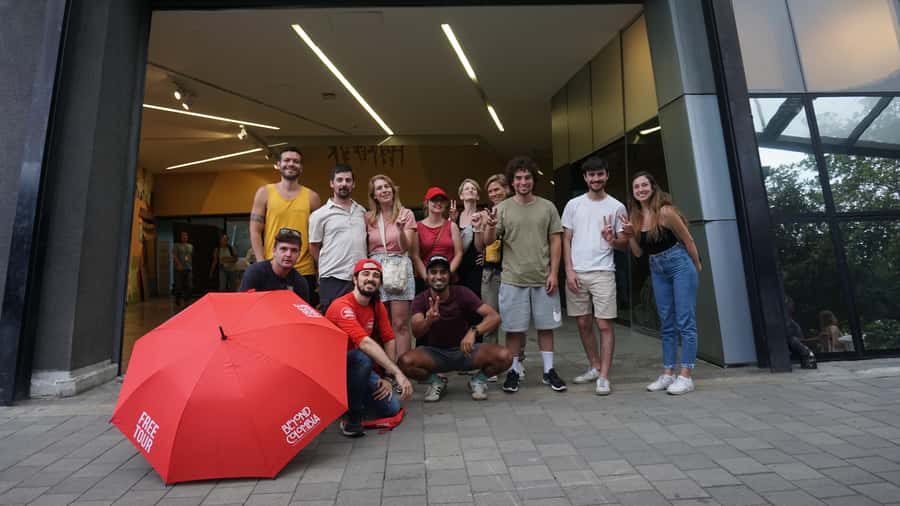
The tour begins at Parque San Antonio, right next to the Botero birds. You’ll find the group by Beyond Colombia’s red umbrellas.
I like starting a context-heavy tour at a public square like this. It’s a low-pressure way to get your bearings fast, and it helps you settle into the idea that the story is not locked in a museum. It’s happening in the open, around where people still meet, commute, and live.
From that starting point, the guide frames what you’re seeing in the center of Medellín. You’ll get a baseline about the drug-trafficking war period, including the conditions that helped violence grow and what it did to daily life in social and economic terms.
If you’re the kind of traveler who likes to ask questions, this is a good early moment. The guide encourages you to be ready with questions about the difficult topics, because the walk is built around discussion, not a one-way lecture.
A different kind of day out of Medellín:
- Day Trip To Guatapé with ,Breakfast, Lunch and Boat Ride
★ 5.0 · 2,996 reviews - Comuna 13 Graffitour knows the urban art district of Medellín
★ 5.0 · 2,856 reviews - Tour to Guatape, Piedra del Peñol, lunch, snacks boat trip
★ 5.0 · 2,658 reviews - Half Day Bike Tour in Medellin – Local snack, Coffee or Beer
★ 5.0 · 2,509 reviews
Downtown Medellín as a Lesson in the Urbanization of War
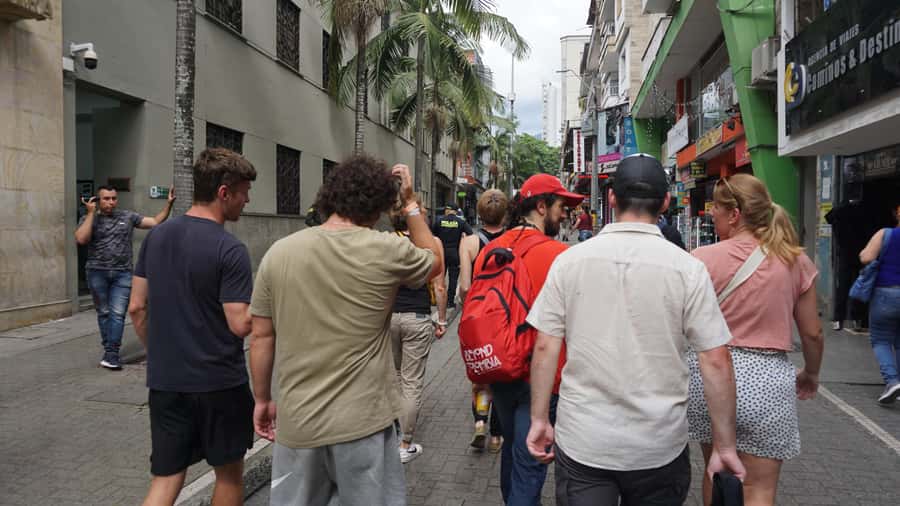
Once you move through the downtown area, the tour shifts from broad background to how conflict becomes part of city space. This section is where the tour really earns its value, because it talks about the urbanization of war: guerrillas, paramilitarism, and drug traffic, and how those forces shaped the way people navigated Medellín.
What you’ll learn here is not just who fought, but how the conflict changed life. The topics include cultural, social, and economic consequences, which is the difference between knowing names and understanding impact.
You can think of it like this. When war enters a city, it affects what people do for work, where they feel safe, who has power, and how families plan for the future. Even if you don’t live through the era, the guide helps you see the logic of why communities responded in different ways.
At the same time, this isn’t framed as one faction’s story. The tour is designed to be accurate and objective, and it’s meant to help you understand motivations, practices, and transformations of multiple characters and institutions connected to war, peace, and resistance.
From Bullets for Words and Ideas to Community Strategies
One of the most interesting threads in the tour is the idea of changing strategies over time. The tour specifically covers the process of changing bullets for words and ideas, which is basically about how people and communities shifted their approach to survival and influence.
In practical terms, this part of the walk helps you notice something important. Violence often looks like chaos from the outside, but the story of what came next includes organizing, community action, and efforts at peace that come from the ground.
The tour also talks about strategies, heroes, and communities in the pace making and social struggle of Medellín. That wording matters. It signals that the focus is not only on violence as an event, but on people as agents who tried to shape what came after.
If you’re worried this will be overly political, take comfort in the structure. The guide is meant to provide objective knowledge, and you’re encouraged to ask questions. You’ll walk away with more than one perspective in your head, not just a single moral.
Post-Cartel Medellín and Donbernabilidad Through 2015
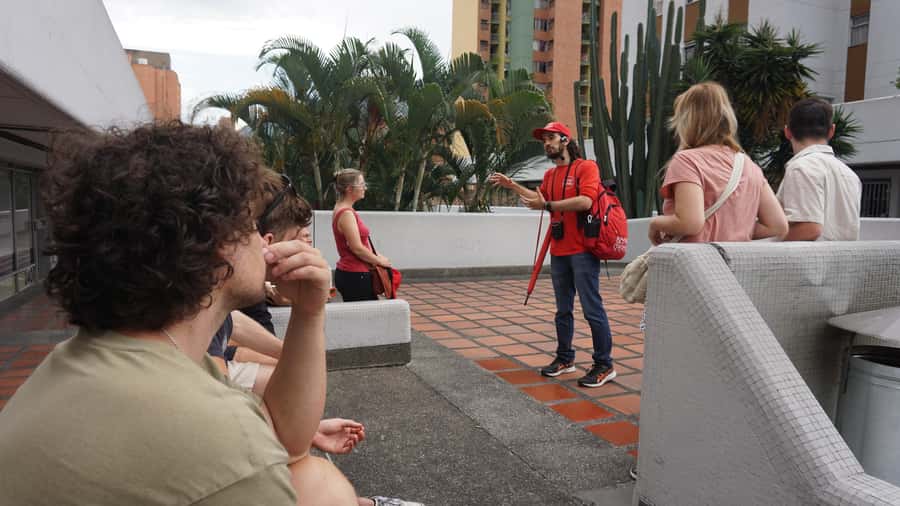
A key point in the tour is what happens after the Medellín Cartel era. The tour covers changes from 1982 to 2015, and it includes what occurred after the cartel period with Donbernabilidad, a term used to describe the struggle for governance and order in the aftermath.
You’ll also hear about the presence of the past in today’s city. That’s the part I find most useful for travelers, because it explains why Medellín feels like it is always negotiating memory and change at the same time.
The tour also includes the role of twenty first century peace agreements and reconciliation in an urban context. That helps you understand that reconciliation is not a switch you flip. In a city, reconciliation has to deal with neighborhoods, institutions, and everyday realities, not just signing documents.
And yes, it’s heavy material. But the tour keeps it structured. It’s not random tragedy. It’s a timeline, with a focus on consequences and on how people tried to move forward anyway.
Ending at Museo Casa de la Memoria: Resistance and Ongoing Conflict
The walk finishes at Museo Casa de la Memoria, and that end point matters. Museums can turn history into something still, but this one is focused on memory and the living weight of conflict.
Ending here helps you connect what you heard in the street to what memory looks like in a dedicated space. You’ll talk about the transformation of the city, including resistance and memories along an ongoing conflict.
This closing segment is also a good moment to reflect on the tour’s main promise. You’re seeing Medellín’s resilience and hope, but not by ignoring the violence. You’re seeing how the city changed because people fought to build a better present while carrying the past.
If you enjoy learning that continues after the tour, this is where the guide’s recommendations can be especially helpful. You’ll be in a mindset that makes it easier to choose what to see next, instead of wandering with no direction.
Price, Walking Time, and Real Value at Around $13
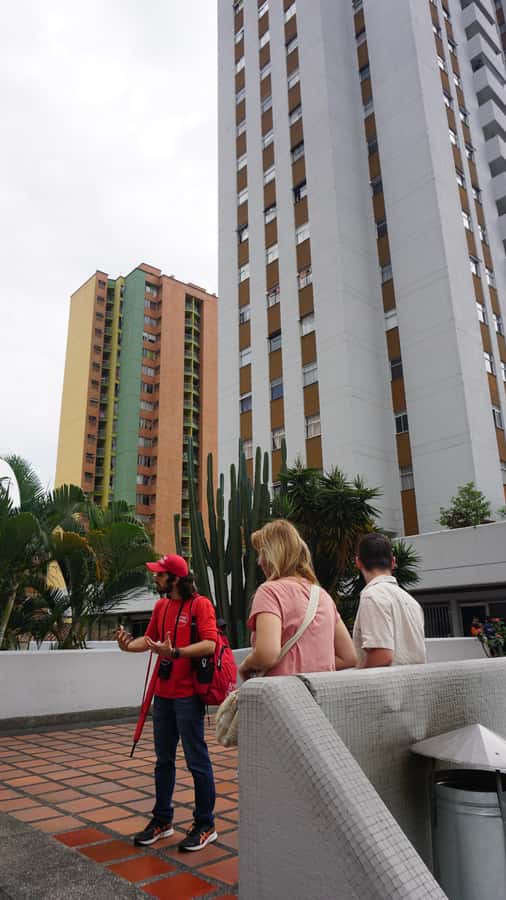
At $13 per person, the price is genuinely low for a guided, English-language, city-context tour that covers decades of conflict plus post-conflict transition. The value comes from the framing, not from a checklist.
You’re not paying for attractions or entrances, since tickets and entrance fees are not included. You’re paying for interpretation: the guide’s ability to connect violence dynamics to the physical city and to explain how post-conflict realities still show up today.
Duration is about 150 minutes (roughly 3 hours). That’s a solid time block for learning without burning your whole day. You also avoid the hassle of coordinating transportation, since the tour is walk-based with resting stops and it does not include rides from your hotel.
If you’re counting your time in Medellín and want depth, this is a smart use of an evening or a morning slot. If you want only scenic views and light stories, you’ll likely prefer something else.
Who Should Book This Tour (and Who Might Skip It)
Book this if you want Medellín to make more sense. It’s ideal if you care about history with a human focus, and you like explanations that link social struggle, urban change, and reconciliation efforts.
It also fits well if you ask a lot of questions. The tour explicitly recommends you come with an open mind and be ready to ask about difficult topics.
Skip it if you need an easy-going tour with minimal emotional weight. Also skip if mobility is a challenge. The tour is not suitable for wheelchair users, children under 18, and people over 70, and it involves walking about 5 km.
Should You Book This Violence & Post-conflict Tour?
If your goal is to understand Medellín beyond the surface, yes, I think you should book it. You’ll get a clear, structured explanation of drug-trafficking war conditions, the urbanization of war, what changed after the cartel era, and how ideas about peace and reconciliation show up in an actual city.
If you’re unsure, here’s the quick test. Ask yourself if you’re comfortable with real topics and if you enjoy a guide-led narrative in English for about three hours while walking around downtown. If both answers are yes, this tour is one of the most meaningful ways to spend time in Medellín.
FAQ
Is this tour a Pablo Escobar tour?
No. It is not a Pablo Escobar tour. The focus is on Medellín’s violence dynamics and post-conflict transition.
How long is the tour?
It lasts approximately 150 minutes, about 3 hours.
Where do I meet the tour group?
Meet at Parque San Antonio, next to the Botero birds, with Beyond Colombia’s red umbrellas.
Is the tour in English?
Yes, the tour has an English-speaking guide.
What does the tour cover in terms of time period?
It covers changes in Medellín’s violence dynamics from 1982 to 2015, including what happened after the Medellín Cartel.
What is included in the price?
You get an English-speaking tour guide, accurate and objective knowledge, sightseeing of important places in central Medellín framed in the conflict and reconciliation story, and recommendations for material and cultural options.
Are museum tickets or entrances included?
No. Tickets or entrances are not included, and the tour says it will not take you to places where sudden extra charges apply.
Do I need transportation from my hotel?
No transportation is included. The tour is walking-based with resting stops.
What should I bring?
Bring comfortable shoes and clothes, water or hydration, sunblock, and a rainproof coat (umbrellas or capes are not allowed). Mosquito repellent could be useful during the rainy season.
Who might find the tour unsuitable?
It is not suitable for wheelchair users, children under 18, and people over 70.
What is the cancellation and pay-later policy?
It offers free cancellation up to 24 hours in advance for a full refund, and it also has a reserve now and pay later option.
Recently reviewed around Medellín
- Coffee Tour – All inclusive – Medellín★ 4.0 · 4 reviews
- Paragliding Over Medellín + Gopro & Photos + Private transport.★ 5.0 · 4 reviews
- Shared Tour Commune 13 and Metro Cable La Aurora de Medellin★ 4.5 · 4 reviews
- Medellín Spa: Hydrotherapy & Themed Massage with Teppanyaki★ 5.0 · 4 reviews
- Night Out Gay Bar Crawl in Medellin★ 4.0 · 4 reviews
- White Water Rafting Near Medellin★ 5.0 · 4 reviews
- Bilingual private transport to the airport.★ 4.5 · 5 reviews
- African Music Roots Private Tour in Comuna 13, Medellin★ 5.0 · 5 reviews
Medellín Tours, compared.
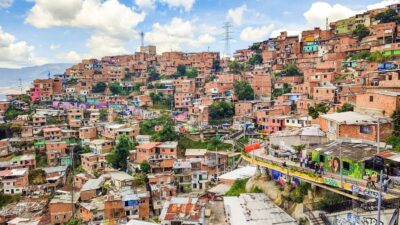
Comuna 13 Graffiti Tour, Cable Car & Street Food
Read our review →
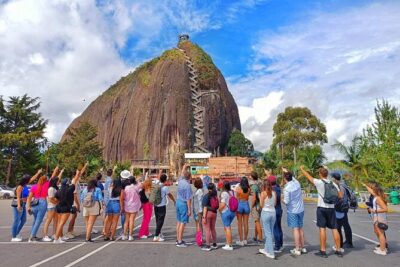
Guatapé Tour: Piedra del Peñol with Boat Tour, Breakfast, Lunch
Read our review →
Day Trip To Guatapé with ,Breakfast, Lunch and Boat Ride
Read our review →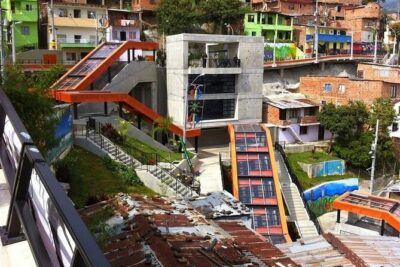
Comuna 13 Graffitour knows the urban art district of Medellín
Read our review →
Tour to Guatape, Piedra del Peñol, lunch, snacks boat trip
Read our review →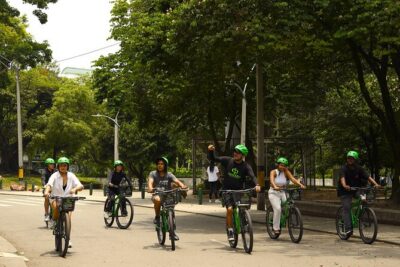
Half Day Bike Tour in Medellin – Local snack, Coffee or Beer
Read our review →