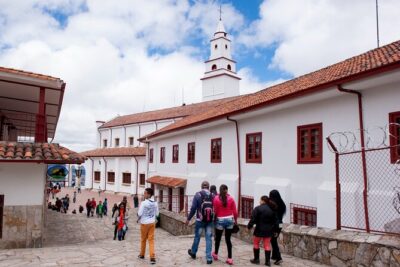
Reviewed · BOGOTÁ TOURS
Shared Tour Colombian Conflict: war, drug trafficking and peace
3 hours (approx.)
This Bogotá walking tour is interesting because it turns today’s city blocks into a clear timeline of Colombia’s conflict and its long path toward peace. I like how interactive the pace feels, with time to ask questions, not just listen. I also like that it’s built around recognizable places like the Jorge Eliécer Gaitán monument and the Palace of Justice, so the story sticks. One drawback to plan for: the topic is heavy, and you should also expect the tour to be treated like a tip-based free walking format, which can create confusion if you only look at the $13 price tag on the booking page.
Two names came up strongly in the guide chatter I’ve seen, like Santiago and Leo, and that matters because the tour’s strength is the way the conflict is explained with nuance and room for questions. Guides like Sergio and Angie also show up as favorites for keeping the history clear and balanced, whether you’re a first-timer or you just want the big picture fast. Still, if you want the tour in Spanish, one guide note suggests it may require a private booking rather than the standard shared tour format.
If you’re visiting Bogotá for the first time and you want context before you start hopping between museums or neighborhoods, this is a smart use of your time. You walk about 10 stops at a relaxed pace, with brief explanations tied to politics, protests, and negotiations, so you come away with a mental map of the city. Just be ready for politics in public places, because the tour is literally built around it.
Key highlights at a glance
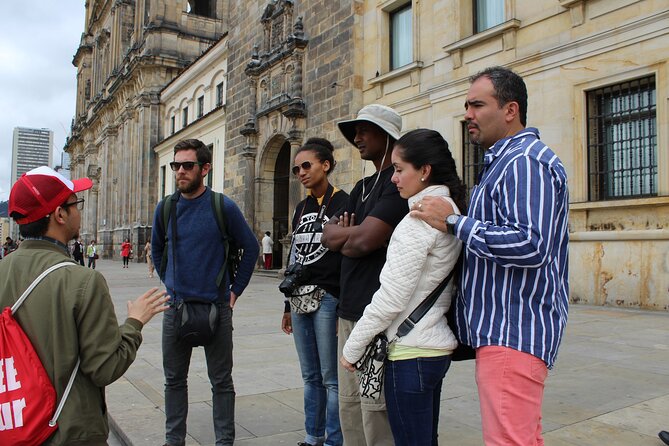
- 10 stop circuit in about 3 hours around central Bogotá, including La Candelaria landmarks
- Licensed, certified guide plus a free tour map to help you keep moving after the walk
- Built for questions, not a monologue, so you can steer what you want to understand
- Most sights have free entry on the route, with Teatro Colón ticket not included
- Tip-based format clarity since the listed amount on Viator is a suggested guide tip
A Bogotá conflict walk that makes street corners feel political
This tour works because it treats the city like a historical document. You’re not just seeing buildings, you’re seeing where demonstrations happened, where power was negotiated, and where violence left a permanent mark on public life.
In practice, that means the guide connects Colombia’s modern conflict themes, including war and drug trafficking, to specific downtown settings you can actually stand in. That approach helps you understand why peace processes happened where they did, and why politics in Bogotá often looks like it happened in the open.
The pacing is also part of the value. You get roughly 18 minutes at each stop, so you don’t end up in a lecture marathon, and you still have enough time to ask questions when something clicks.
A few more Bogotá days worth comparing
- Bogotá Bike Tour
★ 5.0 · 3,329 reviews - Bogota: Bicycle City Tour
★ 4.9 · 2,156 reviews - Zipaquirá: Salt Cathedral Group Tour with Pickup
★ 4.8 · 1,606 reviews
Start point in Santa Fé, then a careful walk into the heart of downtown
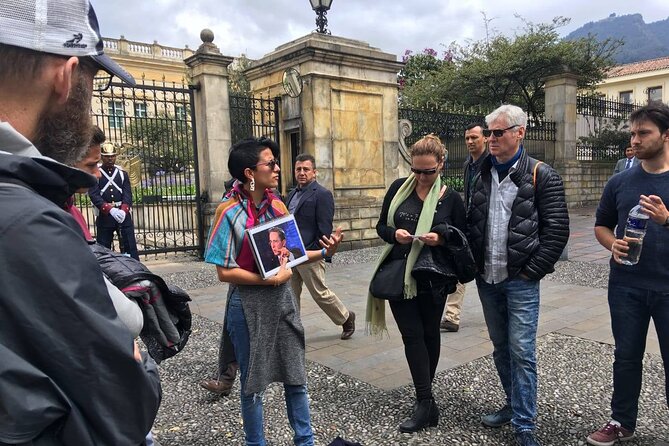
You begin at the Gold Museum in Santa Fé (Cra. 6 #15-88), with the walk starting at 10:00 am. It ends at Teatro Colón in La Candelaria, which is a great finish point because it’s easy to regroup for lunch, coffee, or more sightseeing.
The route stays within a walkable zone, and it’s designed for a shared group with a maximum of 25 people. That group size matters because it keeps the guide’s attention practical, and it helps smaller questions get answered instead of getting lost.
Also, most stops are free to enter, so you’re not juggling extra tickets for the route. The one clear exception is the Teatro Colón visit at the end, where the ticket is not included.
Stop 1: Santander Park, where demonstrations became part of the story
You start at Santander Park, one of those Bogotá places that feels ordinary until you learn what happened there. The guide sets the tone by explaining how the park has witnessed demonstrations and protests tied to the start of the armed conflict in Colombia.
What I like about starting here is that it grounds the whole tour in everyday public space. Parks are where people gather, so it makes sense that political tension would show up as crowds, chants, and public pressure before it ever became something darker and more organized.
If you’re someone who needs a mental anchor early, this first stop helps you build it fast. After that, the rest of the walk becomes easier to follow because you already understand what kind of place you’re looking at.
Stop 2: Avenida Jimenez and the logic of clashes on a major axis
Next you move to Avenida Jiménez, described as a fundamental axis in Bogotá’s life. Here, the focus is on how the avenue played a role in clashes and demonstrations during the conflict.
This is a key moment in the tour because it shows how conflict isn’t only about remote battlefields. It also shows how it can concentrate in transport corridors, commercial streets, and places where lots of people pass through daily.
Stand where you can imagine crowds moving along the avenue, and pay attention to how the guide links the street’s importance to why it attracted confrontation. It’s one of the stops that helps you understand the conflict’s presence in ordinary movement and public routines.
A different kind of day out of Bogotá:
- La Candelaria, Monserrate and Museums Bogotá Private City Tour
★ 5.0 · 1,567 reviews - Shared Tour of the Historic Candelaria in Bogotá
★ 5.0 · 1,551 reviews - Bogotá: Guided La Candelaria Walking Tour
★ 4.8 · 1,229 reviews - Graffiti Tour: a fascinating walk through a street art City
★ 5.0 · 1,074 reviews
Stop 3: The Gaitán moment, and why 1948 changed everything
Then comes one of the tour’s emotional pivots: the Jorge Eliecer Gaitán Monument. The assassination of Gaitán in 1948 is treated as a before-and-after point in Colombia’s history.
The way this stop is explained matters. It isn’t only a tragedy recap, it’s a bridge into how that event triggered a series of outcomes that influenced the armed conflict that followed.
I’d recommend you slow down here mentally, even if the stop itself is brief. If you’re new to Colombian history, this is where you’ll likely start connecting the dots between political assassination, public unrest, and later cycles of armed struggle.
Stop 4: Ministerio de Agricultura and peace negotiations in real buildings
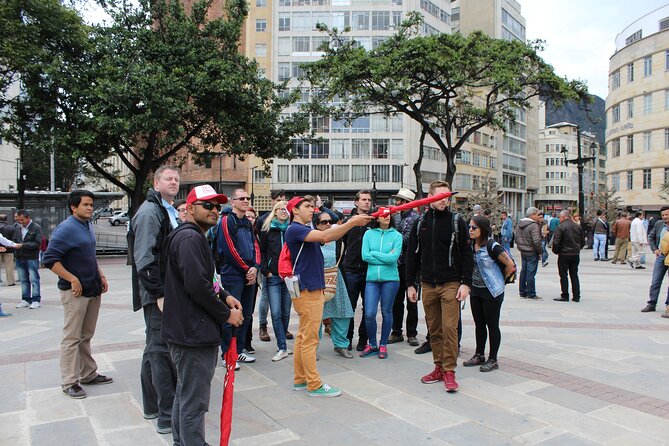
The route then shifts from street and monument to state power. You visit the Ministry of Agriculture and Rural Development, where the guide explains how important peace negotiations took place.
This stop is valuable because it changes the tone from violence to process. You’ll likely come away realizing that peace efforts are not just speeches or slogans, they’re negotiations involving ministries, institutional power, and difficult compromise.
It’s also a good reminder that peace doesn’t happen in theory. It happens inside specific rooms, under specific leadership, with specific agendas and constraints.
Stop 5: Edificio Murillo Toro, government life shaped by conflict
After that, you head to Edificio Murillo Toro, which has hosted different government institutions through time. The guide connects the building’s role in Colombian political life to how it was affected by the armed conflict.
This stop helps you understand why government architecture and conflict history often overlap in Bogotá. When conflict lasts, institutions keep operating, adapting, and sometimes becoming targets, symbols, or negotiation platforms.
If you want the tour to give you more than a story, this is one of the best places to ask your guide what changed over time. Since the tour is built for questions, this is a good moment to do it.
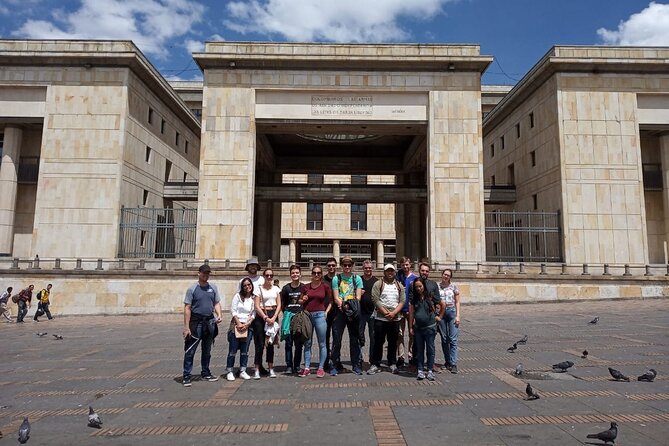
Stop 6: Palacio de Justicia, one of the conflict’s most violent seizures
Next is the Palace of Justice, a stop handled with clear seriousness. The guide explains that it was the scene of one of the most violent seizures during the armed conflict, and covers its tragic consequences.
This is the moment where the tour’s educational goal meets real gravity. I suggest you treat it like a reflective checkpoint, not just another photo stop.
Even if you already know the broad outline of the event, being guided through the site helps you understand why it matters to today’s political memory. This is one place where the guide’s balancing tone tends to feel especially important.
Stop 7: Palacio Lievano, mayors and political change you can see
You continue to Palacio Lievano, home to the mayor of Bogotá for many years. Here, the guide explains how the building has witnessed the evolution of the city and the political changes Colombia has experienced.
This stop gives you a different angle on power. Instead of focusing on national conflict alone, you see how local government life intersects with Colombia’s broader shifts.
If you like your history grounded in visible places, you’ll probably appreciate this one. It’s also a good place to ask about how municipal governance fits into the national story of peace.
Stop 8: Colegio Mayor San Bartolomé and the training of leaders
The route then stops at Colegio Mayor de San Bartolomé, one of the oldest educational institutions in Colombia. The guide explains its history and the role it has played in training political and social leaders.
This is a smart addition to the tour because it adds a long-term lens. Conflict is not only about armed groups and negotiations, it’s also about who gets educated, who becomes influential, and how future leadership forms.
Even if you don’t know the institution yet, the stop gives you a framework for thinking about change that happens through institutions, not just crises.
Stop 9: Plazoleta del Rosario, take a breath before the grand finish
By Plazoleta del Rosario, you get a calmer pause. The area is described as an oasis of tranquility, and the guide shares context related to a monument to an illustrious Colombian philologist.
I like having a quieter stop like this before the ending because it helps you digest what you’ve already heard. It also gives you a chance to reset your body after a few blocks of heavy context.
Use this moment to ask one last question while the group is still attentive. Then you can end the tour with fresh energy instead of mental fatigue.
Stop 10: Teatro Colón, closing with culture after the conflict context
The tour finishes at Teatro Colón, one of Colombia’s major cultural symbols. You’ll admire its neoclassical architecture and hear its history and importance in Bogotá’s cultural life.
Teatro Colón ending is a smart counterweight. You started with protests, power, and violence, and you end with culture, which is often how societies heal, argue, and rebuild identity.
One important detail: the Teatro Colón admission ticket is not included. If you want to go inside for a closer look, budget for that separately based on current local ticketing.
Price and the tip-based format, so you’re not caught off guard
On paper, the price shows as $13 per person, but this tour is part of a free walking tour style experience where what you pay in advance matches a suggested tip for the guide. The provided format also notes that this amount goes directly to the guide after the Viator commission.
That’s where things can get confusing. One guide note in the feedback mentions an expectation of 50K pesos per person at the end. Other experiences describe the tour as free in the sense that the posted amount is a suggested guide tip, and then you tip directly in the moment if you enjoyed it.
So how do you handle this practically? Decide what you consider fair for three hours with a professional licensed guide, then bring cash accordingly. If you’re on a tight budget, you can still participate, but make sure you’re comfortable with the idea that your real payment is the tip.
This is also why I think the tour is good value for the right type of traveler. You get structured context, multiple major landmarks, and a guide who can handle questions about modern conflict and peace. For many visitors, that saves time and helps them enjoy other Bogotá stops more.
What to look for in a good guide moment on this route
The standout theme from the guide experience is how they handle sensitive subjects with balance and room for questions. Names like Santiago, Sergio, Leo, and Angie show up as favorites for clear storytelling and an unbiased-feeling approach.
When you get on the walk, pay attention to how your guide explains cause and effect, especially around key turning points like 1948 and events connected to the Palace of Justice. If your guide is good, you’ll be able to summarize the conflict story in your own words by stop 3 or 4.
Also, don’t be shy about asking a question when the tour feels relevant to your interests. This format is interactive by design, and that interaction is part of the value you’re paying for.
Who should book this shared Bogotá conflict tour
This tour is a strong fit if you:
- Want a fast, street-level overview of Colombia’s modern conflict and peace efforts
- Are staying in or near La Candelaria and want a meaningful walk you can pair with museums afterward
- Enjoy Q&A with a licensed guide, especially when topics are political and complex
- Like history explained through landmarks you can see, not only through books
It may be less ideal if you want a light, purely scenic walk. This is not that. Even with a calm pause at Plazoleta del Rosario, the route includes major events tied to violence, seizure, and political rupture.
Should you book it or skip it
I’d book this tour if you want the kind of context that makes Bogotá feel less like random neighborhoods and more like an organized story. The stop selection is practical for first-timers, and the guided pace helps you keep up without feeling rushed.
I would not book it if you feel uncomfortable with politically heavy history in public spaces, or if you’re very strict about having a single fixed cost with no tip expectations. If you do book, come with cash for the ending tip moment and an attitude of curiosity, not judgment.
If you choose to go, this is one of those walks where your best souvenir is a clearer mental map. You’ll leave knowing why these sites matter, and you’ll understand Colombia’s conflict and peace process as something tied to real streets, real institutions, and real people.
FAQ
How long is the Bogotá Colombian Conflict walking tour?
The tour is about 3 hours.
Where does the tour start and end?
It starts at Gold Museum, Cra. 6 #15-88, Santa Fé, Bogotá, and ends at Teatro Colón Bogotá, Cl. 10 #5-32, La Candelaria, Bogotá.
What time does the tour begin?
The start time is 10:00 am.
What is included in the price?
A certified professional guide and a free tour map are included.
What is not included?
Lunch and tips are not included. The Teatro Colón admission ticket is also not included.
Are the stops free to enter?
Most stops listed on the route have free admission tickets, while the Teatro Colón ticket is not included.
How large is the group?
The tour has a maximum of 25 travelers.
Can I cancel for a full refund?
Yes, free cancellation is available. You can cancel up to 24 hours in advance for a full refund.
Recently reviewed around Bogotá
- Visit and live a colombian coffee plantation (group tour)★ 4.5 · 4 reviews
- Villa de Leyva Food Tour at Sunset★ 5.0 · 4 reviews
- Private Coffee Tour in Cachipay★ 5.0 · 4 reviews
- Tour Nocturno de Tejo y Salsa en Bogotá★ 5.0 · 4 reviews
- Bike Tour in Bogota★ 5.0 · 4 reviews
- Hike to the Rocky mountains of Sutatausa Private Day Tour★ 5.0 · 5 reviews
- Andrés Carne de Res Chía: VIP Entry with Cover & Welcome Cocktail★ 5.0 · 5 reviews
- Salt Cathedral Tour along with the Legendary Lake Guatavita★ 5.0 · 5 reviews
Bogotá Tours, compared.
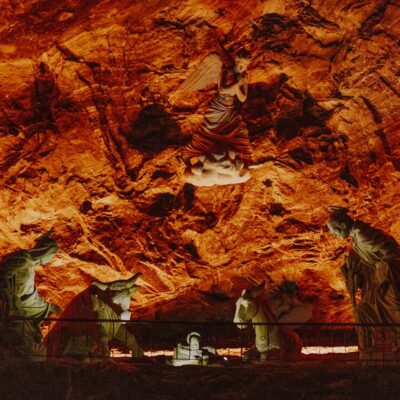
Zipaquirá: Salt Cathedral Group Tour with Pickup
Read our review →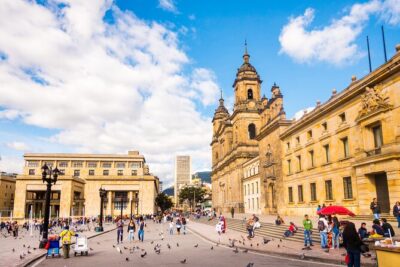
La Candelaria, Monserrate and Museums Bogotá Private City Tour
Read our review →
Shared Tour of the Historic Candelaria in Bogotá
Read our review →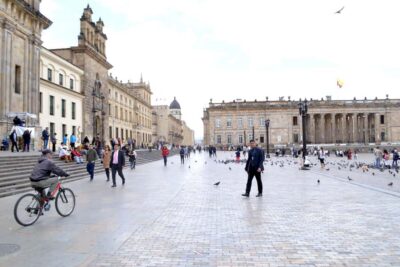
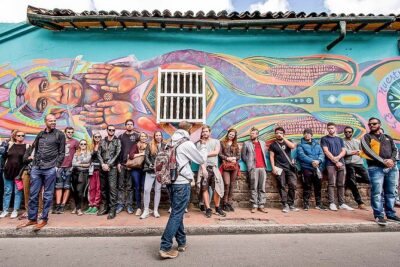
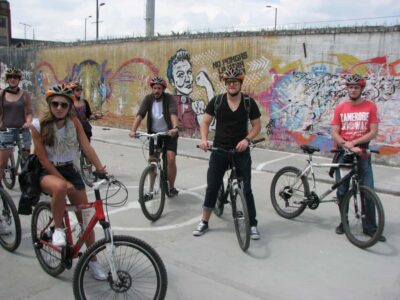
Graffiti Tour: a fascinating walk through a street art City
Read our review →