
Reviewed · WALLED CITY
Private Tour Walled City Walking Tour
Cartagena’s walled city is packed with plazas, churches, and fortifications, and this private walking route makes it easier to connect the dots instead of wandering alone. I like that the tour stays focused on key landmarks rather than random streets, so you build a clear picture of how the city functioned. I also like the practical touches like bottled water and an English-speaking guide.
What I enjoy most is how the route moves through big themes in a short time, especially the city’s role in trade and empire, then the darker parts like slavery-era history and the Inquisition. You’ll see major civic spaces like Plaza de Bolívar and end in cultural sights like Teatro Adolfo Mejía.
One consideration: it is a 3-hour walking tour, so you’ll want to be comfortable on your feet and plan for sun and crowds in the open plazas. If you want a slower pace or lots of long photo stops, tell your guide up front since the time is set by a clear sequence.
Key Highlights You Should Know Before You Go
- Private group only, so you are not stuck with strangers pacing the tour your way
- Free-entry stops across the route, meaning you pay for the guide, not museum tickets
- Hotel pickup option, with the guide meeting you in the lobby wearing a cap with the logo
- A strong theme of Cartagena’s power, from ports and shipping to defense and religious institutions
- A helpful guide style, including flexibility when arrivals run late and extra help for dinner logistics
Why Torre del Reloj to Teatro Adolfo Mejía Is a Smart 3-Hour Plan
Cartagena can feel like sensory overload at first, which is exactly why a focused route pays off. This tour is a compact walk that helps you understand the layout: where people entered, where goods moved, where the city defended itself, and which institutions shaped public life.
The value is also pretty straightforward. The tour costs $30 per person, lasts about 3 hours, includes bottled water and a guide, and the listed stops are free to enter. That means you are not juggling extra ticket lines or surprise entry fees for each square and monument.
Finally, because it is private, you get to ask questions without hearing the same answer repeated for five different groups. Your guide can slow down for details, or speed up if you want photos and then off you go.
More City Tours in Cartagena
- Private Walking Tour in Cartagena Walled City & Getsemaní
★ 5.0 · 1,357 reviews - Cartagena: City Sightseeing Hop-On Hop-Off Bus Tour & Extras
★ 3.9 · 681 reviews - City Sightseeing Cartagena Hop-On Hop-Off Bus Tour
★ 3.5 · 645 reviews
Meeting at Torre del Reloj (Boca del Puente) and Getting Started Smoothly
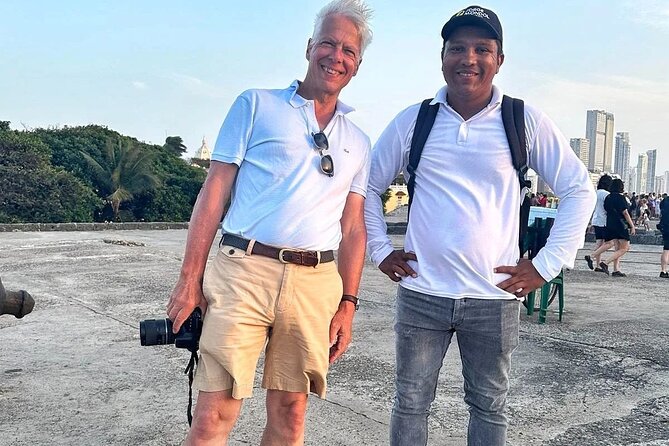
The tour begins at Monumento Torre del Reloj, Boca del Puente, in the Centro area. The nice part is that this is a very recognizable starting point on the edge of the walled zone, so you do not need to decode a complicated meeting location.
If you chose pickup, you will go to your hotel lobby and wait for the guide with a logo cap. Either way, you can expect the tour to follow your group’s timing once everyone is together, since it is built as a private experience.
You’ll also have a mobile ticket, which is helpful if you prefer to travel light. And if you are using public transportation, the meeting area is listed as near it, which can simplify your day.
Plaza de los Coches and Pedro de Heredia: Where Cartagena’s Walled City Started
The first major stop is Torre del Reloj, the Clock Tower rising about 30 meters between the plazas of Los Coches and La Paz. It is a great visual anchor. Before you even start walking, you can get your bearings, since the tower marks a natural point where movement into the historic center funnels you.
Next comes Plaza de los Coches, a square tied to how people entered the walled city. This is also where Cartagena’s painful history connects to the slave trade, and where the area functioned like a transportation hub. The statue of the city founder, Pedro de Heredia, is a big marker in the space, and it helps your guide explain how leadership and commerce shaped daily life.
If you care about history, this is one of the most important stops on the walk, because it frames the city as a controlled gateway, not just a pretty old-world backdrop.
Portal de los Dulces: A Quick Break That Actually Feels Local
After the plazas, you hit Portal de los Dulces, a place built for one purpose: Colombian sweets. The tour doesn’t spend a long time here, but the stop is timed well. It works as a mid-walk reset, especially if you are trying to keep energy up without leaving the historic core.
I like this stop because it brings food culture into the story without forcing a formal meal. You are right inside the walled city, and you can browse or sample typical sweets if you want.
The only drawback is simple: sweets are easy to overdo if you are sensitive to sugar or you’re planning a heavy lunch or dinner right after.
More Walking Tours in Cartagena
- Cartagena: Historic Center and Getsemaní Shared Walking Tour
★ 4.9 · 2,716 reviews - Cartagena: Walled City and Getsemani Shared Walking Tour
★ 4.5 · 352 reviews - Playa Morena Beach Club Whith Lunch And Walking tour of fort San Fernando
★ 5.0 · 218 reviews - Historic and Movie Bike or Walking Tour
★ 5.0 · 189 reviews
Plaza de la Aduana: Ports, Shipping, and How Wealth Traveled to Spain
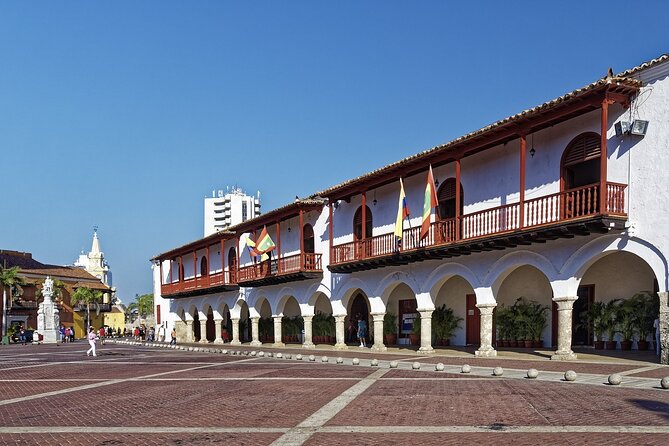
Then the tour turns to Plaza de la Aduana. This square is tied to how valuable goods moved from Cartagena toward Spain on the Armada galleon. Your guide can point out that it was also a channel for imports coming from the metropolis to places across South America.
You’ll also hear about the Royal Accounting Office, which is located here and is now the mayor’s office. That detail matters because it shows how colonial administration left long shadows in the same buildings, repurposed for modern government.
This stop is especially worth it if you want your Cartagena memories to be about more than architecture. It is about systems, shipping, and the money plumbing that powered the city.
Baluarte de San Ignacio: Fortifications Built for Bocagrande and Beyond
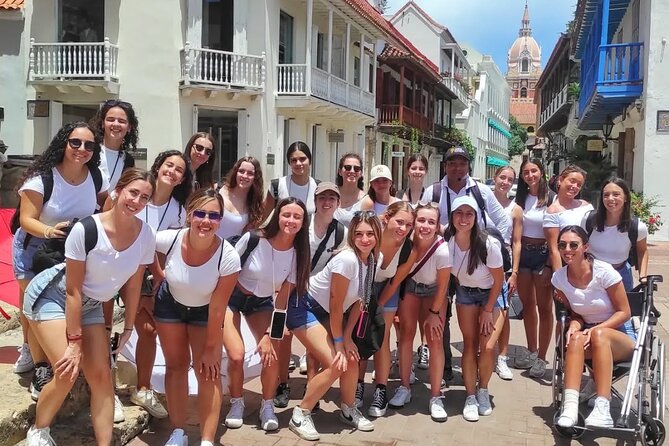
Next up is Baluarte de San Ignacio, a bastion designed to help defend the isthmus of Bocagrande and the Bahía de las Ánimas. Forts can be hard to “see” if you only look at them like walls, so this is the kind of stop where listening to your guide’s framing really helps you understand what threats the builders were responding to.
Historically, it was initially known as the Moros, and it changed name and layout due to proximity to the Compañía de Jesús school. That combination is interesting because it connects defense and education, two worlds that might feel separate in other cities.
If you like viewpoints, this is one of the spots where you can get a sense of scale and why the fortifications mattered.
Plaza de San Pedro Claver: Faith, Service, and a Human Story
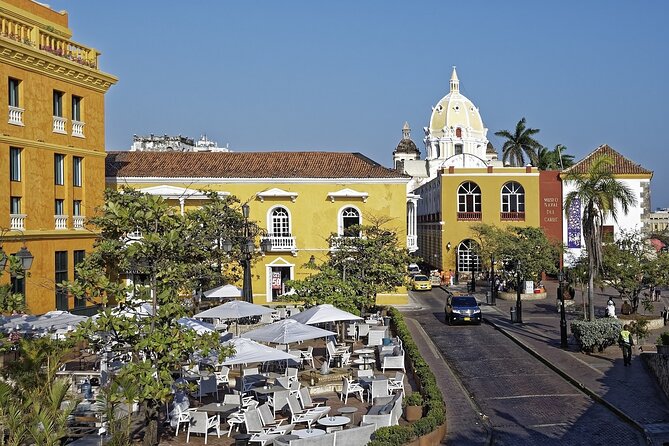
At Plaza de San Pedro Claver, the focus shifts from city power to human work. This square is associated with a life dedicated to true social work and the prayers of San Pedro Claver.
There is also a story that the saint would teach Christian doctrine at dusk, when the sun faded, to people living in a world of ignorance. Whether you read it as a historical anecdote or a moral teaching, it gives your guide a chance to explain how religious devotion played out in daily service.
This is a good pause before the tour enters the most institution-heavy stop of all: Plaza de Bolívar and the surrounding buildings.
Plaza de Bolívar and Palacio de la Inquisición: The City’s Big Institutions in One Frame
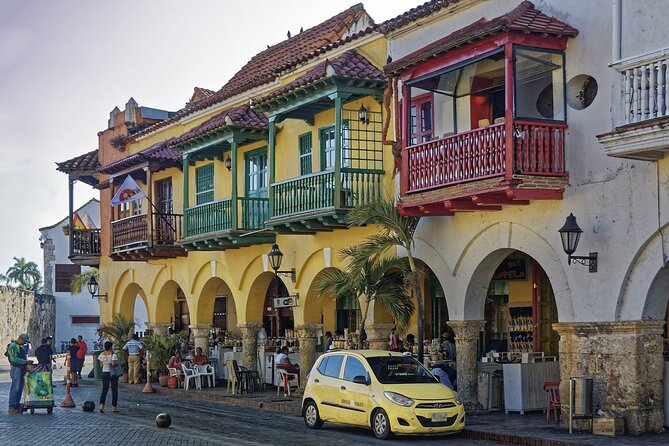
The tour arrives at Plaza de Bolívar, a square framed by major colonial institutions: the Palace of the Inquisition, the cathedral, and the town hall (today associated with the Government of Bolívar). This square is also where you can find the Bank of the Republic and the Cartagena Gold Museum within the area’s framework.
Right next door is Palacio de la Inquisición, the mansion known for the Tribunal of the Holy Office that operated there. It is tied to the issuance of auto de fes against alleged heretics.
This stop is powerful, but it can also feel heavy. If you are traveling with kids or you prefer lighter cultural stops, this is still worth it, just be ready for the topic to be direct. A good guide keeps it respectful and grounded, and helps you understand why these buildings mattered.
Catedral Santa Catalina de Alejandría: One Cathedral, Many Layers of Importance
Then you step into Catedral Santa Catalina de Alejandría, officially the Metropolitan Basilica Cathedral of Santa Catalina de Alejandría. It is the episcopal seat of the Archbishop of Cartagena de Indias.
Two practical things your guide can help you notice: it is the largest church in Cartagena, and it is considered one of the oldest episcopal seats. That combination explains why the cathedral is not just a pretty façade. It is a central point for understanding the church’s long-term presence.
If you want to photograph, go slow here. Cathedrals reward careful looking, but time in this tour is measured, so keep moving unless you want your guide to adjust pace.
Plaza Santo Domingo and La Gorda de Botero: Art, Sculpture, and a First Monumental Church
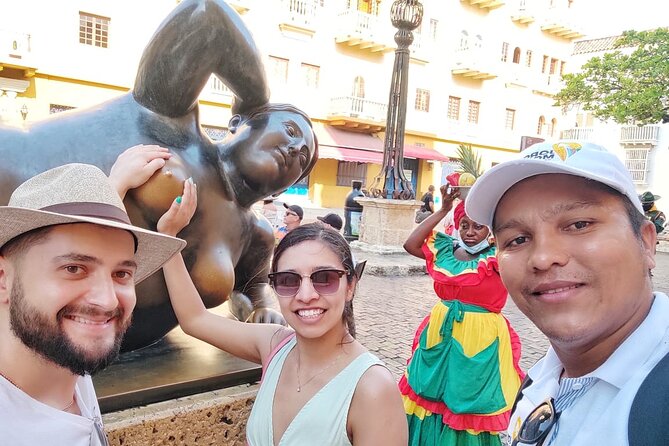
At Plaza Santo Domingo, you’ll spot Gertrudis, also known as La Gorda de Botero. This is one of those moments where art gives you a quick visual break from the bigger institutional buildings around Plaza de Bolívar.
You’ll also see the church of Santo Domingo, described as the first monumental construction in Cartagena. That detail matters because it ties the square to early stages of the city’s built identity.
If you love playful public art, this is a good landing spot. If you want zero distractions, you can treat it as a short transit stop and focus on the church facade.
Baluarte de Santo Domingo and Drake’s 1586 Attack: Defense With a Date
Next is Baluarte de Santo Domingo, the first part built of the fortified area. The history here is very specific: on September 8, 1614, the first stone was laid at the place where Drake attacked Cartagena in 1586.
This is one of the stops where the tour feels “real” because you get a clean timeline. It helps you connect the defensive design to actual events, not just generic military architecture.
If you like war history but hate dry facts, ask your guide to explain how a bastion functions and what an attacker would have been trying to do. This stop can make the city’s walls feel practical instead of decorative.
Teatro Adolfo Mejía (Teatro Heredia): From a Church Site to Italian Marble Details
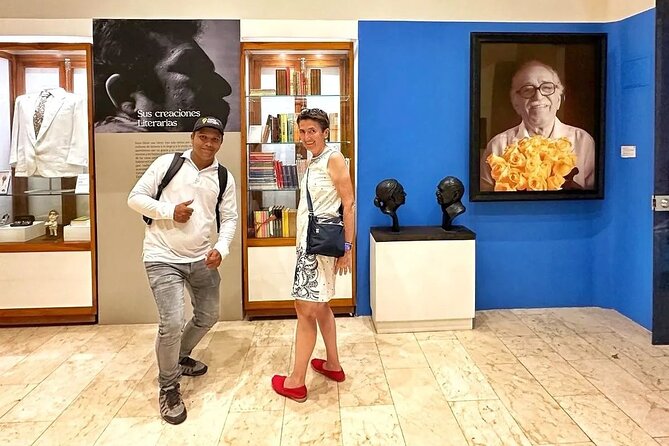
The tour ends at Teatro Adolfo Mejía, also known as Teatro Heredia. The building was constructed on the old church of La Merced and inaugurated in 1911 with the performance of the floral games.
Inside, there are stairs and Italian marble sculptures. The tour time here is short, but it’s a satisfying finish because it gives you a cultural payoff after fortifications and plazas.
Once you are done, the activity returns to the meeting point, back near Torre del Reloj.
Price and Value: Is $30 for a Private 3-Hour Walk a Good Deal?
For $30 per person, you get a private format, an English guide, bottled water, and a route through multiple major Cartagena landmarks that are listed as free to enter. For many travelers, the value is the structure: you get coverage of the most important squares and monuments without having to figure out the logic yourself.
The main value question is: do you want history explained while you walk? If yes, the guide component makes sense. If you are the type who prefers solo wandering and reading independently, you might choose a self-guided route.
There is also an important logistics note. Private transportation is not included for pickup from outside the walled city, so if you are staying far out, you may need to plan how you reach the pickup area. Hotel pickup is offered for the standard option, but the tour does not promise transport beyond the area.
Logistics You’ll Actually Care About: Timing, Walking, and Snacks
The tour runs about 3 hours. It is not a marathon, but it is also not a quick photo loop. You will spend most of your time walking between plazas and landmarks, with short stops at each.
Because admission is listed as free for the stops on this route, the “cost surprises” are minimal. The one area that can change your spending is snacks. Since the tour includes a stop at Portal de los Dulces, you might choose to buy something sweet while you’re there.
The tour is offered in English, and most travelers can participate, with service animals allowed. If you have mobility limits, consider that the walk is outdoors and includes plaza stops.
One more comfort factor: in at least one real-life scenario involving delayed arrival, the guide handled it with patience and kept the experience flowing, even adding help for getting to a dinner plan afterward. That kind of responsiveness makes a big difference on a walking tour.
Should You Book This Private Walled City Walking Tour?
Book it if you want a structured, private introduction to Cartagena’s walled city in a short window. It is especially a good fit if you want your visit organized around the places that explain the city: gateway points like Torre del Reloj and Plaza de los Coches, trade and administration at Plaza de la Aduana, faith and institutions around San Pedro Claver, Plaza de Bolívar, and the Inquisition palace, then the defense and culture stops leading to Teatro Adolfo Mejía.
Skip it or consider a different style if you dislike walking or you need a slower pace with long indoor time. Also, if the Inquisition and slavery trade topics feel too intense for your trip mood, this route does include those themes, so plan for that.
If you are trying to make one half-day feel meaningful, this is a solid way to do it without getting lost in the maze of beautiful streets.
FAQ
How long is the Private Walled City Walking Tour?
The tour lasts about 3 hours.
Is this tour private?
Yes. It is a private tour/activity, so only your group participates.
Is the tour offered in English?
Yes, the tour is offered in English.
Do I need to pay for admission at the stops?
According to the tour details, admission tickets for the listed stops are free.
Is hotel pickup included?
Pickup is offered. You should go to your hotel lobby and wait for the guide wearing a cap with the logo.
What is included in the price?
The price includes a guide and bottled water.
Where does the tour start and end?
It starts at Monumento Torre del Reloj, Boca del Puente, El Centro, Cartagena de Indias, and it ends back at the same meeting point.
More of the Walled City
- Walled City, San Felipe Castle & Popa Convent Cartagena City Tour
★ 5.0 · 391 reviews - Cartagena Private Tour of the Walled City & Getsemani
★ 5.0 · 227 reviews - Street Food Tour in Cartagena Walled City and Getsemani
★ 4.5 · 137 reviews - Private Walking Tour in Walled City and Getsemani Cartagena
★ 5.0 · 130 reviews
Recently reviewed around Cartagena
- Trendy Cartagena photo/ Video Tour★ 2.9 · 4 reviews
- Playa Blanca Baru from Cartagena City Center★ 4.0 · 4 reviews
- Sunset in Cartagena Bay with Boat Dances and Bar★ 5.0 · 4 reviews
- Taste Cartagena: Street Food and Full City Tour with Expert Guide★ 4.5 · 4 reviews
- Colombian Fruits and Paila Ice Cream Tasting★ 5.0 · 4 reviews
- Private Transfers Airport and Hotels in Cartagena★ 5.0 · 4 reviews
- private tours cartagena de indias★ 4.5 · 4 reviews
- Mud Volcano and Day Trip in Hotel with Lunch★ 5.0 · 4 reviews
Walled City, compared.
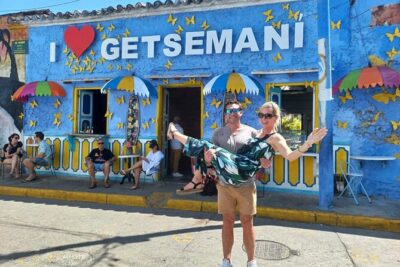
Private Walking Tour in Cartagena Walled City & Getsemaní
Read our review →
Walled City, San Felipe Castle & Popa Convent Cartagena City Tour
Read our review →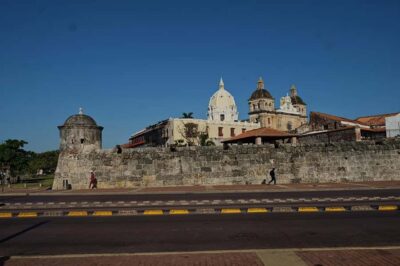
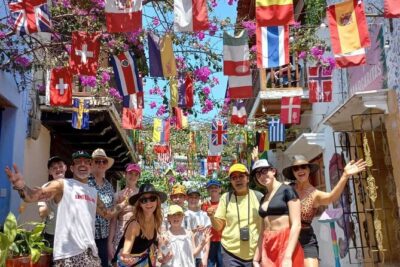
Cartagena Private Tour of the Walled City & Getsemani
Read our review →
Street Food Tour in Cartagena Walled City and Getsemani
Read our review →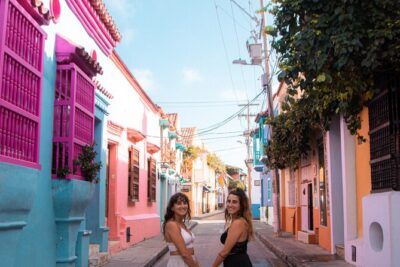
Private Walking Tour in Walled City and Getsemani Cartagena
Read our review →
Walled City, Getsemani San Felipe Castle Cartagena City Tour
Read our review →Browse the lists this tour appears in