This kind of tour is interesting because it treats Medellín like a living classroom. You walk through parks, squares, and public art, then connect the dots between violence, recovery, and everyday peacebuilding.
I like that it packs real themes into a simple format: stop, listen, look around, move on. I also like the small-group feel, with a cap of 10 people, so you can actually ask questions and get straight answers. One consideration: some stops are more about the story than the visuals, so if you want only scenic photo spots, you might feel slightly underwhelmed.
Key Highlights at a Glance
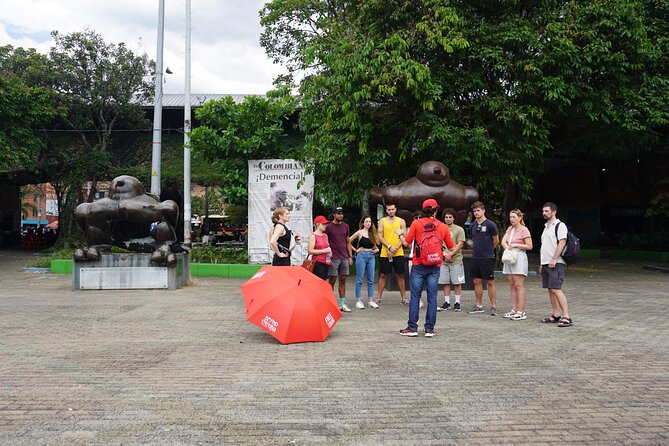
- A 3-hour story-walk through central Medellín, paced at about 22 minutes per stop
- Certified guiding focused on conflict and how education and community programs shaped peace
- Public-art and architecture stops that show how the city rewrote public space
- Multiple guides get high marks, including Paul, Miguel, Daniel, and others
- Free entry for most stops, with a couple of parks where admission is not included
Why Medellín’s Post-Conflict Story Works Better on Foot
Medellín is the kind of city where you can’t fully understand the present without reading the scars in the street. This tour turns that idea into something practical. You don’t sit in a lecture hall. You stand in places tied to human rights, education, and the struggle to rebuild social trust. Then you watch how the physical city reflects that shift.
The route also feels balanced. It includes places that are designed for learning and culture, plus spots that are more symbolic and reflective. That matters, because Medellín’s journey after violence is not just about dramatic events. It is also about small institutions and everyday spaces where people try again.
A few more Medellín days worth comparing
- Medellin: Comuna 13 Graffiti Tour, Cable Car & Street Food
★ 4.8 · 9,046 reviews - Comuna 13 Graffiti Tour with Street Food
★ 5.0 · 7,503 reviews - Guatapé Tour: Piedra del Peñol with Boat Tour, Breakfast, Lunch
★ 5.0 · 7,035 reviews
Price and Pace: What $14 Buys in About 3 Hours
At $14 per person for roughly 3 hours, this is one of those deals that makes you wonder why more cities don’t do it this way. You’re paying for a certified guide and a structured walk that keeps you from bouncing around randomly across the center.
A big part of the value is that many stops come with free admission tickets. The tour also runs in a tight timeframe, so you’re not forced to spend half your day in transit. Expect a brisk but not frantic pace, with around 22 minutes at each location.
One more money angle: the tour is a shared experience with a small cap (max 10). That often means less chaos than big group city tours. Your time with the guide is more usable, especially for a topic like conflict history where you will probably have follow-up questions.
From Parque San Antonio to the Memory House: The Route in Plain English
The walk starts at Parque San Antonio (Cl 44 #50, La Candelaria) at 2:00 pm. The finish is at the Memory House Museum area near Parque Bicentenario (Cl 51 #36-66, La Candelaria).
In between, you hit a sequence that follows a theme more than a map:
- A foundational neighborhood landmark
- Education as a peace tool
- Culture programs that strengthen social ties
- Modern architecture as a signal of urban change
- Murals and public art that carry messages
- Reflection time
- A human-rights tribute
- A future-looking park to wrap it up
If you like tours that feel like a guided argument, this one works. It keeps saying, in different ways, that peace is not only a political process. It shows up in squares, schools, cultural centers, and how the city chooses to paint its walls.
Stop-by-Stop: Where the Meaning Changes at Each Corner
A different kind of day out of Medellín:
- Day Trip To Guatapé with ,Breakfast, Lunch and Boat Ride
★ 5.0 · 2,996 reviews - Comuna 13 Graffitour knows the urban art district of Medellín
★ 5.0 · 2,856 reviews - Tour to Guatape, Piedra del Peñol, lunch, snacks boat trip
★ 5.0 · 2,658 reviews - Half Day Bike Tour in Medellin – Local snack, Coffee or Beer
★ 5.0 · 2,509 reviews
Parque San Antonio: Medellín’s Past in a Public Square
You begin at Parque San Antonio, a place that feels emblematic in Medellín. This stop is about how the park has changed over time, and what that says about the city around it.
This matters because parks and squares are not neutral. They are where people gather, where power shows up, where the city’s priorities become visible. You get an anchor point before the tour moves into more specific themes like education, human rights, and public art.
Plazuela San Ignacio: Education as a Peacebuilding Tool
Next is Plazuela San Ignacio, where the focus is education and why it was central to transformation. You are not just hearing generic facts. You’re seeing education framed as a strategy for rebuilding after violence, basically a way to give young people a different future and help communities repair trust.
This is one of those stops where you might think, okay, I get it. Then you realize how much education changes a city’s social structure when schools, learning programs, and access improve.
Comfama San Ignacio: Culture, Art, and Social Fabric
At Comfama San Ignacio, you visit a cultural center tied to art, culture, and education. The point here is practical: programs that support peaceful coexistence and strengthen the social fabric.
I like this stop because it refuses to treat peacebuilding like a concept. It treats it like programming, like ongoing work. If you’ve ever wondered why some cities recover faster than others, this is the kind of stop that explains it without getting abstract.
Torres de Bomboná: Modern Architecture as Urban Messaging
Then you move to Torres de Bomboná, where the story shifts to architecture. These towers are presented as a symbol of modern design in Medellín, and the guide ties that to urban transformation.
This is where you learn to look up. You see buildings as more than scenery. They become signals about what the city is trying to become, and who the city is trying to serve.
Pasaje Cervantes: Murals That Carry a Message
Pasaje Cervantes is a strong public-art stop. You get to see colorful murals and hear about the artists and what their work is trying to communicate.
This one is often the moment when the tour feels most human. Art is where people say things they cannot always say out loud. Even if you are not a hardcore street-art fan, the messaging makes the visuals click.
Parque de Boston: A Short Break for Reflection
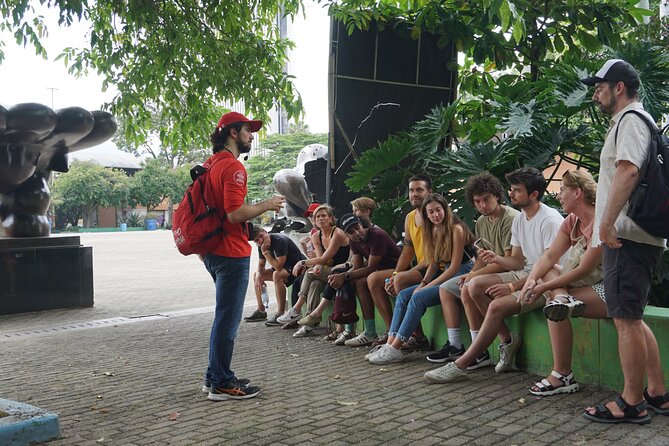
At Parque de Boston, you get a pause to rest and reflect. The guide invites you to share your thoughts on what you’ve seen and learned.
I appreciate this kind of break because it stops the tour from turning into pure information. It also gives you time to process the heavier theme without trying to do it all at once.
Simona Duque Park: Human Rights Through One Person’s Legacy
Simona Duque Park is a tribute to Simona Duque and her fight for human rights. The guide explains her story and legacy, connecting individual courage to the larger idea of post-conflict repair.
One practical note: admission is listed as not included for this stop. So keep that in mind if you are traveling with a tight budget or you want to avoid any surprise costs.
Bicentenario Park: Closing on the Future, Not Just the Past
Finally, you end at Bicentenario Park, a modern and sustainable space that represents the future of Medellín. The wrap-up reflection centers on the challenges and opportunities still facing the city as it moves along the road to peace.
Admission is again marked as not included here. Even so, this finish point works well because it pulls the tour out of the past. It asks you to leave with a sense of where the city is going, not only where it has been.
The Guides Who Make This Tour Work: Paul, Miguel, Daniel, and More
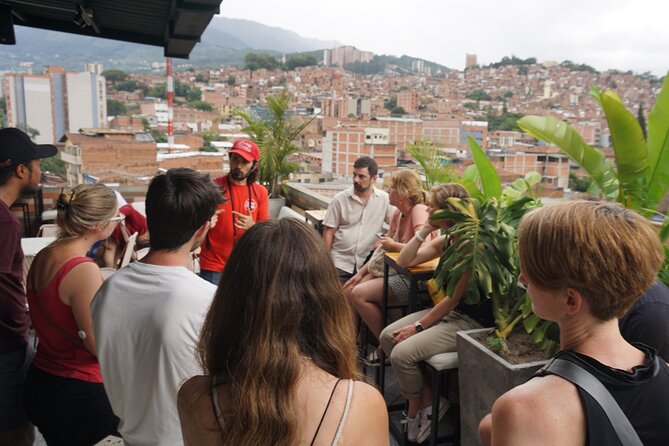
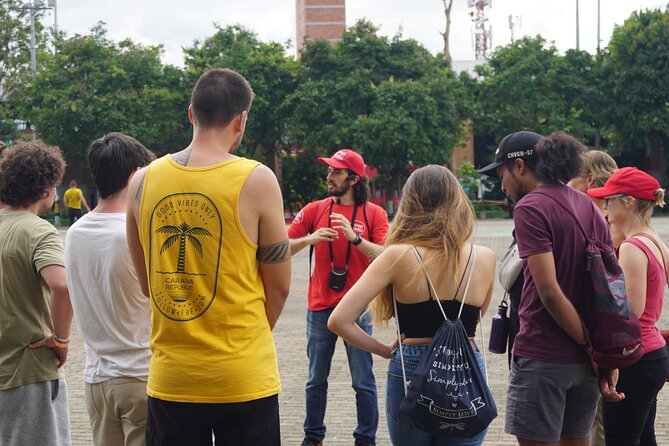
The tour is designed for discussion, and the quality often comes down to the guide’s clarity. Several guides associated with this experience come through strongly in how they explain conflict history and present-day social dynamics.
For example:
- Paul is described as extremely knowledgeable and able to handle the detailed, complex story around Medellín and Colombia, in a way that makes recent events understandable.
- Miguel is praised for explaining social dynamics clearly, with strong English and a focused approach to both national and local struggles.
- Daniel earns compliments for being honest and insightful, with a storytelling style that keeps the topic from feeling like a textbook.
- Alejandro is noted for answering questions and making the conflict history feel coherent.
- Manuel is praised for being both knowledgeable and fun, which is a good combo for a heavy theme.
That’s useful for you because it tells you what to look for on the day. If your guide is interactive, answers questions directly, and ties each stop back to the main theme, you will get more out of every minute on the route.
What You Might Find Less Fun Visually, and Why That’s Still Okay
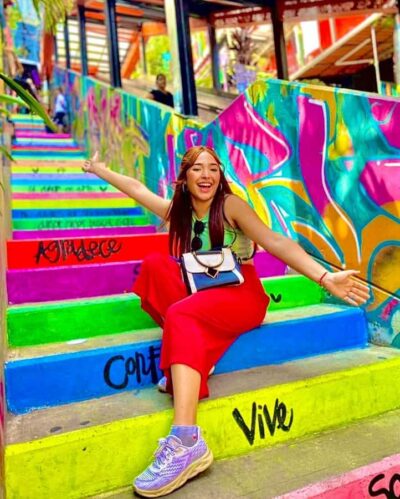
Some stops in this tour are not designed to be Instagram backdrops. A square, a park, or a passage can look ordinary at first glance. That’s where the story becomes the real attraction.
The payoff is that you learn to read the city differently:
- Education becomes a visible part of peacebuilding
- Architecture becomes a clue to urban change
- Murals become a language of memory and message
- Memorial parks become reminders of ongoing human rights work
If you go in expecting only dramatic sightseeing, you could feel disappointed. If you go in ready to listen, you’re likely to find it deeply satisfying.
Practical Tips for a Comfortable Medellín Walk
This tour is built for walking, and the requirement says you should have a strong physical fitness level. The tour is about 3 hours, and you’ll move between multiple stops in central Medellín.
A few practical moves:
- Wear comfortable shoes with good traction, since you will be on city sidewalks and public spaces.
- Bring a water bottle. Snacks are not included, so plan your timing if you get hungry mid-walk.
- If you want the full experience, come with basic curiosity. The theme is conflict and recovery, so you’ll get more out of it if you stay open to nuance.
Logistically, it’s near public transportation, and the group size stays small (max 10). Service animals are allowed, which is helpful to know.
The Value Call: Should You Book This Violence and Post-Conflict Tour?
I’d book this tour if you want a Medellín experience that connects history to what you can actually see on the street. It’s especially worth it if you care about education, human rights, and the role of public spaces in rebuilding trust.
I would skip it or think twice if:
- you only want scenery and photos
- you get impatient with topics that involve violence, politics, and social change
- you expect the tour to feel like a casual stroll with minimal talking
One last reality check. There are occasional reports of guides not showing up without communication. That is rare, but it’s enough that you should be ready to confirm day-of and stay flexible.
FAQ
How long is the tour?
The experience lasts about 3 hours.
Where does the tour start and end?
It starts at Parque San Antonio (Cl 44 #50, La Candelaria) and ends at the Memory House Museum area near Parque Bicentenario (Cl 51 #36-66, La Candelaria).
What time does the tour run?
The start time is 2:00 pm.
How much does it cost?
The price is $14.00 per person.
Is the admission ticket included?
Admission is free for some stops. Admission is not included for Simona Duque Park and Bicentenario Park.
What’s included in the tour price?
A certified guide is included.
What should I bring since snacks and lunch are not included?
Plan on bringing or buying your own snacks, because snacks and lunch are not included. Also bring what you need for walking comfortably for about 3 hours.
Recently reviewed around Medellín
- Coffee Tour – All inclusive – Medellín★ 4.0 · 4 reviews
- Paragliding Over Medellín + Gopro & Photos + Private transport.★ 5.0 · 4 reviews
- Shared Tour Commune 13 and Metro Cable La Aurora de Medellin★ 4.5 · 4 reviews
- Medellín Spa: Hydrotherapy & Themed Massage with Teppanyaki★ 5.0 · 4 reviews
- Night Out Gay Bar Crawl in Medellin★ 4.0 · 4 reviews
- White Water Rafting Near Medellin★ 5.0 · 4 reviews
- Bilingual private transport to the airport.★ 4.5 · 5 reviews
- African Music Roots Private Tour in Comuna 13, Medellin★ 5.0 · 5 reviews
Medellín Tours, compared.
Comuna 13 Graffiti Tour, Cable Car & Street Food
Read our review →
Guatapé Tour: Piedra del Peñol with Boat Tour, Breakfast, Lunch
Read our review →
Day Trip To Guatapé with ,Breakfast, Lunch and Boat Ride
Read our review →
Comuna 13 Graffitour knows the urban art district of Medellín
Read our review →
Tour to Guatape, Piedra del Peñol, lunch, snacks boat trip
Read our review →
Half Day Bike Tour in Medellin – Local snack, Coffee or Beer
Read our review →