What makes the More Than Escobar experience interesting is that it treats Medellín’s drug story as a whole system, not a single celebrity saga. You start with the coca leaf’s Indigenous roots, then move through cartel-era violence, and finish at a memorial centered on victims, not legends.
I especially liked two parts. First, the guide frames coca and cocaine with a clear cause-and-effect lens, including the environmental damage tied to chemicals and dumping. Second, I found the storytelling sharp and human, with one guide highlighted for excellent narration, including a local named Pablo who explains the politics and the pain without making it feel like a show.
One consideration: transportation is not included, so you’ll want to plan how you get to the meeting point in El Poblado and how you’ll get home after the tour ends at Inflexión Memorial Park.
Key highlights you will feel right away
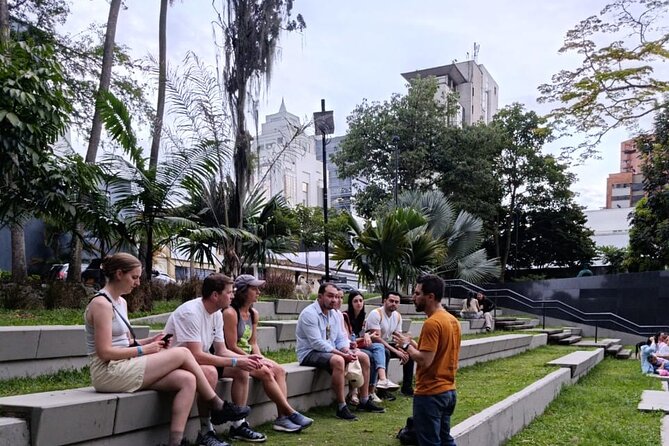
- Coca with context: Indigenous cultural and medicinal uses paired with the reality of chemical harm
- A cartel story with policy behind it: War on Drugs, violence, and shifting perceptions
- Montecasino and Los Pepes: history tied to specific locations, not vague name-dropping
- Economics stop in a real institution: demand, supply chains, elasticity, and money laundering
- Inflexión Memorial Park: the conversation lands at a victims’ memorial on a former Escobar-linked site
- Small group pace: a maximum of 12 people means more questions and back-and-forth
A respectful Medellín route through coca, cartels, and victims
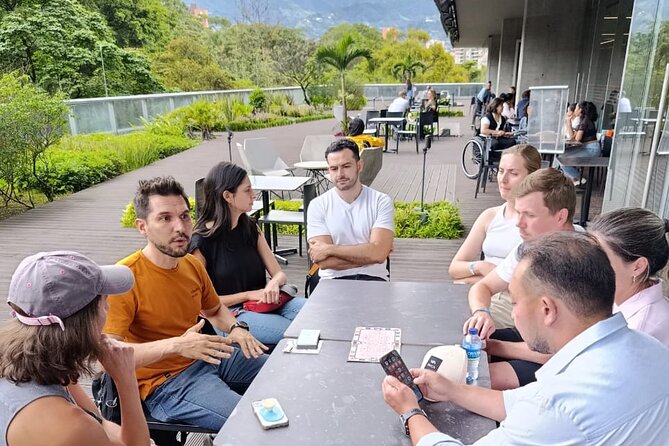
This is an afternoon walking-and-sight tour that tries to make the drug story make sense. You will cover culture, politics, and economics, then bring it home at a memorial that honors people harmed by trafficking-violence. The tone is careful. It is not about buying into myths, it is about understanding how a system grows, causes damage, and leaves scars.
I like that the tour keeps the focus on consequences. It talks about environmental destruction tied to production, and it circles back to victims so the conversation stays grounded. If you have ever felt the Escobar story has been turned into trivia or entertainment, this approach will feel like a corrective.
You are also paying for a lot of guidance, not just a stroll. Professional guidance is included, and the stops themselves are free to enter, which helps keep the value strong.
A few more Medellín days worth comparing
- Medellin: Comuna 13 Graffiti Tour, Cable Car & Street Food
★ 4.8 · 9,046 reviews - Comuna 13 Graffiti Tour with Street Food
★ 5.0 · 7,503 reviews - Guatapé Tour: Piedra del Peñol with Boat Tour, Breakfast, Lunch
★ 5.0 · 7,035 reviews
Parque Lineal La Frontera, coca in Indigenous life, and the cost of production
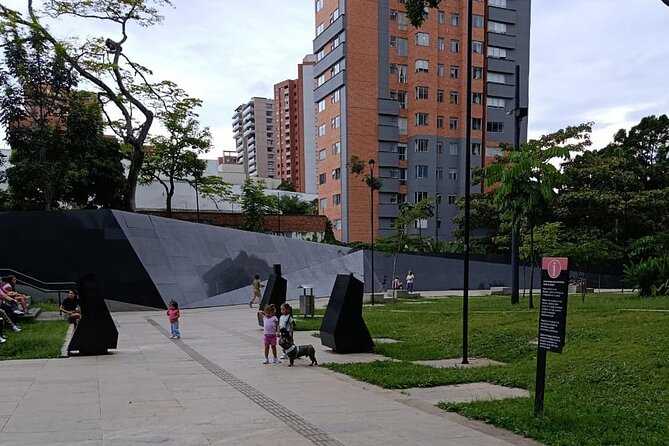
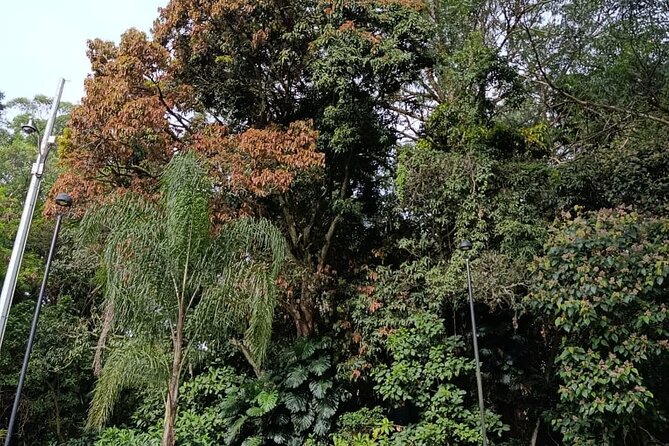
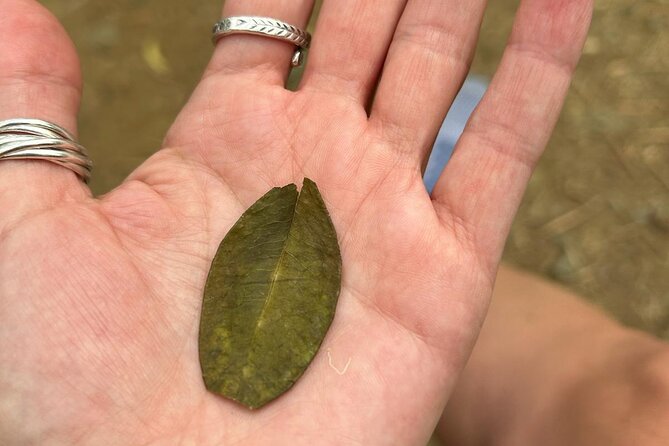
The first stop is Parque Lineal La Frontera, a green corridor on the edge of Medellín and Envigado. This is where the tour starts in a way that matters: with the coca leaf in Indigenous life, including cultural, spiritual, and medicinal uses. You are not asked to treat coca as a single symbol. You are shown how it fits into community traditions.
Then the guide shifts the lens. Coca is also transformed into cocaine, and the tour explains the production process at a level that connects to real-world harm. The emphasis is not on instructions. The emphasis is on consequences, especially environmental ones, including the devastating impact of chemical waste dumped into jungle areas.
This stop is a good reality check. It helps you hold two truths at once: one leaf can be used in community practices, and that same crop can also feed an industry that destroys land and endangers people. You will leave with a more nuanced mental map than the usual black-and-white talk.
Montecasino, Los Pepes, and the Medellín cartel story behind the headlines
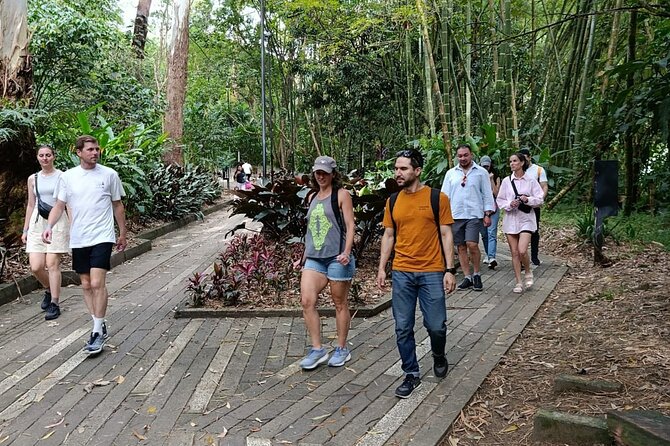
From the first stop, the tour broadens out into a bigger story. You’ll hear about the global history of coca and cocaine, including how figures in the past used coca and how perceptions changed over time. The point is to show that the controversy has never been only local. It has been shaped by politics, economics, and moral framing.
The next phase uses a major reference point: Montecasino. It is described as the former residence of the Castaño brothers, who were linked to the creation of paramilitaries and the vigilante group Los Pepes. Standing here helps the story feel specific. Names become places. People become choices made through power.
Then the tour connects the rise and fall of Escobar and the Medellín cartel to a wider backdrop. You will discuss the violent era of drug-trafficking violence and how the U.S. War on Drugs changed the playing field. The tour also reflects on effects on Colombian society, not just on the cartel itself.
What I like about this segment is the way it ties the violence to systems. You are not just memorizing dates. You are learning how international policy and local power struggles feed each other, and how quickly the situation can spiral.
A possible drawback is emotional. This part of the story deals with violence and fear. If you want a light, casual tour, this is not that kind of afternoon. If you want honest context, it delivers.
Medellín Chamber of Commerce and the economics behind the drug trade
Your third stop takes you to a place that feels important for understanding why these businesses last. At the Medellín Chamber of Commerce, the tour focuses on economics: demand and supply chains, elasticity, money laundering, and how shadow economies can influence systems at local, national, and global levels.
This is one of the most useful parts for your brain. The guide helps you see the drug trade as a market and a logistics problem, not just a crime story. When you hear terms like elasticity and supply chains in a serious institutional setting, it stops sounding like movie talk. It starts sounding like something that could be explained in any business case study, which is exactly the point, and exactly why it is alarming.
Money laundering is also treated as central, not as a footnote. The tour connects illicit money to mechanisms that can hide origins and move value through normal channels. That framing helps you understand why cracking down on one leader does not automatically shrink the whole system.
The practical result is this: you leave better able to evaluate news headlines. You’ll be more likely to ask questions like, who benefits, where does the money go, what are the incentives, and why do enforcement efforts sometimes create new problems.
A different kind of day out of Medellín:
- Day Trip To Guatapé with ,Breakfast, Lunch and Boat Ride
★ 5.0 · 2,996 reviews - Comuna 13 Graffitour knows the urban art district of Medellín
★ 5.0 · 2,856 reviews - Tour to Guatape, Piedra del Peñol, lunch, snacks boat trip
★ 5.0 · 2,658 reviews - Half Day Bike Tour in Medellin – Local snack, Coffee or Beer
★ 5.0 · 2,509 reviews
Parque de la Inflexión Memorial Park, Escobar-linked ruins, and the victims’ center
The tour ends at Parque de la Inflexión, built on the site of the former Monaco building. This is a site tied to Escobar and later bombed by the Cali Cartel. The story could have ended in spectacle. Instead, it pivots toward memorial work.
You will visit a memorial honoring victims of trafficking-violence. The tour brings together the earlier themes, coca and culture, cartel history, and economic drivers, then pushes you toward a different question: what responsibility do societies share, and what solutions could actually reduce harm.
I appreciate that this ending does not pretend history has a clean moral lesson. It pushes you toward reflection. It also keeps the people who suffered at the center of the conversation, rather than letting violence get turned into branding.
If you are the kind of person who likes to process with your feet, this final stop is a strong closer. It is not just information. It is a place designed to make you slow down.
Price and timing, plus what to plan for in the real world
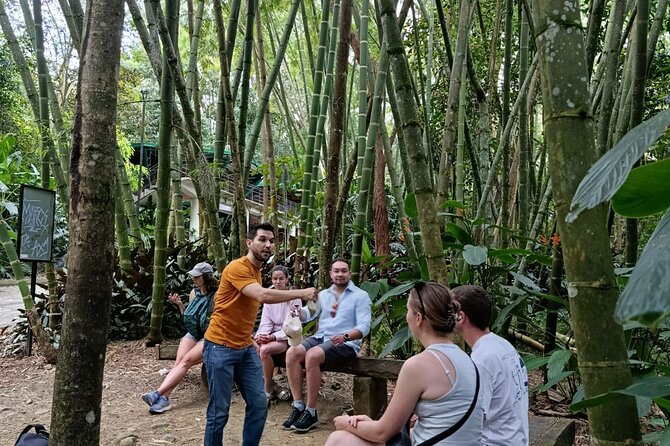
This tour runs about 3 hours 30 minutes, starting at 3:00 pm. It is priced at $25.00 per person, which is unusually reasonable for a guided, multi-stop experience with several free admissions along the way.
Here is why the price feels fair. You get professional guidance, a small maximum group size of 12, and access to multiple sites that are free to enter. The big missing piece is transportation. You will need to get yourself to the start and back from the end.
The meeting point is in El Poblado at Tanque campestre, on Cl. 18 Sur #39a-85. The tour ends at Inflexión Memorial Park at Cra. 44 #15 Sur-31, also in El Poblado. Because both are in the same neighborhood area, it is easier to plan dinner and a return plan than if it had ended far away.
Plan for an afternoon walk. Even if you do not know the city, the route is designed to connect meaningfully. Bring a way to stay hydrated and keep your phone charged if you like maps. Also, if you have questions, this tour is structured for conversation because the group is capped.
Who this tour is best for in Medellín
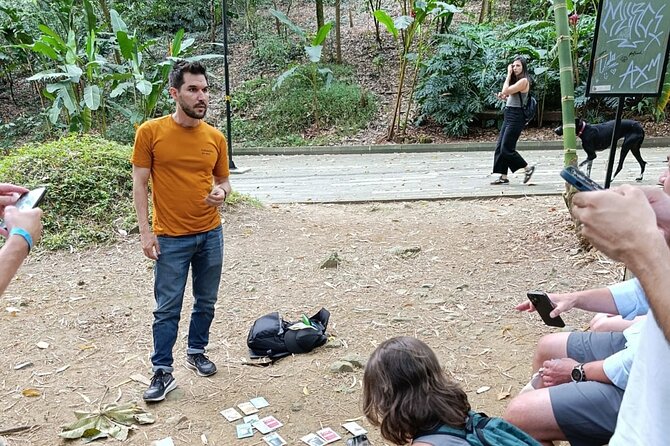
This is a strong fit if you want more than the usual Escobar highlights. You’ll enjoy it if you care about context, like how cultural practices can be attacked or misunderstood, how policy decisions ripple across borders, and how economic incentives keep harmful systems going.
It also works well for people who want to stay respectful. The tour is built to avoid glorification and to keep victims in the foreground. That makes it a better choice for ethical travelers who want realism without sensationalism.
Most people can participate, and service animals are allowed. If you prefer calmer experiences, know this one covers heavy themes, including violence and environmental harm. So your comfort level matters. If you are okay facing hard history with sensitivity, you will be in the right place.
Should you book this tour in Medellín?
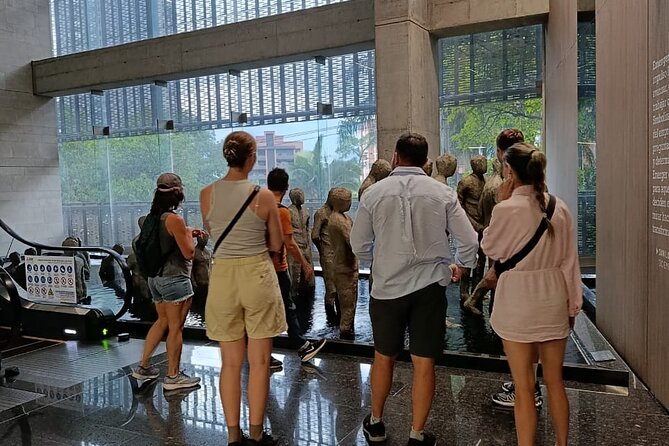
If you are curious about Medellín beyond the headlines, I would book it. The value stands out because guidance is included, group size is small, and admissions for the key stops are free. The way it connects coca culture, cartel history, and economics, then ends at a victims’ memorial, gives you a complete arc.
Skip it only if you are looking for a casual, light tour with zero heavy material. This is history and responsibility, with real details and a clear moral focus on harm.
If you do book, go with one mindset: you are not here to chase fame. You are here to understand how a city gets shaped by forces that are bigger than any one person.
FAQ
How much does the tour cost, and how long is it?
The tour costs $25.00 per person and lasts about 3 hours 30 minutes.
Is transportation included?
No. Transportation is not included, so you will need to arrange how you get to the start and how you return after.
Where is the meeting point and where does the tour end?
It starts at Tanque campestre, Cl. 18 Sur #39a-85, El Poblado, Medellín, Antioquia, Colombia. It ends at Inflexión Memorial Park, Cra. 44 #15 Sur-31, El Poblado, Medellín, Antioquia, Colombia.
Are entrance tickets included for the stops?
Yes. The stops are listed as free admission tickets.
How many people are in a group?
The tour has a maximum of 12 travelers.
Is it easy to reach using public transportation?
Yes. The tour is near public transportation.
What is the cancellation policy?
You can cancel for free up to 24 hours in advance for a full refund. If you cancel less than 24 hours before the experience starts, the amount paid is not refunded.
Recently reviewed around Medellín
- Coffee Tour – All inclusive – Medellín★ 4.0 · 4 reviews
- Paragliding Over Medellín + Gopro & Photos + Private transport.★ 5.0 · 4 reviews
- Shared Tour Commune 13 and Metro Cable La Aurora de Medellin★ 4.5 · 4 reviews
- Medellín Spa: Hydrotherapy & Themed Massage with Teppanyaki★ 5.0 · 4 reviews
- Night Out Gay Bar Crawl in Medellin★ 4.0 · 4 reviews
- White Water Rafting Near Medellin★ 5.0 · 4 reviews
- Bilingual private transport to the airport.★ 4.5 · 5 reviews
- African Music Roots Private Tour in Comuna 13, Medellin★ 5.0 · 5 reviews
Medellín Tours, compared.
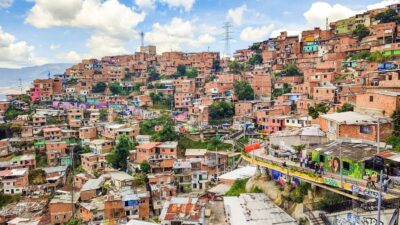
Comuna 13 Graffiti Tour, Cable Car & Street Food
Read our review →
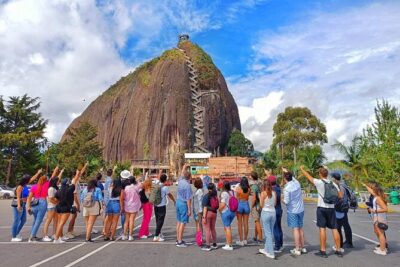
Guatapé Tour: Piedra del Peñol with Boat Tour, Breakfast, Lunch
Read our review →
Day Trip To Guatapé with ,Breakfast, Lunch and Boat Ride
Read our review →
Comuna 13 Graffitour knows the urban art district of Medellín
Read our review →
Tour to Guatape, Piedra del Peñol, lunch, snacks boat trip
Read our review →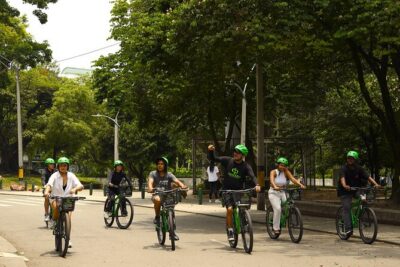
Half Day Bike Tour in Medellin – Local snack, Coffee or Beer
Read our review →