
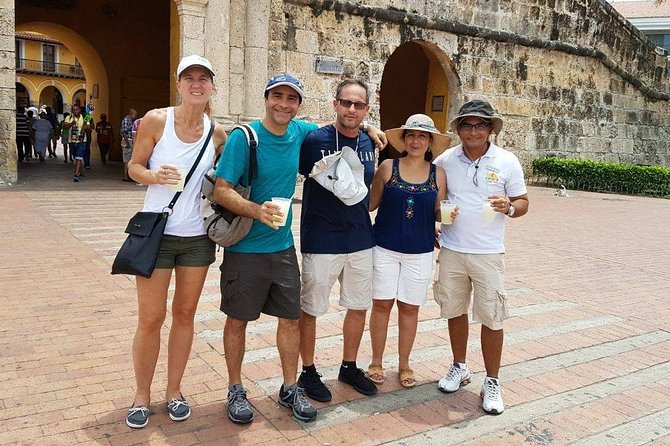
Reviewed · WALKING TOURS
Cartagena Walking Tour
Cartagena has a way of pulling you in with color, rhythm, and layers of history you can actually walk through. This private tour moves through the Walled City and into Getsemaní, so you get the story, not just the postcard.
I especially like how the guide ties big eras together, conquest to colony to republic, then flips the lens to modern life in the 21st century. The second thing I like is the pacing, about 2 hours, with short stops that keep you moving while still giving you real context.
One heads up: Cartagena traffic and cruise crowds can make getting to the meeting point tricky. If you are on a tight ship schedule, give extra time so you do not stress about being late.
Key Highlights Worth Planning For
- Private tour with just your group, max 15 travelers
- Multiple admission tickets included, so you are not paying hop-by-hop
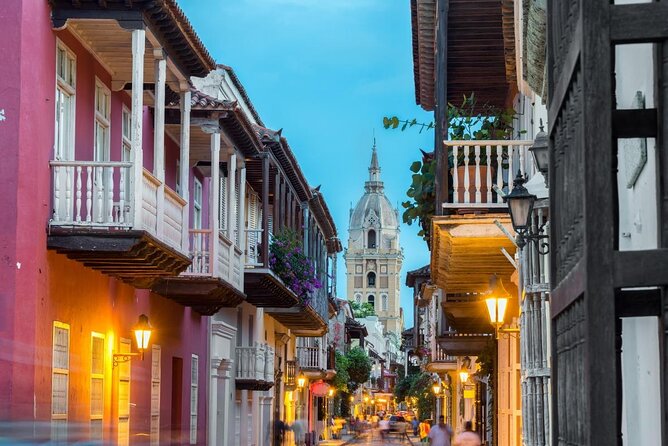
- A clear route through squares, bastions, and streets inside the Corralito de Piedra wall
- Slave trade history handled directly, including places tied to commerce and enslaved people
- Getsemaní culture walk, with graffiti, umbrellas, and music streets
- Parque Centenario animal spotting potential, sloths, squirrels, and iguanas
A 2-Hour Walk Through Cartagena’s Walled Story
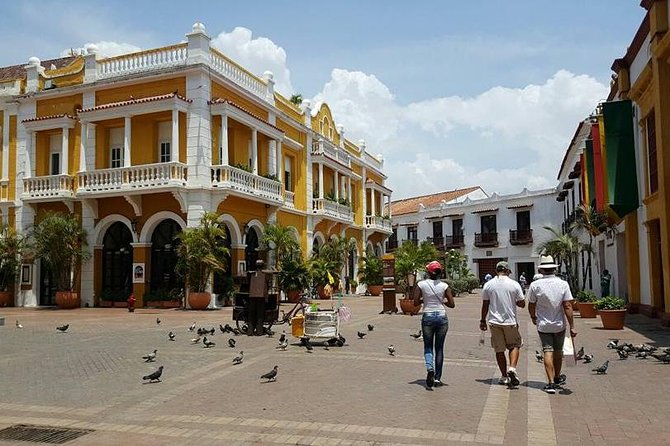
This tour is built for people who want to see Cartagena fast, but not shallow. In about two hours, you cover the core squares and streets inside the symbolic wall called the Corralito de Piedra, then slide into Getsemaní for the modern, street-level side of the city.
You will feel the difference between the guide-led version of Cartagena and the self-guided version. With a guide, the names of plazas start doing actual work. You stop at places because of what happened there, not just because the photo looks good.
And you do not feel trapped. It is a private format for your party, and the group stays small. That matters when you want to ask questions and keep the pace comfortable.
More Walking Tours in Cartagena
- Cartagena: Historic Center and Getsemaní Shared Walking Tour
★ 4.9 · 2,716 reviews - Private Walking Tour in Cartagena Walled City & Getsemaní
★ 5.0 · 1,357 reviews - Cartagena: Walled City and Getsemani Shared Walking Tour
★ 4.5 · 352 reviews
Meeting at the Torre del Reloj, Then Getting Your Bearings Fast
You meet at the Monumento Torre del Reloj at Boca del Puente in El Centro. From the start, the guide helps you get oriented, which is huge in Cartagena’s old streets where landmarks can blur together.
This opening section also sets expectations. You get a sense of the route and the themes, including Cartagena’s mix of Indigenous, African, and European influences. That theme keeps showing up through the tour, so even short stops feel connected.
Practical tip: If you are coming by taxi, aim to arrive early. Cartagena can get slammed when multiple cruise ships land, and that can delay everyone headed to the same meeting area.
Camellón de los Mártires and Plaza de Cervantes: Before the Spanish Arrived
The first meaningful stop is at Camellón de los Mártires, in Plaza de Cervantes. This is where the tour grounds Cartagena before Spanish arrival. You get context on the Indigenous people who were here before and during the early period of contact.
I like this start because it breaks the common pattern of starting a city story at the first European chapter. It makes the later discussion of conquest and colonial control feel more complete.
You only spend about 10 minutes here, but it is enough time to orient your brain. Think of it as setting the baseline before the big changes start rolling in.
Torre del Reloj and Pedro de Heredia: Power, Founding, and the City’s Political Edges
Next comes the Torre del Reloj area, often described as a Golden Key of Cartagena. The guide uses the clock tower zone to point toward streets tied to the enslavement route, including Porto Carrero and Candilejo.
This section can be intense, but it is also practical. You see how geography and power connected, with certain areas becoming routes for commerce and control. It is not just a history lesson, it is a map you can keep in your head while you keep walking.
Then you move to the Monumento a Pedro de Heredia. You connect the name to Cartagena’s founding story and also to Colombian literature. The tour threads together how rulers and writers shaped how people remember the city.
A different kind of day out of Cartagena:
- Cartagena Island Hopping: 5-Stop Rosario Islands Tour with Lunch
★ 4.5 · 4,903 reviews - Cartagena: Rosario Islands Catamaran with Lunch and Snorkel
★ 4.5 · 2,479 reviews - Full-Day Rosario Islands Including Barú, Bocachica & Playa Blanca
★ 4.0 · 1,729 reviews - Tour De Palenque, Road to Emancipation.
★ 5.0 · 1,678 reviews
The Slave Route Stops: Portal de los Dulces and Plaza de la Aduana
Cartagena’s past includes forced labor, and this tour does not dodge that. It stops at places linked to markets and commerce involving enslaved people, then explains what the spaces were doing in the city’s economy.
Portal de los Dulces is one of the most interesting stops in this section. The guide explains it as a symbol connected to female activity during slavery, and you hear how traditions continued through descendants.
Then there is Plaza de la Aduana, the old commercialization hub. You see important buildings nearby, including the Municipal Hall, and you learn how trade operated in the past, including the role of enslaved people in the system.
A consideration here: this tour talks about difficult material. If you prefer a purely celebratory city walk, you might find some parts heavy. But if you want the truth of Cartagena, these stops are essential.
Museo Stops with Included Tickets: Modern Art Plus the Gold and Emerald Story
You also get museum time built into the walk, with admission tickets included as part of multiple stops. The big one is Museo de Arte Moderno Cartagena.
This stop is described as an exponent of Caribbean and Latin American art from the 1950s, and the museum complex also connects to Indigenous pieces in what is called the Gold Museum and to the Emerald Museum with stones associated with celebrity collections.
Here is the practical value: you do not have to stop and figure out which tickets you need. The tour includes entries on these museum stops, which saves you time and money.
The tradeoff is time. Each museum segment is short. So if you want deep art study, this tour is not that. But for an intro that folds art and material culture into the city walk, it works well.
San Pedro Claver and the Church Complex: Human Rights in Stone and Silence
San Pedro Claver anchors the religious side of Cartagena. You visit Plaza de San Pedro Claver and learn about San Pedro Claver, Slave of the Slaves. The guide points out the church architecture and the museum-monastery complex that is tied to a human rights focus.
This stop is powerful because it shifts the tone. After the harder economic history, this adds a layer of moral purpose and later-day emphasis on rights.
Expect about 10 minutes. Even with short time, it is long enough to understand why the site matters.
Baluarte de San Ignacio and the Walls: Pirates, Defense, and the Bay of Souls
Next you hit Baluarte de San Ignacio, a bastion built to defend the Bay of Souls from pirate attacks. This is where the military logic of Cartagena becomes visual.
The guide explains the walls as protection, not just scenery. You start to see the fortifications as an answer to the city’s geography and wealth, then the story becomes less abstract.
If you like Cartagena’s swashbuckling reputation, this is the section that makes it concrete. You will still hear about corsairs and pirate feats, but tied to why the bastion existed.
Plaza Bolívar and Plaza de la Proclamación: Independence, Inquisition, and What You Can See
You reach Plaza de Bolívar and learn about the independence precursor connection. The tour also keeps the pirate theme going by pairing military constructions with the city’s strategic thinking.
Then the walk extends toward Plaza de la Proclamación. Here, the guide mentions several major sites like the palace of the Inquisition, a passage connected to beauty queens, and a Gold Museum. Important detail: entrance tickets for those specific places are not included during the tour. You get discussion and orientation rather than full entry.
This is a good moment to decide what you want to do later on your own. If you want to add more museum time, jot down what caught your attention and plan a return visit.
Getsemaní Without the Guesswork: Graffiti, Umbrellas, Music, and Street Life
After the more formal city center, you step into Barrio Getsemaní. This is where Cartagena feels less like a museum and more like a living neighborhood.
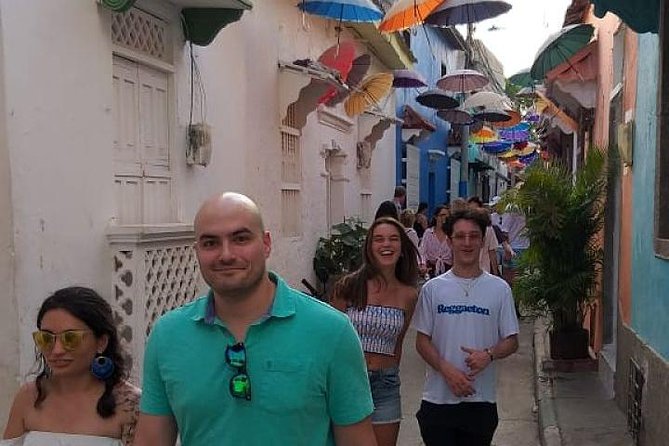
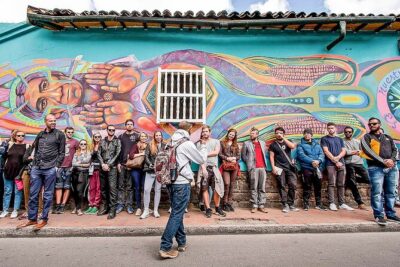
The tour focuses on graffiti, culture, music, customs, folklore, trade, and architecture. You will also notice umbrellas used as a symbolic form of advertisement and how the street visuals connect to identity.
This is one of the stops that usually gets the happiest reaction. It is not just that it looks cool. The guide helps you read the neighborhood, so the street art feels meaningful instead of random.
If you want souvenirs or quick snacks, Getsemaní is the area where it makes most sense to slow down, but keep your pace. The tour is timed, and the best photos happen when you are moving with the group.
Calle de San Juan and Plaza de la Trinidad: The Music Streets End the Walk
The route continues along Calle de San Juan, where you hear about cultural figures tied to Cartagena and Colombia, including Blas de Lezo, Gabriel García Márquez, Mister Black, and Joe Arroyo. You also get a sense of how cafes and the everyday rhythm of the street fit into the city’s story.
Then the tour ends at Plaza de la Trinidad after passing by the church and square of the Holy Trinity. The last stretch includes the Callejón Ancho area, described as ending with salsa and African champeta sounds.
Even with the short stop times, this finale matters. It gives you a sensory wrap-up, the music and street energy that ties the entire tour together. You finish with a stronger feel for the city’s pulse.
Parque Centenario: Shade, Old Railways, and Animal Spotting Potential
Before you reach the final stretch, the walk includes Parque Centenario. This is described as one of Cartagena’s lungs, a former railway station relic inside a tropical dry forest environment.
The animal spotting bit is real, at least as a possibility the guide will try to help you notice. The tour specifically calls out sloths, squirrels, and iguanas.
I like this stop because it is a break. It offers shade and a slower rhythm before the streets and music return you to the energy of the city.
Price and Value: Is $74 Worth It?
At $74 per person for about two hours, the value comes from what is included and how the guide organizes your time.
You get:
- a local tour guide
- bottled water
- included admission tickets at several key stops
That matters because Cartagena’s old town can be expensive if you try to piece together multiple entries on the fly. Here, you know the walk will include major sites without you doing ticket math mid-trip.
Also, the private element is not just a marketing line. A private guide is where you can ask practical questions and get explanations tailored to your interests. In the experiences shared with me by people who took this walk, they repeatedly highlighted that their guides were patient with questions and sometimes even adjusted the walk for comfort in heat.
The one drawback of this kind of tour is depth. You move quickly. You get the big picture and enough detail to choose what to explore later, but you are not doing a full museum marathon.
The Right Fit: Who Should Book This Tour?
This walking tour is a strong choice if you:
- want a guided intro to both Centro Histórico and Getsemaní
- like your city history tied to specific places you can point at
- prefer a short, structured walk instead of wandering and guessing
- want admission included at major stops
It is also a good option for first-time Cartagena visitors. The route gives you a mental map right away, which helps you enjoy the rest of your days without feeling lost.
If you are traveling with someone who wants only upbeat entertainment and no tough history, you might find the slave trade topics uncomfortable. But if you want a fuller, truer Cartagena story, this tour delivers it in walking form.
Should You Book This Cartagena Walking Tour?
Yes, with a couple of practical conditions.
Book it if you want an organized, small-group walk that covers the major squares, bastions, and cultural streets, with admission tickets handled for you. The private guide format helps you ask questions and get the city explained in plain language.
Think twice if you are on a cruise day with a tight return window. Traffic near the meeting area can be ugly, and late arrivals can ruin the timing. If you can build in extra buffer time, you will be much happier.
If you do book, I recommend bringing comfortable walking shoes, a small amount of patience for heat, and a curious mindset. You will leave with Cartagena not just seen, but understood.
FAQ
How long is the Cartagena Walking Tour?
It lasts about 2 hours.
How much does the tour cost?
The price is $74.00 per person.
Is this tour private?
Yes. It is described as a private tour for just you and your party, and the experience has a maximum of 15 travelers.
Where do I meet, and does the tour end there?
You meet at the Monumento Torre del Reloj Boca del Puente, El Centro, Cartagena de Indias, Bolívar, Colombia. The tour ends back at the meeting point.
What is included in the price?
Bottled water and a local tour guide are included. The itinerary also indicates admission tickets included for multiple stops.
Are food and drinks included?
No. Food and drinks are not included unless specified.
What should I wear?
Wear comfortable sports clothes (optional is noted), and it is a walking tour.
What is the cancellation policy?
You can cancel for a full refund up to 24 hours in advance of the experience start time. If you cancel less than 24 hours before, the amount paid is not refunded.
Is the tour suitable for most travelers?
Most travelers can participate. Service animals are allowed.
Recently reviewed around Cartagena
- Trendy Cartagena photo/ Video Tour★ 2.9 · 4 reviews
- Playa Blanca Baru from Cartagena City Center★ 4.0 · 4 reviews
- Sunset in Cartagena Bay with Boat Dances and Bar★ 5.0 · 4 reviews
- Taste Cartagena: Street Food and Full City Tour with Expert Guide★ 4.5 · 4 reviews
- Colombian Fruits and Paila Ice Cream Tasting★ 5.0 · 4 reviews
- Private Transfers Airport and Hotels in Cartagena★ 5.0 · 4 reviews
- private tours cartagena de indias★ 4.5 · 4 reviews
- Mud Volcano and Day Trip in Hotel with Lunch★ 5.0 · 4 reviews
Walking Tours, compared.
Historic Center and Getsemaní Shared Walking Tour
Read our review →
Private Walking Tour in Cartagena Walled City & Getsemaní
Read our review →
Graffiti Tour: a fascinating walk through a street art City
Read our review →

Medellin Historic Walking Tour with Expert Guide
Read our review →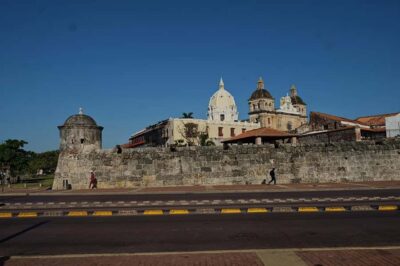
Bogotá Tour: Monserrate, Food, City Walk & Botero Museum
Read our review →Browse the lists this tour appears in