Reviewed · VIP
Cartagena Luxury Classic Car Tour + Bilingual Historian Guide
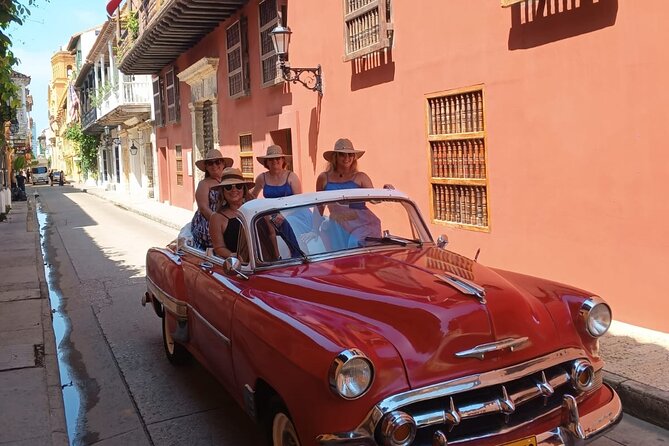
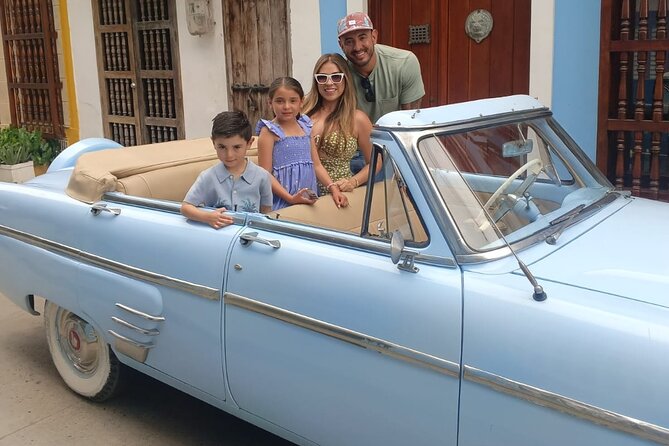
Cartagena by classic car is a fun cheat code. In about 1 hour 15 minutes, you get a smooth circuit of the Historic Center, the walled city highlights, and the big viewpoints, without doing a marathon on foot. I especially like the up-close photo moments at key plazas and clocks, and the way the car ride gives you a different angle than bus tours.
One thing to watch: the word bilingual matters. Some bookings end up with a Spanish-speaking driver rather than a bilingual historian, and that can change how much you understand as you move between stops. Also, Cartagena traffic and heat can make it tough to hear commentary, so plan your expectations accordingly.
Key things I’d zero in on before you go

- Vintage classic car experience with photo-friendly stops around the Historic Center and fort areas
- Short, efficient route: you hit 10+ major sights in about 90 minutes
- Walls and fortress planning are the theme from Centro Historico onward, with context at each stop
- Language option check: make sure you’re booked with a bilingual historian, not only a Spanish-speaking driver
- Heat and noise reality: if it’s midday, bring water and expect limited audio clarity in busy traffic
- WhatsApp helps a lot if you’re meeting the driver at the cruise port
A 90-minute classic car circuit that keeps you moving
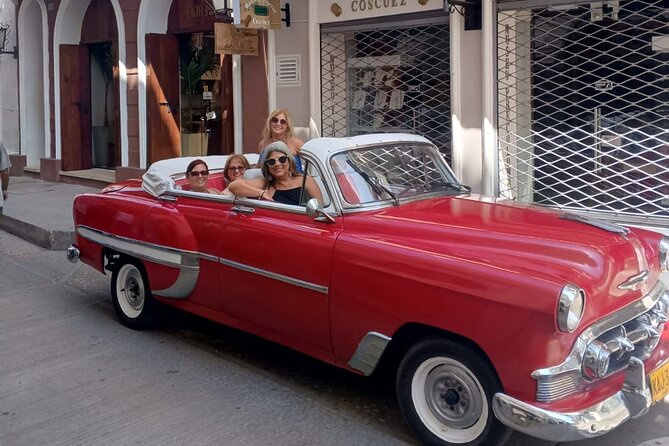
This is built for time. For $169 per group (up to 4 people), you’re basically buying a private classic-car sightseeing loop, with private transportation and pickup included. The car experience is the headline, but the real value is that you can cover major sights fast, then decide if you want to walk further on your own later.
The schedule is tight, with each main stop listed at around 5 minutes. That means you’re not going to go deep at every location. Instead, you get quick orientation, landmark photos, and enough explanation to understand what you’re looking at. If you like “quick hits” and a smooth ride over slow wandering, this format fits.
Also, the cars are vintage and open-air at times. One review described a classic car without power steering, which is charming and very period-feeling, but it also reinforces why this tour is best when you’re okay with a bit of old-school “road feel.” If you want a quiet ride with perfect audio conditions, this may not be your best choice.
A few more Cartagena days worth comparing
- Cartagena Island Hopping: 5-Stop Rosario Islands Tour with Lunch
★ 4.5 · 4,903 reviews - Cartagena: Historic Center and Getsemaní Shared Walking Tour
★ 4.9 · 2,716 reviews - Cartagena: Rosario Islands Catamaran with Lunch and Snorkel
★ 4.5 · 2,479 reviews
Price for up to 4 people, and why it can feel like a bargain
Let’s talk value in practical terms. At $169 per group up to 4, your per-person cost drops fast if you’re traveling with friends or family. And because it’s a private experience, you’re not squeezed into the “camera-click choreography” of a larger group.
You’re also paying for convenience: pick-up is included, and you get direct transportation between the key areas in and around the walled part of Cartagena. That matters because getting around the center can mean traffic, tight streets, and lots of people. A classic car can even access certain routes regular vehicles can’t, based on at least one account you shared, which makes the ride feel like more than just a transfer.
Two value cautions. First, this isn’t priced like a full walking tour with long museum stops. Second, you might not get every stop as an extended photo or explanation moment. If you want lots of time at one place (like the fort), you should expect this tour to prioritize variety over depth.
Picking the right guide language, so you don’t get shortchanged
The experience is described as a bilingual historian guide option, but real-world outcomes in the feedback show a mismatch can happen. In a couple of accounts, the guide was Spanish-only, or the driver was the only guide component included.
Here’s how to protect yourself: before your tour day, confirm you booked the option that explicitly includes the bilingual historian. If you’re relying on English commentary, don’t assume the “bilingual” part automatically applies. One response you included even clarified that some selections are private tours with a Spanish-speaking driver rather than a bilingual historian.
If you speak Spanish, you’ll likely feel more comfortable with the pacing and the explanations, even when English isn’t strong. If you don’t, you’ll want that language clarity in writing ahead of time.
Entering the walled heart at Centro Historico and the defensive city wall
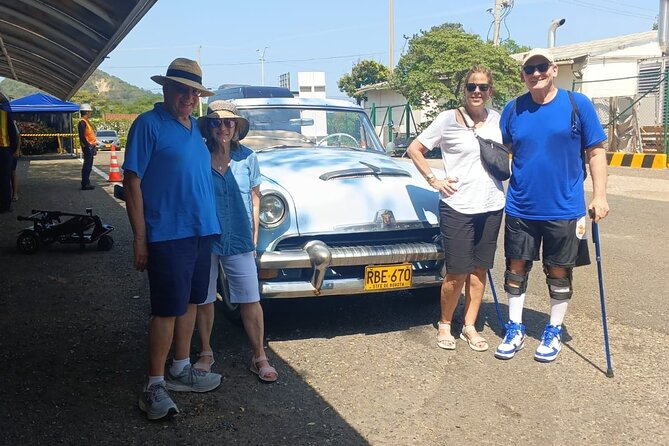
Your route begins at the Centro Historico, part of Cartagena’s World Cultural Heritage recognition. The point of this stop is more than a pretty beginning. You start where the story starts: the idea of a city built to protect itself, and the walls that turned defense into identity.
Right away, the tour frames the walls as a symbol. Today you walk past openings and imagine the old threats. That “past then present” approach matters, because Cartagena’s most famous views can feel like scenery until you understand what the builders were solving.
Because the time is short, the best mindset is to look for the wall line and the entrances first. If you’re taking photos, aim for a shot that shows the wall with the street context. It’s the quickest way to make your photos look like Cartagena, not just like an old stone wall.
A different kind of day out of Cartagena:
- Full-Day Rosario Islands Including Barú, Bocachica & Playa Blanca
★ 4.0 · 1,729 reviews - Tour De Palenque, Road to Emancipation.
★ 5.0 · 1,678 reviews - Half-Day Tour to Totumo Mud Volcano from Cartagena
★ 4.5 · 1,455 reviews - Private Walking Tour in Cartagena Walled City & Getsemaní
★ 5.0 · 1,357 reviews
Walled City of Cartagena: 18th-century defense logic, explained fast
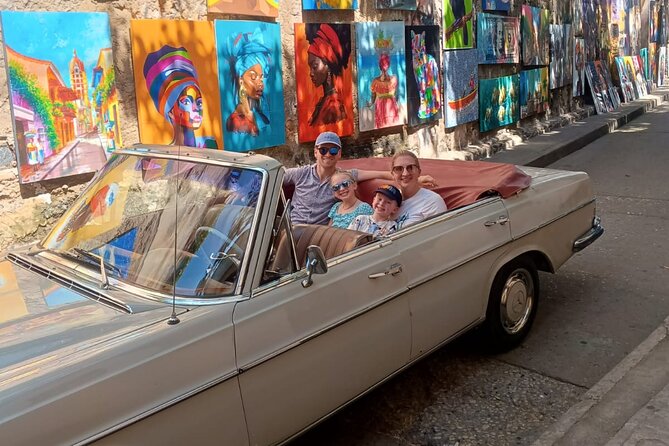
Next you’re back with the Walled City of Cartagena itself, including the project that stretched across almost two centuries and finished in 1796. The tour connects that timeline to pirate attacks, which helps you make sense of why Cartagena’s fortification wasn’t a quick fix.
This is one of those stops where the “5 minutes” format works. You do a quick reset: what you’re seeing is not just historic architecture. It’s engineering, politics, and survival all in one place.
If you get heat or traffic noise, don’t fight it. The best use of your time here is visual: track the wall structure, note where the city opens inside, and get a photo that includes both wall and street movement.
Torre del Reloj and the plazas that make Cartagena instantly recognizable

The Torre del Reloj is a real visual anchor: a 30-meter-high clock tower between the plazas of Los Coches and La Paz, described as one of the most beautiful public clocks in the world.
This stop is pure payoff for photographers and first-timers. When the tour is moving quickly, a landmark like this gives you something solid to aim at. One of the best strategies is to take two photos fast: one close enough to show the tower detail, and one from farther back to show the square layout around it.
The value here is that the tour places the clock tower as a geographic hub. From there, your mind starts connecting squares, streets, and key points, so the city feels less like random streets and more like a map you can navigate.
Plaza de las Bóvedas: colonial walls turned barracks, then prison
At Las Bóvedas, you get a different side of the fortress story. This area is described as the last major colonial work inside the fortified perimeter. It served as barracks for the Spanish and later as a prison for patriots during Independence and the early Republic.
This is a stop where you’ll get more out of it if you listen for the “change of use” idea. The same stone spaces that once supported troops became places of detention. That kind of context turns architecture into a timeline.
Time is brief, so your best move is to take in the plaza setting first, then let the explanation land as you look at the space. If you’re traveling with kids or friends, this is a great place to ask one simple question: What makes a defensive building different from a religious or civic building? That question keeps the tour meaningful in a short slot.
Getsemaní and Cartagena’s social rhythm at Plaza Santo Domingo
Now you shift from fortress mode to people mode, with Barrio Getsemaní. It’s positioned as a place where festivities, culture, gastronomy, and history intersect. That doesn’t mean it’s only party, but it does mean the street energy feels alive.
From there you hit Plaza Santo Domingo, one of the busiest squares in the Historic Center, surrounded by restaurants and known for traditional balconies. The tour also flags the Santo Domingo church and important monuments nearby.
Two practical tips here. First, balance your curiosity with your stamina. This area can feel crowded, and classic cars still need to navigate tight spaces. Second, if you plan to buy snacks later, this is a good moment to notice where foot traffic gathers.
This part of the tour is also where the “how much you hear” issue shows up. Reviews you shared mention that heat and busy traffic can make it hard to hear commentary. If that happens, focus on what you can control, which is watching the street, noticing balconies, and getting a clean photo from a spot where you’re not fighting for space.
Plaza de Los Coches and the Clock Tower combo shot, plus sweets
Back near the clock tower area is Plaza de Los Coches, another iconic square in the Historic Center. The key detail is that it’s surrounded by two attractions people quickly fall for: the clock tower and the Portal de los Dulces, where you can find Cartagena-style sweets and treats.
This stop is ideal if you want an immediate payoff and a plan for later eating. Since your tour time here is short, you might not have enough minutes to wander deeply. But you’ll get enough orientation to locate the sweets area if you want to come back after the tour ends.
If you’re sensitive to sugar, no worries. You can treat this as a landmark stop only, then eat later when you’re ready and not squeezed into a 5-minute window.
Teatro Adolfo Mejía and Catedral Santa Catalina: two styles, one stop-light feeling
Next comes Teatro Adolfo Mejía, also known as Teatro Heredia. The tour describes it as shaped like a horseshoe, with boxes and balconies divided by lace-like cedar lattices. The building sits on the old church of La Merced and was inaugurated in 1911 with the performance of the floral games.
This is the kind of stop where a bilingual historian helps. Even if you’re not an architecture expert, the details give you a mental picture: where the crowd sat, how the design supported performances, and how the building changed from church grounds to opera-house style.
Then you visit Catedral Santa Catalina de Alejandría in Herrerian style, characteristic of Philip II’s reign and the third stage of Spanish Renaissance architecture.
If the car ride is loud or hot, don’t worry. This is still worth it because it’s a major visual contrast to the more defensive feel of the walls and forts. You finish this segment with the sense that Cartagena wasn’t only a military machine. It was also a place that built institutions and ceremonial spaces.
Castillo de San Felipe de Barajas: the big fort energy, without the long hike
The tour culminates at Castillo de San Felipe de Barajas, a fortification located on the hill called San Lázaro, built in 1536.
Even with a short stop, this location hits hard visually. Forts give you scale fast, and San Felipe is one of the most famous ways to understand Cartagena’s military priority. If you’re looking for dramatic photos, this is where you’ll want them.
One more useful reality check: because the time is short, you’re not getting a full fort walkthrough. You’ll likely get a viewpoint moment and landmark context. For deeper exploration, you’d come back separately later. But as a first taste, it’s a strong closer.
Monumento a los Zapatos Viejos and Plaza de La Trinidad at night
Two final stops lean more playful and social.
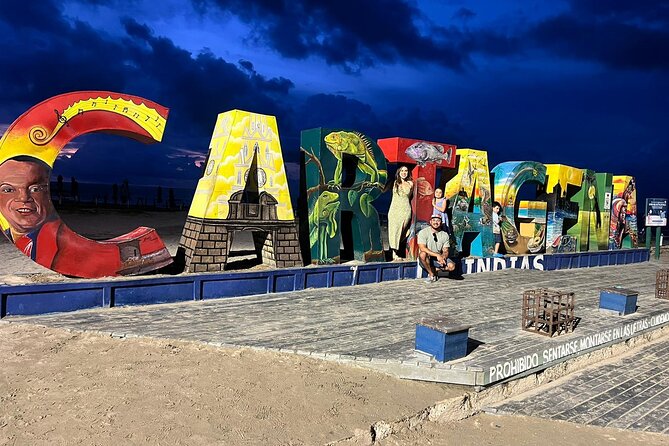
First is the Monumento a los Zapatos Viejos, a sculpture of old boots created by Hector Lombaña Piñeres. This is a quick photo stop, but it also gives Cartagena a modern layer. Not every stop has to be a fortress or church for the city to feel real.
Last is Plaza de La Trinidad, described as the epicenter of Cartagena nightlife, where locals and tourists gather to chat, buy fast food, participate in aerobics and Zumba workouts, and watch artists perform.
Your tour time here is short, but the value is the transition. You end in a place where the city’s mood is easier to feel. If you’re staying longer after the tour, you’ll know where to go next without wandering blindly.
Who this classic car tour is best for
This works especially well for:
- Couples and small families who want a private ride and quick landmark coverage in 90 minutes
- First-timers who feel overwhelmed by the Historic Center and want an efficient orientation loop
- Photo-focused visitors who like getting landmark angles fast from a moving classic car
- People traveling with mixed-language groups, as long as you verify the bilingual historian option upfront
It might be a weaker fit if you want:
- Long explanations at every sight
- Quiet, easy-to-hear narration in heavy traffic
- A full walking museum-style tour instead of a ride-and-stop circuit
Should you book this Cartagena luxury classic car tour?
I’d book it if you want a stylish, efficient way to see the city’s most recognizable landmarks, especially if you’re traveling as a small group. The classic car factor adds real charm, and the route is built around the core story of Cartagena, walls to forts, with plazas and major buildings in between.
Before you book, do two quick checks. Confirm your booking includes the bilingual historian you expect, not just a Spanish-speaking driver. And if you’re on a cruise, make sure you’re comfortable using WhatsApp so meeting up in port goes smoothly.
If those boxes are checked, this is one of the easiest ways to get a “wow, this is Cartagena” feeling fast, without spending your whole day navigating streets on foot.
FAQ
How long is the Cartagena luxury classic car tour?
The tour is approximately 1 hour 15 minutes.
How much does the tour cost?
It costs $169 per group for up to 4 people.
What is included in the price?
The price includes private transportation, a driver, and pickup is included.
Is return transfer to your hotel or back to the port included?
No. Return transfer to your hotel or to the port is not included.
Is there an admission ticket fee for the stops?
The stop descriptions provided indicate admission ticket is free at each listed location.
How many people can join the private tour?
It is a private tour, and only your group participates. The group size is up to 4 based on the price.
Can I cancel for a full refund?
Yes, free cancellation is offered. You can cancel up to 24 hours in advance for a full refund.
Recently reviewed around Cartagena
- Trendy Cartagena photo/ Video Tour★ 2.9 · 4 reviews
- Playa Blanca Baru from Cartagena City Center★ 4.0 · 4 reviews
- Sunset in Cartagena Bay with Boat Dances and Bar★ 5.0 · 4 reviews
- Taste Cartagena: Street Food and Full City Tour with Expert Guide★ 4.5 · 4 reviews
- Colombian Fruits and Paila Ice Cream Tasting★ 5.0 · 4 reviews
- Private Transfers Airport and Hotels in Cartagena★ 5.0 · 4 reviews
- Mud Volcano and Day Trip in Hotel with Lunch★ 5.0 · 4 reviews
- private tours cartagena de indias★ 4.5 · 4 reviews
VIP, compared.
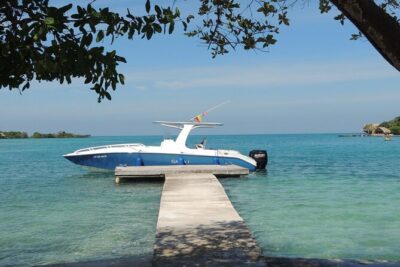
Cartagena VIP Boat Tour: Rosario Islands & Snorkel
Read our review →
PREMIUM Guatapé Tour: Rock, Luxury boat ride, Meals & Llamas
Read our review →
Sibarita Master 85′ luxury 90 min Sunset Tour Open Bar
Read our review →
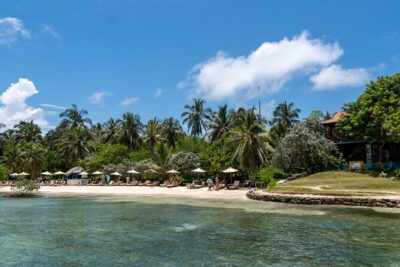
Private Full Day Tour 5 Spots Rosario Islands VIP
Read our review →
VIP Private Transfer: El Dorado Airport → Bogota Hotels SUV 24hrs
Read our review →
VIP Bogota City Tour: Monserrate, Candelaria, Coffee Tasting, 6hr
Read our review →