
Reviewed · LA CANDELARIA
Candelaria Unveiled: Cool-tural Heritage Walking Tour
This tour is interesting because it treats Bogotá’s La Candelaria like a living timeline, moving from the city’s founding legend to modern culture stops in one smooth walk. I especially like how it anchors the neighborhood’s colonial architecture to specific stories, including Policarpa Salavarrieta and the founding point at Chorro de Quevedo. I also like that it doesn’t stop at sightseeing, you get practical guidance for where to eat, what to do, and how to spend your remaining time well.
One consideration: it’s a 150-minute, on-your-feet route with cobblestones and several outdoor plazas, so plan on solid walking time and bring comfortable shoes.
Key things you will like on this Candelaria walking tour
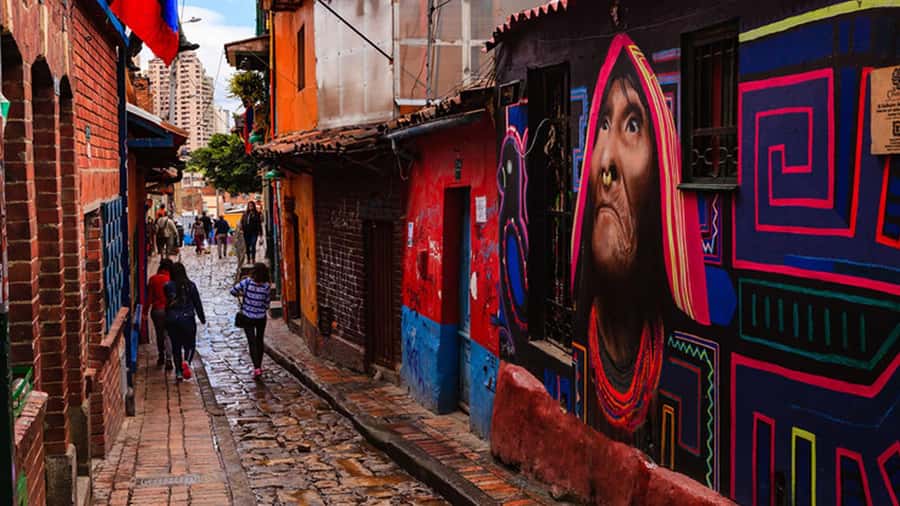
- Chorro de Quevedo as the place where Bogotá was founded in 1538 by Gonzalo Jiménez de Quesada
- Callejón del Embudo cobblestones shaped like a funnel, tied to the old Quebrada de San Bruno
- Casa de La Pola connected to Policarpa Salavarrieta, a heroine of Colombia’s liberation campaign
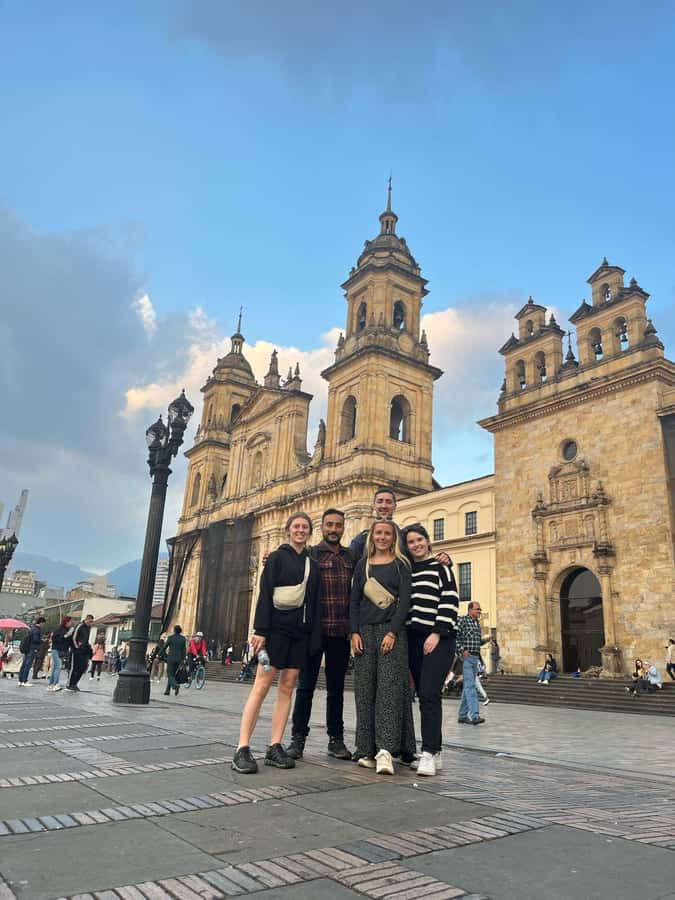
- Plaza de Bolívar as the heart of Bogotá, surrounded by landmark institutions like the Palace of Justice and the National Capitol
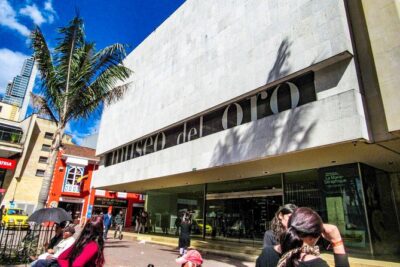
- Manzana Cultural and the Botero Museum as your main museum payoff
- Local restaurant and nightlife recommendations from the guide, so you leave with plans, not just photos
The real value: a guided route through Candelaria’s stories
Candelaria can feel like a blur if you visit alone. You see impressive facades, you snap a few pictures, and then you realize you do not know what you just passed. This tour solves that in a simple way: it strings together major places so you understand why they matter.
The best part for me is the blend. You get colonial street details, but you also hit cultural institutions like Teatro Colón and the Gabriel García Márquez Cultural Center, plus museum time at the Botero Museum. That mix helps you see Bogotá as more than one era, it is historic and creative at the same time.
Another value point is the guide-led “after the tour” help. The format includes recommendations for restaurants, clubs, and activities, which is exactly what you want on a first or second day in town. It is not just walking, it is planning.
Finally, there is a practical fairness to the pacing. It is long enough to feel substantial at 150 minutes, but it is not so long that you are dragged through every corner of downtown. You leave with direction.
More Historical Tours in Bogotá
- Shared Tour of the Historic Candelaria in Bogotá
★ 5.0 · 1,551 reviews - Bogota Shared Gastronomy Tour in the Historic Center
★ 5.0 · 264 reviews - Bike Tour in Bogota Historical Sites and Fruit Market
★ 5.0 · 171 reviews
Meet at Policarpa Salavarrieta, then get your bearings fast
You start at the Monumento a Policarpa Salavarrieta, a fitting opening because she is not just a name on a plaque. Policarpa is a symbol tied to Colombia’s liberation campaign, and the tour keeps bringing her back in different ways as you move through the neighborhood.
Starting at a monument also helps you orient. Once you know where you are in the story, the rest of Candelaria makes more sense. Streets and plazas stop feeling random and start feeling like chapters.
A small bonus: guides who run this kind of route often work in a “question-first” style. In past experiences shared by guests, guides such as Sharik and Jorge were praised for answering lots of questions and keeping the tour engaging. That matters because Bogotá can be complex, and being able to ask real stuff in real time makes the walk click faster.
You will also hear the route framed as history plus art plus a bit of adventure. That is a good promise, because Candelaria is one of those neighborhoods where your eyes need both facts and permission to wander.
La Concordia Market and the Plazoleta de la Concordia atmosphere
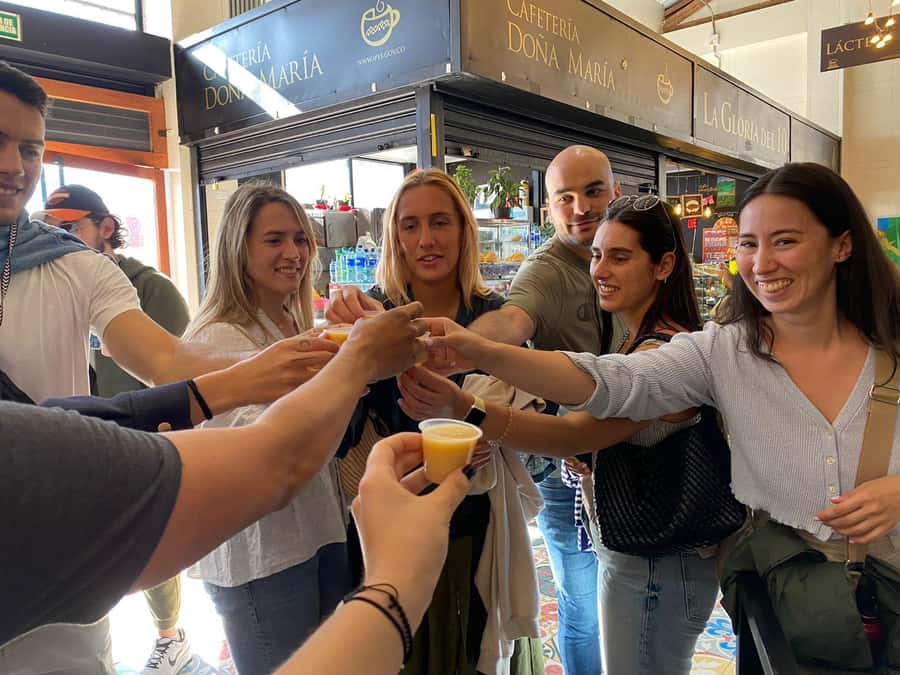
One of the early stops is the La Concordia Market, in the broader Plazoleta de la Concordia area. This is where you shift from “historic landmark mode” into everyday local life. You can expect a guided walk through the market space, with art, culture, and tradition in the mix.
This stop is valuable for two reasons. First, markets give you a sensory reset. Even if you have been reading about colonial Colombia, food and crafts pull you back into the present. Second, craft shops and local stalls help you understand what people actually do with their time and money in this neighborhood, not just what the city looks like from a distance.
If you like buying small souvenirs, this is the kind of place where you will likely find something more personal than a mass-produced trinket. If you are not shopping, you can still treat it as orientation, watch how the vendors interact, and take note of the kind of items people are drawn to.
Chorro de Quevedo and Callejón del Embudo, where geography tells a story
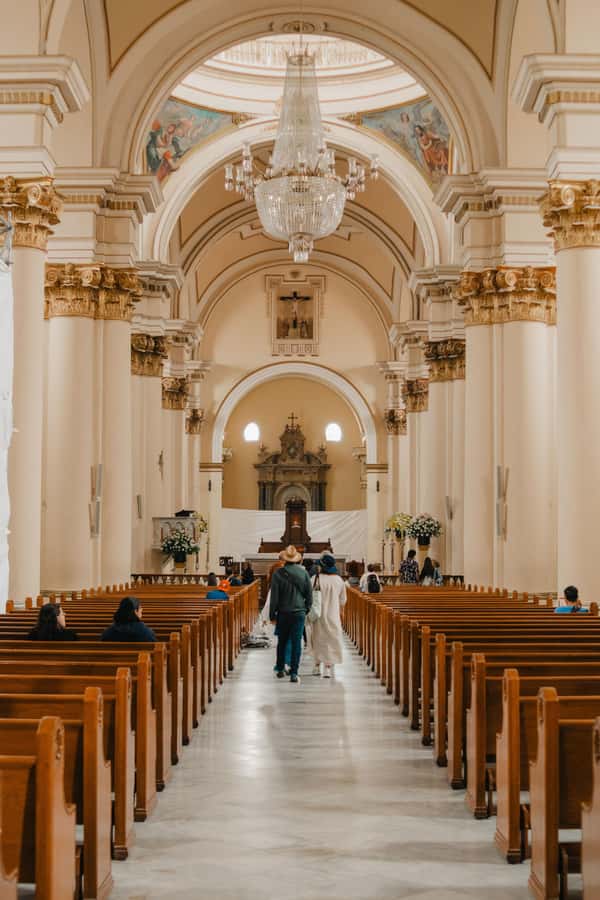
Then you step into the places where the city’s physical layout carries history.
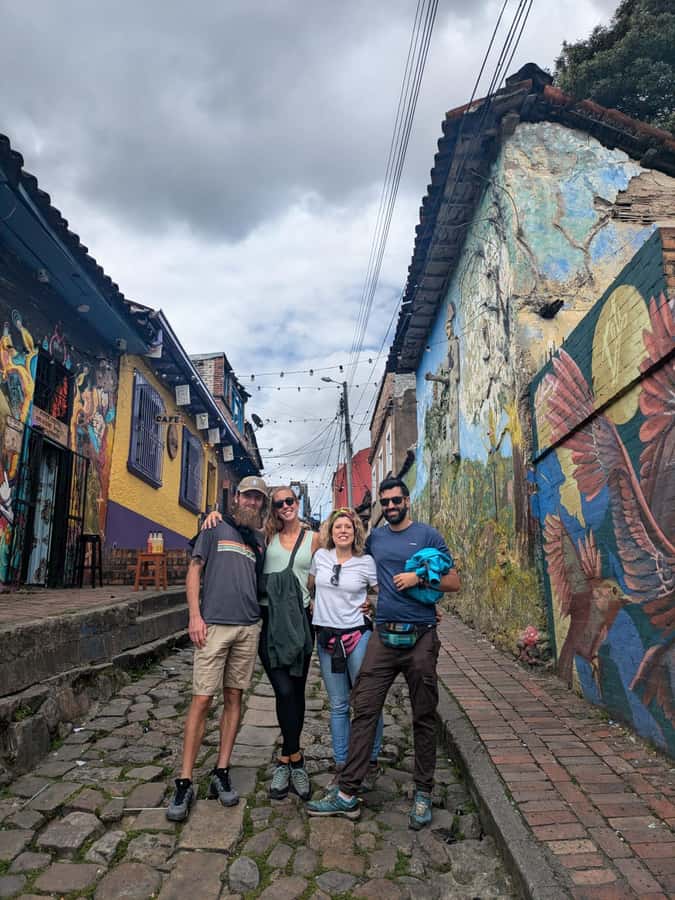
At Chorro de Quevedo, you are at the dramatic founding point of Bogotá, tied to 1538 and Gonzalo Jiménez de Quesada. This is one of those moments where your brain finally connects the name “Bogotá” to an actual place. A good guide will make you look at the surroundings like a map, not just like a photo spot.
Right after, you get Callejón del Embudo, a cobblestone street shaped like a funnel. It is linked to the edge of the ancient Quebrada de San Bruno. That detail is easy to miss on your own. On this tour, you get the explanation behind the shape, which makes the street feel intentional rather than accidental.
Here is the practical takeaway: when you visit places like this, your memory improves if you know what to look for. Funnel street shape, cobblestone texture, and the idea of an old ravine inform how the neighborhood developed. You are not just walking, you are reading the terrain.
Wear shoes you trust. Cobblestones are real here, and they are not the forgiving kind. This is the single best way to avoid turning the “cool-tural heritage” part into a sore-feet situation.
More Walking Tours in Bogotá
- Bogotá: Guided La Candelaria Walking Tour
★ 4.8 · 1,229 reviews - Graffiti Tour: a fascinating walk through a street art City
★ 5.0 · 1,074 reviews - Walking Tour in La Candelaria Bogotá
★ 5.0 · 859 reviews - Bogotá Tour: Monserrate, Food, City Walk & Botero Museum
★ 5.0 · 328 reviews
Teatro Colón and the cultural spine of downtown Bogotá
Next up is Teatro Colón. Even if you do not plan to see a show during your trip, the building functions like a landmark for how the city values the arts. A guided stop here matters because it frames the theater as part of the neighborhood’s cultural engine, not just an impressive facade.
Teatro Colón also helps break up the walk. After streets and plazas, you get a shift into “institutional culture.” That change in pace makes the whole tour feel less like you are trudging and more like you are moving through different moods of the city.
If your travel style leans toward art and performance, you will probably enjoy how the guide connects institutions across the walk. It makes it easier to choose what to do later. For example, you might decide to follow the theater thread and look for more shows, or pivot toward museums if that is more your speed.
Plaza de Bolívar: the center of power, faith, and politics
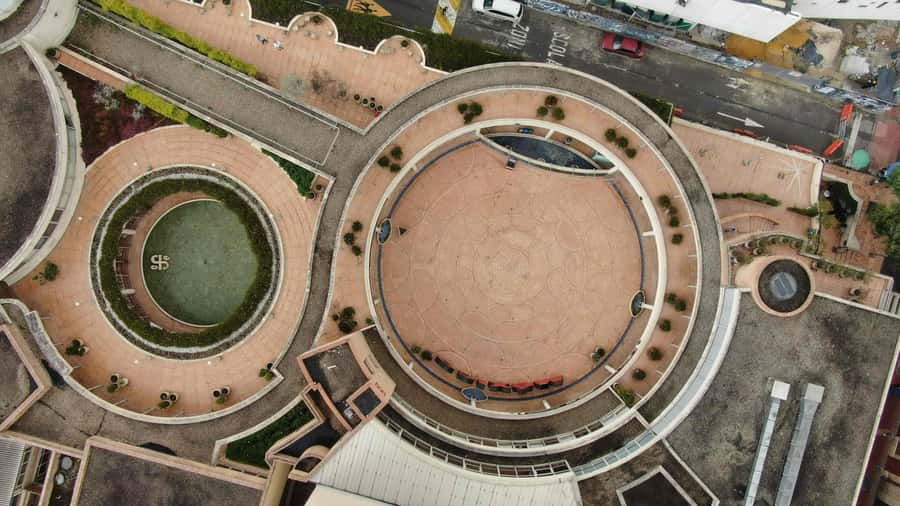
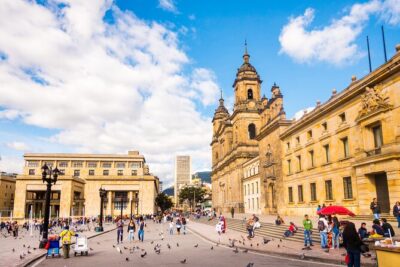
The tour brings you to Plaza de Bolívar, described as the heart of Bogotá, and you get a guided look at the surrounding iconic buildings. You are not just standing in the square, you are learning the role it plays in the city’s public life.
What makes this stop work is the variety around it. You will be near major national institutions, including the Palace of Justice and the National Capitol, plus other landmark architecture in the immediate area. In one place, you can sense politics, law, and national identity all at once.
This plaza stop also helps you understand why Bogotá feels the way it does. Even without getting too academic, the energy of a central square is easy to read: people pass through, events happen, and the architecture sets the tone. With a guide, you get the “why” behind that tone.
If you are the kind of traveler who likes to connect your city photos to meaning, Plaza de Bolívar is where you will feel that payoff.
Gabriel García Márquez Cultural Center and Manzana Cultural
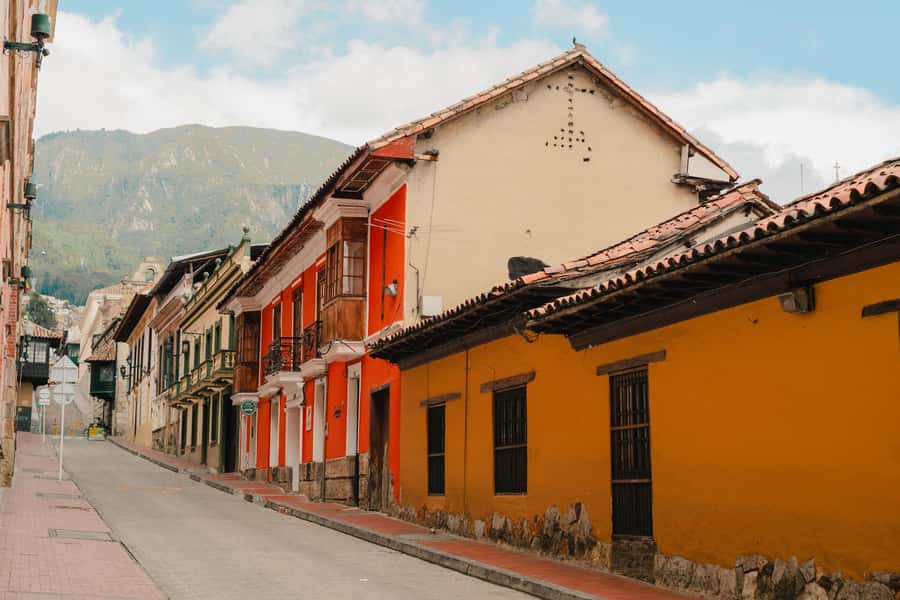
As the walk turns more modern, you go to the Gabriel García Márquez Cultural Center. This stop broadens your sense of what counts as Bogotá heritage. You are still in the same general neighborhood, but the cultural focus shifts toward contemporary Colombian identity.
Then you reach Manzana Cultural, a place that houses three of the most important museums, including the Botero Museum. This matters because it is a way to hit multiple museum energies without feeling like you are bouncing around the city all day.
If you only have limited time, this kind of clustering is exactly what you want. You are not forced into an “either museum or street life” choice. You get both, and the tour helps you manage the transitions so you do not lose momentum.
One smart thing a guide can do here is help you choose where to linger during your visit. The Botero Museum is the big finish, but Manzana Cultural sets context so you appreciate what you see when you walk through.
Casa de La Pola and Iglesia San Ignacio: people behind the architecture
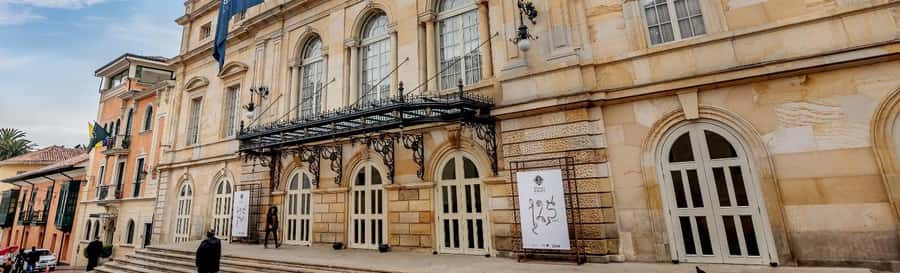
The tour also weaves in stops tied to Colombia’s liberation story and religious architecture.
Casa de La Pola is the residence of Policarpa Salavarrieta, and connecting a person to a specific home changes how you feel about the era. It moves the story from abstract to concrete. You get to picture daily life in the same space where history later attached itself.
Then you visit Iglesia San Ignacio, a Catholic religious temple built in the 17th century. It is not just an old building, it is a snapshot of how faith shaped community space. Even if you do not do “religious tourism,” visiting older churches in a guided format can be meaningful because you learn what was important to the people who built them.
The drawback to keep in mind is that church and museum visits can feel slow compared with plazas and street scenes. The fix is simple: treat indoor moments as “listen and look” time. Focus on what the guide points out, because that is what makes the difference between seeing a building and understanding it.
Museo Botero as the natural finish, plus what to do next
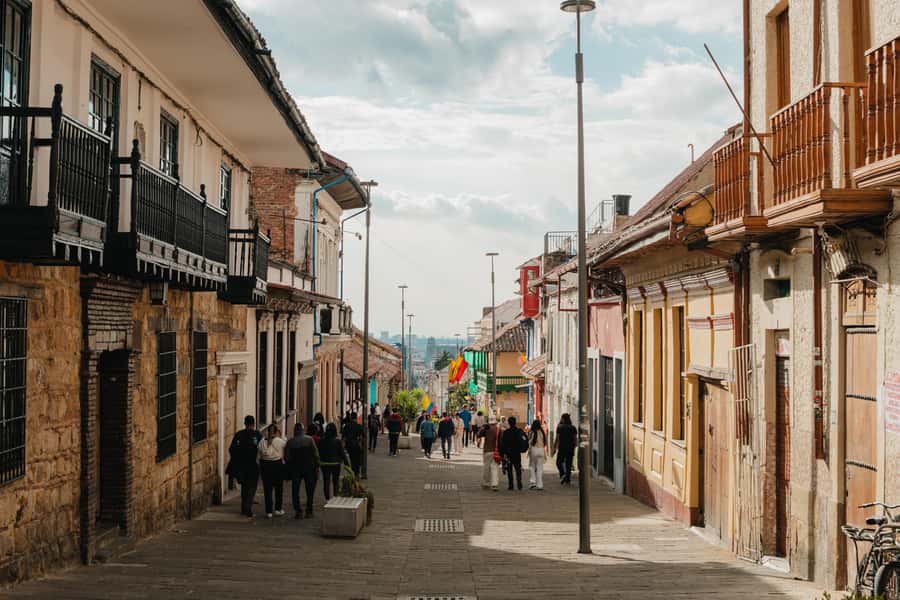
The tour ends at the Botero Museum. This is a strong finish because by then you have context for the neighborhood’s blend of old and new. You have walked through the founding story, national heart, and cultural hubs. Now you step into art where you can reset visually and mentally.
The Botero Museum is also a practical ending point. You are in a museum complex area, so it is easier to keep going after the tour. If you want more time with art, you can often build your plan without hauling yourself across town.
Just as important is what you get before you even arrive. The tour format includes guidance on where to go for food, clubs, and activities. That advice is gold, especially if you are trying to avoid spending your first night in Bogotá wandering in circles.
If you are tired, this is also a good moment to throttle your day back. You can go slow in the museum, then decide later whether you want a relaxed dinner or something more energetic.
Price and logistics, and whether $16 makes sense
At $16 per person for about 150 minutes, this tour is positioned as a high-value way to cover a dense part of Bogotá with a guide. The key is that it includes an expert guide, plus entrance to some museums and churches. Even without naming every entry, it is clear that you are not paying only for commentary, you are paying for access.
Where the money shows up for you:
- You get interpretation, not just movement between sights
- You save time figuring out what to see first in Candelaria
- You get museum time instead of a purely outdoor stroll
- You leave with actionable plans for the rest of your trip
What is not included is also worth noting, because then you can budget realistically. Anything not specified is on you, so plan for personal expenses like snacks, drinks, and anything beyond the included museum and church access.
One final logistics note, based on rare past issues with group tours, is to keep your confirmation and watch your meeting details. If a guide does not show up, it can ruin your day. The best protection is staying organized and checking messages on the day of the tour.
Who this walking tour is best for
This is a good fit if you want a structured introduction to La Candelaria and Bogotá without turning your day into a spreadsheet of stops. It is also ideal for travelers who enjoy mixing architecture, people, and art in one route.
It also makes sense for couples and small groups because a guide can answer questions without the tour feeling rushed. Past experiences with guides like Sharik and Jorge were highlighted for strong question handling and an enjoyable pace, which is exactly what you want from a group tour.
I would consider it less ideal if:
- You want a completely self-paced walk with no explanation
- You dislike cobblestones and long stretches on foot
- You need more than the typical museum and church time blocks
Also, it is not suitable for people over 95 years, so double-check the fit for your group before you book.
Should you book Candelaria Unveiled: Cool-tural Heritage Walking Tour?
Book this tour if you want a smart, guided way to understand Bogotá’s colonial core and modern culture stops in about two and a half hours. The price is reasonable for the time and because entrance to some museums and churches is included, plus you get practical recommendations you can use right away.
Skip it if you are chasing a purely “wander and discover” day, or if you know cobblestones and indoor visits will frustrate you. And if you have a tight schedule, I suggest you keep your plans flexible, since a no-show is rare but can happen with any group booking.
If you like history with a human face, art as a payoff, and a guide who helps you plan the rest of your trip, this one is an easy yes.
More of La Candelaria
- La Candelaria, Monserrate and Museums Bogotá Private City Tour
★ 5.0 · 1,567 reviews - Bogota + Monserrate Private City Tour, Museums, Candelaria.
★ 5.0 · 1,015 reviews - Graffiti Tour in La Candelaria Bogotá
★ 5.0 · 315 reviews - Bogotá: La Candelaria Graffiti & Urban Art Guided Tour
★ 4.7 · 250 reviews
Recently reviewed around Bogotá
- Visit and live a colombian coffee plantation (group tour)★ 4.5 · 4 reviews
- Villa de Leyva Food Tour at Sunset★ 5.0 · 4 reviews
- Private Coffee Tour in Cachipay★ 5.0 · 4 reviews
- Tour Nocturno de Tejo y Salsa en Bogotá★ 5.0 · 4 reviews
- Bike Tour in Bogota★ 5.0 · 4 reviews
- Hike to the Rocky mountains of Sutatausa Private Day Tour★ 5.0 · 5 reviews
- Andrés Carne de Res Chía: VIP Entry with Cover & Welcome Cocktail★ 5.0 · 5 reviews
- Salt Cathedral Tour along with the Legendary Lake Guatavita★ 5.0 · 5 reviews
La Candelaria, compared.
La Candelaria, Monserrate and Museums Bogotá Private City Tour
Read our review →
Shared Tour of the Historic Candelaria in Bogotá
Read our review →
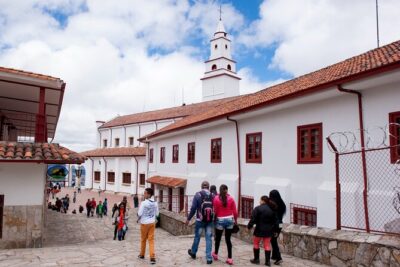
Bogota + Monserrate Private City Tour, Museums, Candelaria.
Read our review →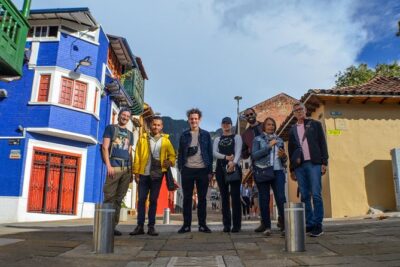
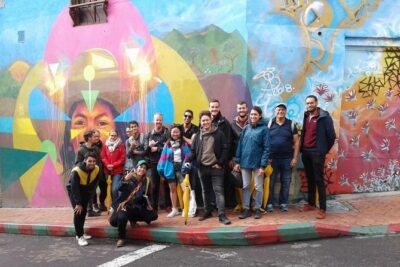
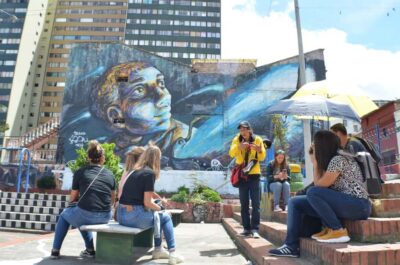
Private Tour in Bogota : Monserrate, Museums and Candelaria
Read our review →Browse the lists this tour appears in