
Reviewed · TATACOA DESERT
Discover the Tatacoa Desert with a Local
Tatacoa Desert with a local is interesting because it turns the whole day into a slow switch from city routine to Mars-like silence and big-sky night views. I like how the route starts in Villavieja so you get context before you walk the strange rock shapes. I also like the finish: an astronomical observatory moment aimed at seeing the sky in full, not just taking photos at sunset.
The main thing to think about is effort. This is a long day (about 13.5 hours) in real heat, with walking in open desert and optional pool time. If you need fully English commentary, expect a possible language mix, and stargazing can depend on cloud cover.
Key highlights you’ll actually feel on the ground
- A local-style route, starting with Villavieja town center history before the desert walks begin
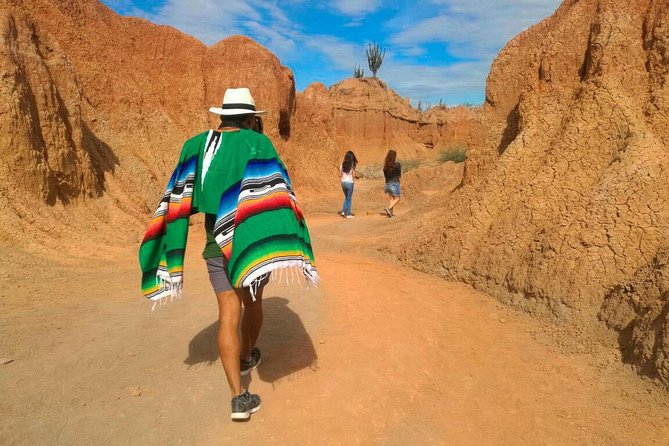
- Grey Desert and the region of the holes, with a guided walk that helps you read the terrain
- Window stop plus viewpoints like the cardon viewpoint, great for understanding how the landscape was shaped
- Red Desert walks in the Cusco labyrinths, where the colors look otherworldly at golden hour
- Natural water pool as an optional break, often the best way to cool off after the sun
- Stargazing at an observatory, with telescopes when skies cooperate
Tatacoa Desert by 8:00 am: why this day starts early
Your day begins at 8:00 am in Neiva, at Cl. 34 #8g-18, Comuna 2, Huila. The early start matters because Tatacoa rewards you when you’re not fighting the midday sun. Later in the day, you’ll be chasing colors in the red zone and then waiting for dark skies. If you start late, you lose the best light and you feel the heat longer.
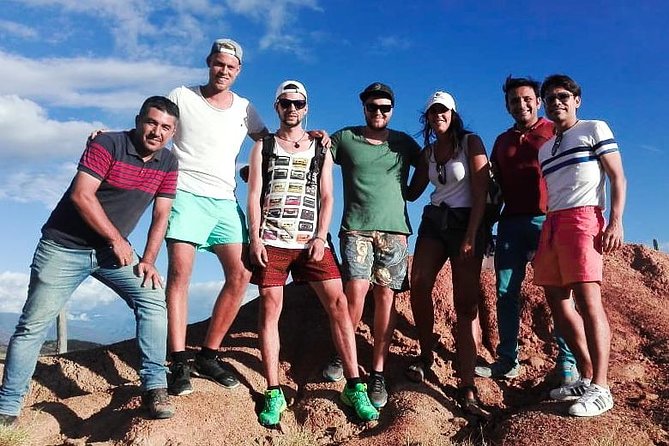
This tour runs about 13 hours 30 minutes and keeps things compact, with a maximum of 20 travelers. That small group size makes it easier to move together through viewpoints and short hikes, and it usually means your guide can pace the day without feeling rushed.
You’ll ride in an air-conditioned vehicle, and there’s travel insurance included. That’s not glamorous, but on a long desert day, it helps your body stay functional.
More Tatacoa desert trips:
- Neiva: Guided Day Trip to the Tatacoa Desert with Lunch
★ 4.8 · 76 reviews - Community and Biodiversity Tour of the Tatacoa Desert from Neiva
★ 5.0 · 29 reviews - Community and Biodiversity Tour of the Tatacoa Neiva Desert
★ 4.7 · 14 reviews
The Villavieja foundation stop: history first, photos second
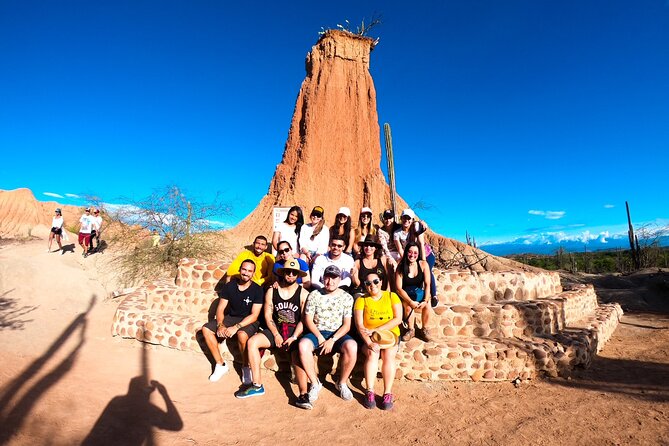
The first big “setup” moment is Villavieja town center. You’ll learn local history as you orient yourself to the area before the desert starts looking like another planet. This is one of those smart travel choices: when you know a bit about where you are, you notice more during the walks.
After Villavieja, you go to the cardon viewpoint. Cardon refers to tall cactus plants, and viewpoints here are about perspective. You’re not just looking, you’re learning the geography, how the desert formations sit in layers, and why some stops are placed where they are.
This part also helps with pacing. You’re not yet deep into the “hot walking” section, so you can settle in. If your Spanish is rusty, use this time to get comfortable with the guide’s rhythm, then lean into the later stops when the visuals do half the work.
Grey Desert walk and the region of the holes
One of the signature stops is the grey desert, specifically in the region of the holes. The grey zone has a different mood than the red: the colors feel muted and textured rather than blazing. That’s why this walk matters. When you step on the ground here, you start to understand how erosion and time carve the odd shapes you see from a distance.
You’ll also do a guided walk through this area. The goal is not just “steps on sand.” It’s about reading the terrain while someone explains what you’re seeing. Guides on this route, including people like Miguel and Valentina (names you may hear depending on the day), tend to focus on practical explanations that make the desert feel less random.
One real-world consideration: it can be hot. In desert heat, even “not too hard” walking becomes intense once you add sun and direct exposure. This is the part where you’ll feel most grateful that the day is guided, with planned stops and breaks instead of wandering around alone.
Window stop: a quick photo break with meaning
The window stop is a shorter stop but an important one. It gives you a framing point, like a natural viewpoint that helps you “hold” the geography in your mind. You’ll likely take photos here, but the better value is how it connects other stops, including the grey and later red zones.
Also, this stop functions like a mental reset. After walking in the grey zone, your eyes need a change in color and structure. Window stop is a bridge, and it helps you stay energized instead of just counting minutes until the end.
A different kind of day out of Neiva:
- Tatacoa Desert Day Trip live, discover and connect
★ 4.0 · 9 reviews - HUILA VIEWPOINTS MANO DEL GIGANTE
★ 4.7 · 3 reviews
Natural water pool: optional, often worth the cool-down
At some point you’ll have time at a natural water pool. The key detail: pool entrance is not included, so plan a small extra expense if you want to swim. The good news is that the pool itself is built into the experience, and many people treat it as the payoff for the hotter sections of the day.
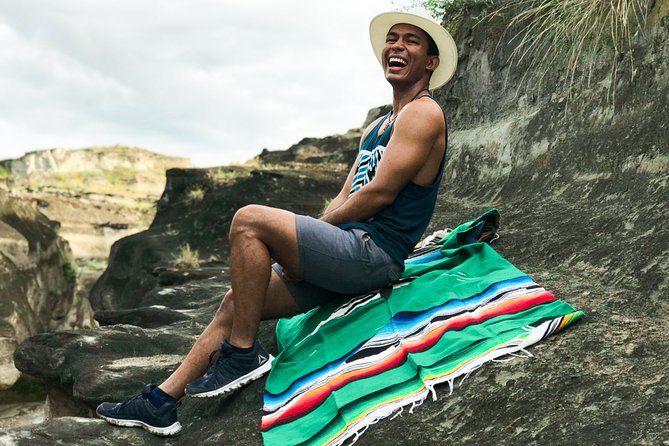
Bring a towel if you’re doing the pool. If you don’t, you’ll dry off the slow way, sitting in the sun with wet skin. Also pack sunscreen, because you’ll go from high heat to water cool-down and back to sun right after.
The pool stop also gives you a chance to reset your body before the red desert walking. In other words, it’s not just fun. It’s practical.
Red Desert and the Cusco labyrinths walk
The red desert is where the Tatacoa experience starts feeling truly cinematic. The itinerary calls it walking through the labyrinths of Cusco, and that word labyrinth fits what you see: narrow paths and rock formations that make you feel like you’re moving through a maze of colors.
This is also where the day’s lighting tends to get better. As the sun shifts, the red tones intensify, and the ground textures look sharper. If you’re the kind of traveler who cares about seeing a place in more than one light, this is your moment.
One caution from real desert experience: this part is often the most demanding emotionally, because you’re excited and you still have more walking ahead. If you need to pace yourself, slow down early rather than pushing through. There’s a reason people talk about Tatacoa as a place to find tranquility. You get that feeling when you don’t rush.
Sunset drink and how the day transitions to stargazing
As your day moves toward night, you’ll receive a drink while you watch the sunset. You can choose between beer, soda, juice, or water. It’s a nice touch because it’s not just “good luck, see you later.” It’s a real transition moment from daytime trekking to nighttime viewing.
This part also matters because it cues you to slow down. In desert heat you move fast to survive, but at sunset you want to stand still and let your eyes adjust. That’s when stars start becoming realistic, not just ideas.
Astronomical observatory: telescopes, but clouds can change the plan
The tour ends with stargazing at an astronomical observatory. Here’s what to know before you count on a perfect sky: observatory entrance is not included, and the actual stargazing depends on conditions like cloud cover.
When skies cooperate, telescopes do the heavy lifting. Even if you’re not a science person, it’s a different feeling to see real celestial objects through equipment rather than just looking up.
Language can also affect how much you get out of this part. On some days, the observatory guide has been reported to speak exclusively Spanish, and earlier portions may be a mix of English and Spanish depending on who’s on your bus. If you want maximum detail, knowing at least some Spanish helps. If your Spanish is limited, focus on the visuals and ask your guide for quick clarifications when you can.
Lunch in Villavieja: typical regional food, with a social bonus
Lunch is included and described as a typical meal of the region. The bonus is that you may get the chance to share lunch with local people as a family, which can turn a routine meal into a real human moment. Even if it’s not a long conversation, you’ll still get the feel of local life rather than eating quickly and moving on.
This is where value shows up. At roughly $82.90 per person, you’re not just paying for transport and entrance logistics. You’re paying for access to a local routine: food, pacing, and guided interpretation.
If you have dietary needs, you might want to communicate that in advance. The tour data doesn’t list specific options, so it’s smart to plan.
Price and value: what $82.90 buys you in the desert
Let’s talk value plainly. At $82.90 per person for an about 13.5-hour day trip, you’re paying for:
- an air-conditioned vehicle
- a guided route across multiple desert stops
- lunch plus a sunset drink
- bottled water
- travel insurance
The two costs you may add yourself are the pool entrance and the observatory entrance. That means your final price depends on whether you swim and whether observatory access happens as expected.
Still, the structure is what you’re buying. You get a full desert day that would take time and local knowledge to assemble on your own. Plus, the route moves through several named stops, which is usually the difference between a random desert walk and a meaningful one.
Also note the booking lead time: it’s commonly booked about 53 days in advance on average. That’s a hint to lock in early if you’re traveling during busier periods.
Comfort checklist: how to survive the heat and enjoy the hikes
Tatacoa is not a “light strolling” destination in the middle of the day. The desert hikes can be heavy simply because it’s hot, even if the trail itself looks straightforward on paper. Plan like this:
- Sunscreen you can reapply
- a hat or something to block direct sun
- extra water if you tend to get thirsty fast (bottled water is included, but you control your own pace)
- a towel if you plan to use the natural pool
- insect repellent if you get bitten easily, since bugs can show up later in the day
One more practical idea: wear shoes that can handle dust and uneven ground. You’ll be walking on desert surfaces, and comfort affects your enjoyment more than you’d think.
Language and guide style: you’ll be fine, but plan for mixed commentary
This tour is built around a local guide experience, and language can vary. One day may feel heavily translated, while another day may feel more Spanish-forward depending on who joins your group.
Two things help:
1) Ask the guide for short explanations when you see something you care about.
2) Use visuals as your anchor, because the stops are structured and the scenery does a lot of the work.
If your Spanish is strong, you’ll likely get more out of the walks and the observatory commentary. If your Spanish is limited, you can still enjoy the day, just don’t expect every sentence to land perfectly in English.
Who should book this Tatacoa Desert with a local
This tour fits best if you want:
- a full-day structure in one go, not a half-baked DIY plan
- guided walking across both grey and red parts of Tatacoa
- the chance to cool off at a natural pool
- a real attempt at stargazing at an observatory
It might not be the best choice if you hate long days, strong sun, or you need fully English-only commentary every minute. If clouds are common during your travel dates, you might value the daytime desert more and treat stargazing as a bonus.
Also, if you’re traveling with kids or anyone with mobility challenges, you should consider comfort and walking tolerance. The tour notes that most travelers can participate, but it does not say it’s low-impact.
Should you book this Tatacoa day trip?
Book it if you want an organized, small-group day that hits the key Tatacoa stops, includes lunch, and tries for a night-sky finish. It’s a good value for the time you get, especially if you’re short on days in Huila.
Skip or rethink if any of these apply:
- you require fully English commentary without any Spanish segments
- you cannot handle long, hot walking days
- you mainly want swimming or you mainly want guaranteed stargazing, since the pool entrance and observatory entrance are not included and star conditions can change
If you’re flexible, pack for heat, bring a towel if you plan to swim, and go in with a calm mindset, this is the kind of day that makes the desert feel like more than scenery. It becomes a break from the usual pace.
FAQ
What time does the Tatacoa Desert tour start?
It starts at 8:00 am in Neiva.
How long is the tour?
It runs for about 13 hours 30 minutes.
Where is the meeting point in Neiva?
The meeting point is at Cl. 34 #8g-18, Comuna 2, Neiva, Huila, Colombia.
What stops are included during the day?
You visit Desierto de la Tatacoa, including Villavieja town center, the cardon viewpoint, the grey desert (region of the holes) walk, the window stop, a natural water pool stop, the red desert and Cusco labyrinths walk, and an astronomical observatory for stargazing.
Is lunch included?
Yes. Lunch is included, described as a typical regional meal.
Is bottled water included?
Yes. Bottled water is included, and you also receive a drink at the end of the tour to watch the sunset.
What drink options are available at sunset?
You can choose between beer, soda, juice, or water.
Is the natural water pool entrance included?
No. Pool entrance is not included.
Is entrance to the astronomical observatory included?
No. Observatory entrance is not included.
What is the maximum group size?
The tour has a maximum of 20 travelers.
Recently reviewed around Neiva
- Tatacoa Desert Day Trip live, discover and connect★ 4.0 · 9 reviews
- HUILA VIEWPOINTS MANO DEL GIGANTE★ 4.7 · 3 reviews
- Community and Biodiversity Tour of the Tatacoa Desert from Neiva★ 5.0 · 29 reviews
- Neiva: Guided Day Trip to the Tatacoa Desert with Lunch★ 4.8 · 76 reviews
- Community and Biodiversity Tour of the Tatacoa Neiva Desert★ 4.7 · 14 reviews
Tatacoa Desert, compared.
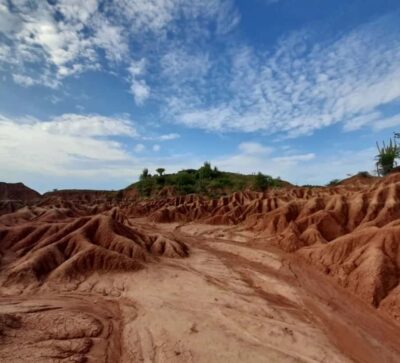
Neiva: Guided Day Trip to the Tatacoa Desert with Lunch
Read our review →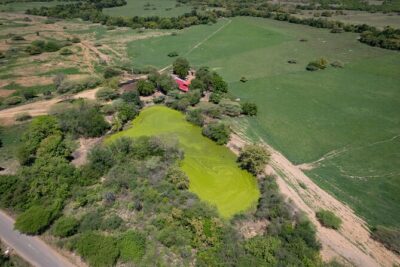
Community and Biodiversity Tour of the Tatacoa Desert from Neiva
Read our review →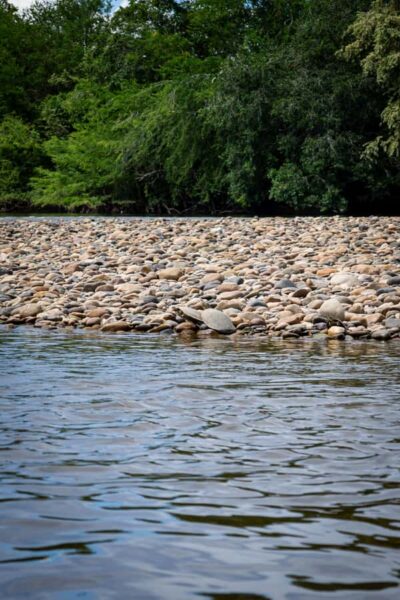
Community and Biodiversity Tour of the Tatacoa Neiva Desert
Read our review →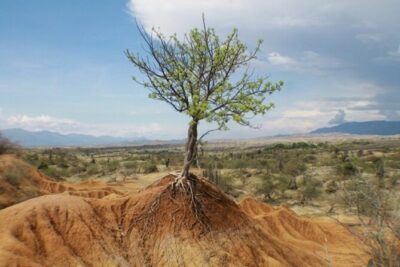
Desierto de la Tatacoa: paisajes y observación de estrellas.
Read our review →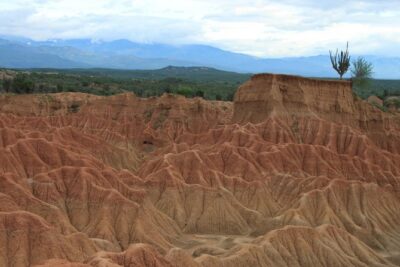
2-Day Private Tour to the Tatacoa Desert from Bogotá – Astronomy
Read our review →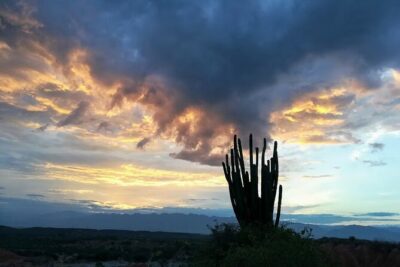
Tatacoa Desert Day Trip live, discover and connect
Read our review →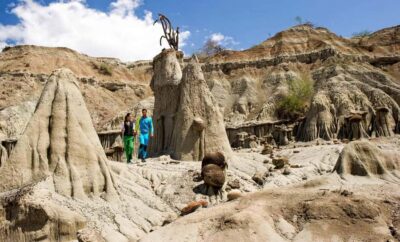
Day Trip to Tatacoa Desert (Horseback, Boat, Stargazing, ..)
Read our review →Browse the lists this tour appears in