Reviewed · PRIVATE
Pablo Escobar Private Tour : Violent Times and The New Medellin
4 hours (approx.)
This experience is interesting because it uses one man’s story to explain a whole city’s shift from fear to a newer, rebuilding Medellín. You move through places tied to Pablo Escobar, but the tour keeps the focus on the people and consequences left behind, not just the legend. Escobar’s legacy and memorial sites are what make it feel real.
I love that the route hits specific locations, like the Inflexion Park memorial at the Monaco Building ruins and the Jardim Montesacro cemetery. I also love the human tone the guides bring, with names like Luis, Carlos, Andres, Santiago, and Julian showing up in standout feedback for being friendly, hospitable, and easy to learn from.
One possible drawback: it is a heavy topic. You’ll visit a memorial for victims and then a cemetery and a house tied to his death, so if you want light sightseeing only, this four-hour run can feel emotionally intense.
Key things I’d circle before you go
- Four focused stops in about four hours, so you do not waste time hopping around aimlessly
- Inflexion Park at the Monaco Building ruins, framed around victims of the civil war
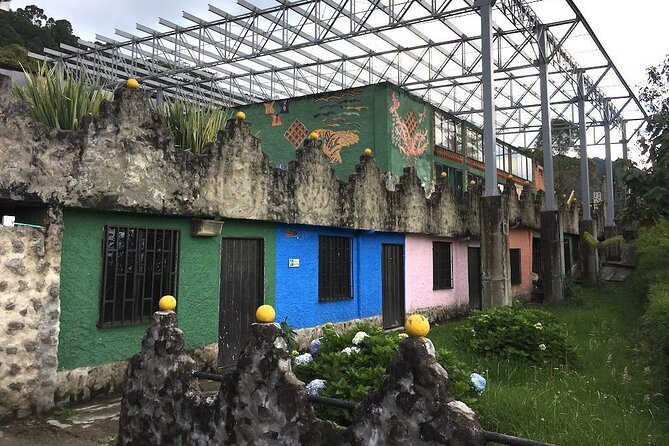
- Barrio Pablo Escobar and the mural honoring the community, tied to housing for homeless families
- Cementerio Jardines Montesacro, including where he is buried with family members
- Los Olivos, where you hear both the official death story and an alternate version connected to the roof
- Small group size (max 20), which usually makes the questions and pacing work better
Medellín, Escobar, and why this tour is more than a “scary story”
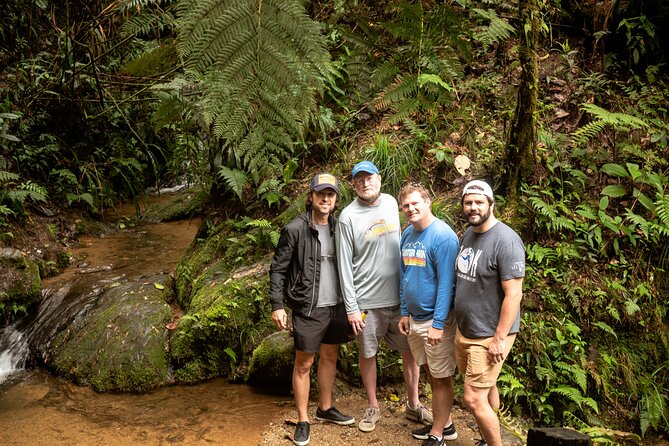
Medellín is famous for resilience. This tour takes that idea and tests it against the city’s darkest chapter. Instead of treating Pablo Escobar like a movie character, you’re guided through places where you can see the aftermath in stone, street art, and neighborhood life. It’s the kind of tour that makes you look at the city map differently.
What makes it especially useful for your planning is the structure. In one afternoon, you get four stops that connect in a clear line: a memorial for victims, a neighborhood built for homeless families, a cemetery that names family members, and the last house where he lived. That sequencing matters. You are not just collecting photos. You are building a cause-and-effect picture.
Now, a quick honesty note: this is not a “fun facts” walk. The tour is built around violent times, civil war memory, and the reality that people paid the price. The payoff is that you come away with a clearer sense of what Medellín had to recover from, and what modern Medellín looks like after all that.
A few more Medellín days worth comparing
- Medellin: Comuna 13 Graffiti Tour, Cable Car & Street Food
★ 4.8 · 9,046 reviews - Comuna 13 Graffiti Tour with Street Food
★ 5.0 · 7,503 reviews - Guatapé Tour: Piedra del Peñol with Boat Tour, Breakfast, Lunch
★ 5.0 · 7,035 reviews
Price and what $49.99 buys you in 4 hours
At $49.99 per person for about 4 hours, this is positioned as good value for a guided, ticketed experience. Each stop includes an admission ticket, which is a detail people often overlook when comparing tours. You are not paying for a guide only, then hoping the entry fees are small.
You also benefit from not having to figure out everything yourself in the middle of the city. The tour is said to be near public transportation, which can help if you like flexibility for arriving a bit early or getting back out after the tour. Still, the guided route keeps you from turning the afternoon into logistics.
One more value point: the group limit is 20 travelers. It’s not a huge bus crowd. In this size range, guides can usually manage questions and keep the flow from turning into a race between stops.
How the route connects victims, communities, and the “last house”
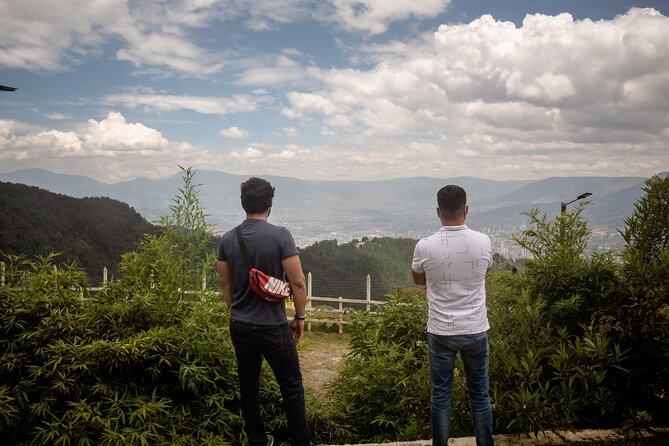
I like tours where the stops explain each other. Here’s the logic the itinerary follows, even if you never say it out loud:
- You start with ruins turned into a memorial, so you begin with consequences for real people.
- Then you shift to housing and community artwork, which shows how everyday lives were rebuilt or reshaped.
- Next you visit a cemetery tied to family names, which brings the story back to the man and his close circle.
- Finally, you end at the last house area, where you hear the official story and a different version, plus commentary about how media can simplify or distort.
That arc matters. It helps you avoid the trap of thinking the past is only about one person. The real subject is Medellín itself: what broke, what was remembered, and what moved forward.
Stop 1: Inflexion Park and the Monaco Building ruins
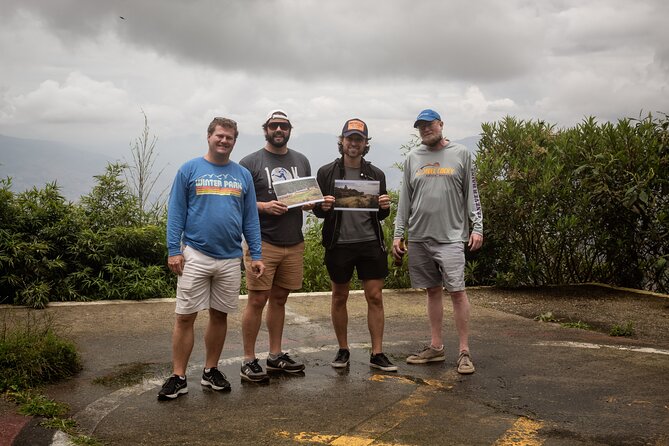
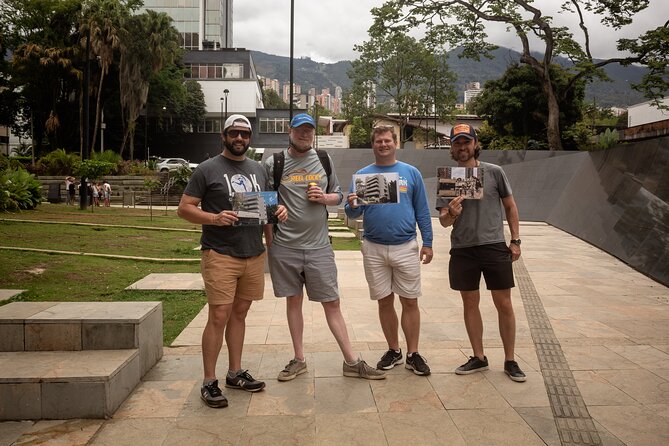
Your first stop is Parque Memorial Inflexion, connected to the Monaco Building ruins, once home to Escobar’s family. The important part is what happened next. The place is now a memorial park dedicated to the victims of the civil war, described as the real heroes of those dark times.
This is where the tour earns its seriousness. Ruins are powerful because they refuse to be tidy. You do not get a polite history lesson with clean margins. You get a location that still reads as aftermath.
You only spend about 15 minutes here, which means your visit is meant to be focused rather than drawn out. If you tend to read every sign slowly, you might want to prepare for a brief visit and then follow up later on your own if something grabs you.
What I’d watch for: look at how the memorial frames the story. The tour’s tone suggests you should treat this stop as remembrance, not entertainment. That mindset sets the pace for the rest of the afternoon.
A different kind of day out of Medellín:
- Day Trip To Guatapé with ,Breakfast, Lunch and Boat Ride
★ 5.0 · 2,996 reviews - Comuna 13 Graffitour knows the urban art district of Medellín
★ 5.0 · 2,856 reviews - Tour to Guatape, Piedra del Peñol, lunch, snacks boat trip
★ 5.0 · 2,658 reviews - Half Day Bike Tour in Medellin – Local snack, Coffee or Beer
★ 5.0 · 2,509 reviews
Stop 2: Barrio Pablo Escobar, housing, and the mural honoring him
Next comes Barrio Pablo Escobar. The tour’s framing here is different from the ruins. You’re told the neighborhood was constructed for homeless families in the late 80s, and you’ll see a mural created by the community that honors Escobar.
This stop is a good example of why this tour is worth your time even if you think you already know the basics. When people talk about Escobar, they often reduce it to violence alone. Here, you get a reminder that the effects of power can show up in unexpected places, including housing and neighborhood identity.
It also helps you understand how a city can hold contradictory memories at the same time. A mural can be a sign of gratitude for some, a discomfort for others, and a complicated symbol to everyone.
You spend about 20 minutes, so again, it’s not meant to turn into an extended cultural immersion. It is meant to give you just enough on the ground that you can connect the dots later.
Possible drawback to consider: if you’re uncomfortable with anything that portrays Escobar in a celebratory way, this stop could feel off-balance. The tour itself aims for context, but murals and names can still hit emotionally.
Stop 3: Cementerio Jardines Montesacro and the burial details
Then you head to Cementerio Jardines Montesacro, where you learn about Escobar’s grave. The tour also describes him as buried with family members, including Gustavo Gaviria and Griselda Blanco.
A cemetery stop always changes the tone of a tour. It becomes quieter, more reflective, and less about sightseeing. In this case, it also ties the story to names, not just events. That makes the history feel closer to human relationships and family networks, not only politics or crime headlines.
Your time here is about 15 minutes. That’s short enough to keep the experience from dragging, but long enough to let you register that this is a place with real weight. If you want to take in inscriptions or read details carefully, keep your expectations realistic. Your best move is to focus on what you can absorb in the time you have, then return later if you want deeper reading.
What makes this stop valuable: it grounds the story in a specific location. It’s harder for facts to slide into rumor when you’re standing where they are claimed to be.
Stop 4: Los Olivos and the story behind the roof
The final stop is Los Olivos, described as the last house he lived in. Here, the tour does something you should appreciate if you care about accuracy: it discusses the official version of his death and then points you toward a different version tied to where he died, including the roof.
There’s also a direct callout that media, including what you might see from Netflix, does not always tell the whole truth. That doesn’t mean everything you hear is automatically more accurate. It means you should treat the story as contested and layered.
You spend about 15 minutes here. That’s just enough time to hear the narrative, understand what the guide claims, and then look at the location with your own judgment.
Why this stop is worth ending on: it leaves you with questions. You do not get a neat bow on the story. Instead, you get the sense that history in real life includes competing accounts, public messages, and selective details.
And yes, it can be a bit surreal to hear a “version vs version” discussion at the very spot the story is tied to. That weird feeling is part of the point. It reminds you to stay alert and not take any one retelling as the final word.
Guides make or break tours like this, and names matter
This kind of tour depends heavily on the guide’s tone. You’re moving between memorials, neighborhoods, and death-related locations, so the guide has to manage emotions without turning the afternoon into either propaganda or gossip.
In the feedback tied to this tour, several guide names show up with strong notes. Luis is praised for a friendly vibe and lots to think about. Carlos is highlighted for being phenomenal, hospitable, and knowledgeable about both Escobar and Medellín history. Andres and Santiago also get strong mentions for being informative. Julian shows up as well, with praise for everything being excellent.
Even without naming a specific person on your booking day, you can use this info as a practical tip. If the platform lets you choose a guide or request preferences, it may be worth asking for one of these names. If not, you can still apply the same mindset: pick a time slot and company that clearly sends experienced, communicative guides for a sensitive subject.
Pacing, group size, and how to get good value
The tour lasts about 4 hours and includes four stops with short time blocks. That pacing is intentional. It’s built for visitors who want a structured story without committing to a full day.
The group limit of 20 travelers matters more than it might sound. In a small group, you can ask questions without feeling like you are interrupting a machine. It also makes the guide more likely to keep the conversation responsive, especially in a topic where people naturally want clarification.
Your best strategy is simple:
- Wear comfortable shoes. You’ll be moving through multiple public spaces.
- Bring a light layer. Indoor or shaded areas can still feel cooler than you expect.
- Keep your questions ready about what you hear at each stop, then ask them when the guide is talking through that location.
And remember, the tour includes tickets at each stop. That reduces friction. You’re not spending your short afternoon hunting for entrances.
What kind of traveler should book this
This tour fits best if you want real places and a narrated story that connects past to present. It’s a good choice if you’re:
- Visiting Medellín for the first time and want a structured introduction
- Interested in how cities rebuild and remember after violent eras
- Curious about how public memory can look like ruins, cemeteries, murals, and neighborhood identity
It may be less ideal if you:
- Prefer purely scenic tours with no heavy subject matter
- Are sensitive to discussions involving violence, war, or death
- Want a purely academic style with no commentary on contested versions
Should you book Ultra Tours Medellín’s private history tour?
I think this is worth booking if you want a guided, efficient afternoon that gives you context you can actually use. The combination of ticketed memorial and cemetery stops, plus a neighborhood visit and a final discussion tied to the last house, gives it enough substance to justify the $49.99 price tag.
However, go in with the right expectations. This is not a cheerful tour. You’re walking through sites linked to violent times and the aftermath. If you can handle that, you’ll likely leave with a sharper, more human understanding of Medellín’s story, including the parts that don’t fit neatly into a headline or a TV episode.
FAQ
Where does this tour take place?
The tour takes place in Medellín, Colombia.
How long is the Private History Tour?
It runs for about 4 hours.
What does the tour cost?
The price is $49.99 per person.
How many stops are included?
There are four stops: Inflexion Park (Monaco Building ruins), Barrio Pablo Escobar, Cementerio Jardines Montesacro, and Los Olivos.
Are entrance tickets included?
Yes. Admission tickets are included for the stops.
How big is the group?
The tour has a maximum of 20 travelers.
When will I get confirmation?
Confirmation is received at the time of booking.
Is there free cancellation?
Yes, free cancellation is available. You can cancel up to 24 hours in advance for a full refund.
What is the best fit for most travelers?
The tour states that most travelers can participate, and it is near public transportation.
Recently reviewed around Medellín
- Coffee Tour – All inclusive – Medellín★ 4.0 · 4 reviews
- Paragliding Over Medellín + Gopro & Photos + Private transport.★ 5.0 · 4 reviews
- Shared Tour Commune 13 and Metro Cable La Aurora de Medellin★ 4.5 · 4 reviews
- Medellín Spa: Hydrotherapy & Themed Massage with Teppanyaki★ 5.0 · 4 reviews
- Night Out Gay Bar Crawl in Medellin★ 4.0 · 4 reviews
- White Water Rafting Near Medellin★ 5.0 · 4 reviews
- Bilingual private transport to the airport.★ 4.5 · 5 reviews
- African Music Roots Private Tour in Comuna 13, Medellin★ 5.0 · 5 reviews
Private, compared.
La Candelaria, Monserrate and Museums Bogotá Private City Tour
Read our review →
Private Walking Tour in Cartagena Walled City & Getsemaní
Read our review →
Bogota + Monserrate Private City Tour, Museums, Candelaria.
Read our review →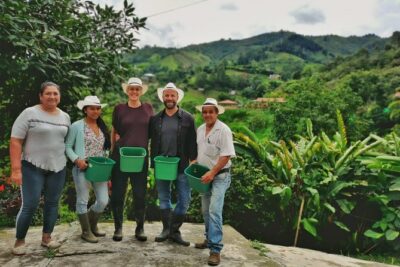
Private Coffee Farm Tour in Medellin: Real Authentic Experience
Read our review →
Private City Tour, Monserrate, Emerald and Botero
Read our review →
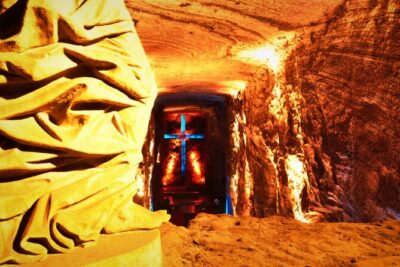
Bogota Zipaquira Salt Cathedral Private Tour + Lunch
Read our review →