Reviewed · PRIVATE
“Essential Cartagena” Private Tour.
A private tour of Cartagena is interesting because it turns the city into a timed walking circuit, with a guide who can adjust as you go. I like that you get the private experience and true customization rather than a one-size route.
I also like the way the tour explains why each place matters, from the founder and the slave-trade entry point at Plaza de los Coches to the naval heroes and defenses that shaped the port. You’re not just looking, you’re learning the logic behind the walls, plazas, and viewpoints.
One possible drawback: expect lots of cobblestones and some hills, so good shoes matter. If weather gets rough, your route may shorten, so go with a flexible mindset.
Key highlights you should not miss
- A tailor-made private circuit with start times that fit your day
- Plazas that explain Cartagena’s power (trade, faith, and city governance)
- Bastion viewpoints over Cartagena Bay plus stories of pirates and the Spanish crown
- Most stops are free, with only one museum ticket listed as extra
- Getsemaní street-art area and time around lively squares for snacks and local bites
- Guides who tell it clearly in real life English, including named guides like Néstor, Stefania, Jose, and Hector
Setting Off From the Clock Tower, Not a Bus Stop
Cartagena starts best on foot, inside the old-city web of streets and squares. This tour begins at the Monumento Torre del Reloj in the El Centro area, at Boca del Puente, and ends back at the same meeting point. That matters because you’re not trying to map the city while carrying a daypack, you’re following a guided route that naturally brings you back where you started.
The timing also helps. It runs about 4 hours, and you can usually pick a start time from the available windows (morning and late afternoon slots are listed). That gives you flexibility if you’re juggling a cruise day, a beach afternoon, or a dinner reservation.
You’ll be walking at a “comfortable but consistent” pace. The tour is aimed at people with moderate physical fitness. In practice, that means you should expect continuous strolling, plus short climbs and descents. Based on guides’ experience with different guests, the best way to enjoy it is to wear supportive shoes and be ready to slow down whenever you want a photo.
A few more Cartagena days worth comparing
- Cartagena Island Hopping: 5-Stop Rosario Islands Tour with Lunch
★ 4.5 · 4,903 reviews - Cartagena: Historic Center and Getsemaní Shared Walking Tour
★ 4.9 · 2,716 reviews - Cartagena: Rosario Islands Catamaran with Lunch and Snorkel
★ 4.5 · 2,479 reviews
Why a Private Guide Changes Everything in Cartagena
Cartagena can feel like a postcard from the outside. Inside the walls, it can also feel like a lot of stone, unless someone connects the dots. That’s where the private format wins.
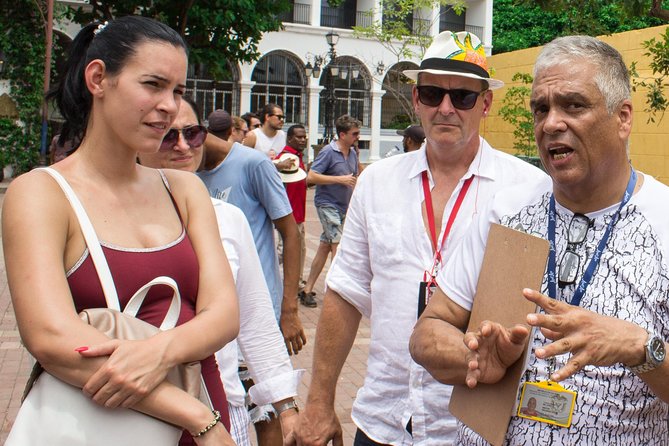
I like that this is not just a checklist tour. You’re choosing your priorities, and the guide can shift the route and pace to match you. That shows up clearly in real-world feedback from guides like Stefania and Jose, who customized for a guest traveling with a mother who couldn’t walk long distances. It also shows up with Néstor and Hector, who were praised for being engaging, easy to talk with, and for storytelling that didn’t drag.
If you care about history, you’ll get it in human terms. If you care about photos, you’ll get the “turn your head right here” moments. Either way, the guide helps you understand why the city looks the way it does, especially where trade and defense meet.
Also, the tour includes bottled water and snacks. That’s a practical win in Cartagena’s heat, and it helps you keep your energy up between short stops.
Plaza de los Coches: Where the City Let People In, and Profits Out
Your first meaningful stop is Plaza de los Coches. This square was the entrance point into the walled city, and it was tied to the slave trade that passed through Cartagena as part of the colonial port system. It’s heavy subject matter, but it’s also central to understanding why the old city is built the way it is.
What you’ll appreciate here is not just the architecture. It’s the positioning. This is a gateway space, the kind of place where power gets exercised quickly. You also see the statue of the city’s founder, Pedro de Heredia, which helps anchor the story in the people who built Cartagena’s early reputation.
This is a good “warm-up stop” because it sets the tone: you’re not sightseeing randomly, you’re learning the port city’s operating system.
Plaza de la Aduana: Trade Paperwork Becomes City Power
Next is Plaza de la Aduana, a key square tied to shipping and the movement of goods. The gold, silver, tobacco, potatoes, sugar, and fruits loaded here traveled to Spain through the Galeón Armada system. Imports from the metropolis also came through this space to destinations across South America.
Look closely and you’ll realize this plaza wasn’t just a market. It was a control point. You’ll also hear about the Casa de La Real Contaduría, the royal accounting offices, and how it relates to the city’s later administrative role. Today it is part of the mayor’s office area, which is a nice reminder that power centers tend to stick around.
Practical tip: this stop is short. But it gives you context that pays off later when you stand on defensive walls. You start to connect commerce, wealth, and who needed protection.
A different kind of day out of Cartagena:
- Full-Day Rosario Islands Including Barú, Bocachica & Playa Blanca
★ 4.0 · 1,729 reviews - Tour De Palenque, Road to Emancipation.
★ 5.0 · 1,678 reviews - Half-Day Tour to Totumo Mud Volcano from Cartagena
★ 4.5 · 1,455 reviews - Private Walking Tour in Cartagena Walled City & Getsemaní
★ 5.0 · 1,357 reviews
Plaza de San Pedro Claver: Faith Built Around Human Suffering
At Plaza de San Pedro Claver, you’re at the heart of a church dedicated to a Jesuit priest known for his care for enslaved Africans brought to America through Cartagena’s port. This place is both religious and moral, a reminder that the city’s story includes compassion alongside cruelty.
The value here is that the guide frames it as more than a monument. You understand why a port city could produce a figure like San Pedro Claver, and how communities turned toward faith as a response to what was happening around them.
Even if you’re not a museum person, this stop lands because it makes the city’s past feel specific, not abstract.
Baluarte de San Ignacio: Learning Defense From the Bay View
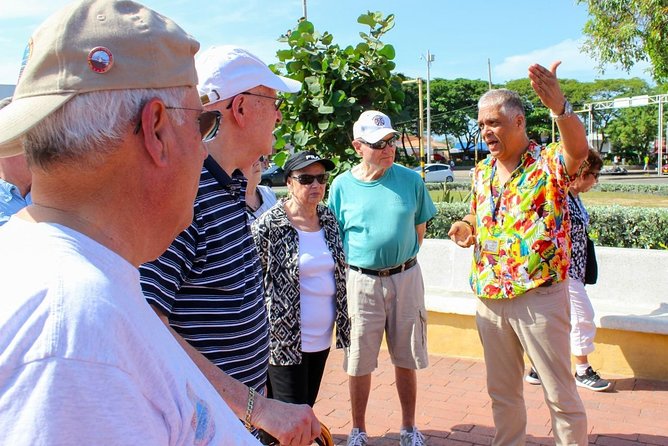
Then you head to Baluarte de San Ignacio. This is where the tour connects history to geography. From the bastion, you get views over the Cartagena Bay and the Bodeguita dock area, and you learn how the city was defended from pirates and enemies of the Spanish kingdom.
This is one of those moments where the view is doing work. When you understand what attackers might have looked for and how ships moved, the walls and strategic placements stop feeling random.
Keep an eye on your footing, though. Bastions can mean uneven ground and steps. If it’s humid or you’re not used to stone paths, take your time at each viewpoint. A good guide will slow you down without making it feel like a drag.
Parque de la Marina and the Admiral Story You’ll Remember
Next stop is Parque de la Marina, focused on the history of the Colombian navy and one hero: Admiral José Padilla. He was known by colleagues as Prudencio for his bravery, and the tour shares how he defeated the Spanish Armada with few men and ships.
This is a smart pivot because it moves you from colonial-era defense to later national identity. Cartagena isn’t only about Spain. It’s about what happened after, and how local stories became part of Colombian history.
If you like character-driven history, this is a strong stop. You’ll come away with a named person and a clearer sense of why Cartagena remained strategic after the colonial period.
Museo Naval del Caribe: The One Ticket You Might Pay Extra For
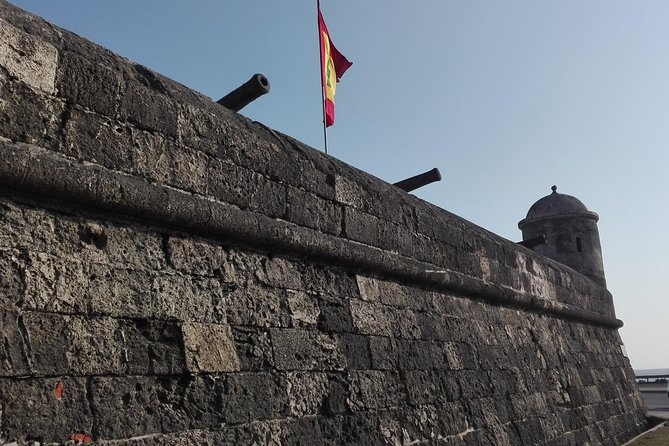
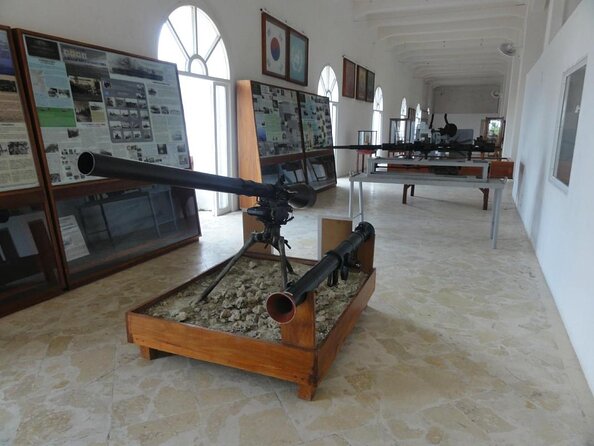
You also visit the Museo Naval del Caribe. This museum adds depth from a naval perspective, tying together geography, nature, and why the area became a perfect defensive port. You’ll get a fuller Cartagena de Indias history through how ships, coasts, and sea routes shaped everything.
The catch is simple: the museum entrance is listed as not included. If you’re budget-conscious, this is still worth planning for because it’s the only extra-ticket item called out. The time here is about 30 minutes, so you’re not trapped inside for hours.
If you’re the type who hates museums, you can still benefit by using the visit time to ask your guide what to look for. A private guide can turn “museum time” into “answer hunting” rather than passive walking through rooms.
Baluarte de San Francisco Javier: Coastal Engineering in Plain Sight
At Baluarte de San Francisco Javier, the focus shifts back to the coastline. In the distance, you’ll see Bocagrande and learn about Spanish military engineers building an underwater jetty to impede navigation, steering ships to the guarded entrance of Bocachica.
This is fascinating because it connects a modern-looking port coastline to old technical tactics. You’re learning how enemies were controlled without needing constant battles.
Practical note: distance views can depend on visibility. If clouds or rain roll in, you’ll still learn the story, but you might get fewer crisp sightlines.
Plaza de Bolívar: The City’s Big Symbols in One Compact Stop
Back inside the old civic core, you reach Plaza de Bolívar. Here you’ll see the Palacio de la Inquisición, a statue of Simón Bolívar, and Cartagena’s links to national pride, including the Colombian beauty queens hall of fame element.
This stop is a good balance point. After bastions and naval stories, you’re back in the political and symbolic center. It’s also a place to reset your pace before the tour moves into cultural and market-adjacent stops.
Time at the square is about 15 minutes, so treat it like a highlight stop: look for the big features, then let your guide point out what matters.
Museo del Oro Zenú: Gold That Comes With Geography and Meaning
Next is Museo del Oro Zenu, where you’ll see gold artifacts made by the Zenú culture, who inhabited the area before the Spanish arrived in the 16th century. Entry here is listed as free.
This museum works for almost everyone because it’s not just about shiny objects. The guide context you get during the tour helps you connect the artifacts to the land and to who lived there.
If you’re trying to decide between this stop and others, prioritize it if you want Cartagena beyond colonial walls. It widens the story beyond Spain.
Plaza Santo Domingo: Botero’s Presence and a Major Church
In Plaza Santo Domingo, you’ll see La Gorda de Botero, known locally as Gertrudis, plus the church of Santo Domingo. This church is described as the first monumental construction in Cartagena, and that kind of detail helps you see why the square matters.
This is where the tour becomes more playful. Botero sculptures are famous for a reason, and even if you’re not a fan of art, it’s a recognizable moment that breaks up the heavier historical stops.
Plaza Fernández Madrid and Plaza de San Diego: Water Supply and Street-Life Energy
Two plazas come close together: Plaza Fernandez Madrid and Plaza de San Diego.
In Plaza Fernandez Madrid, you’ll learn about how people got fresh water. It’s a practical topic that turns into an everyday-life story. In a city known for walls and ports, it’s a good reminder that survival depends on infrastructure.
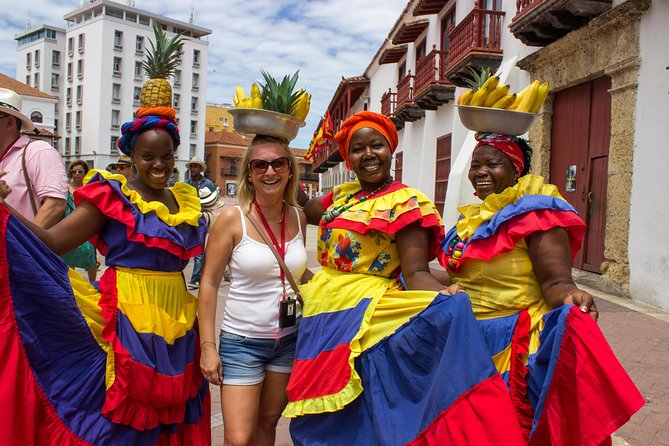
Then comes Plaza de San Diego, one of Cartagena’s picturesque squares with a more social feel. You’ll see the Santa Clara convent, now a luxury hotel, and you’ll find the arts-university student energy that makes this area feel current. The tour also points to street food options like arepa de huevo, caribañolas, and empanadas if you want to try something.
This is a great spot to take a slower moment. Even though the tour keeps moving, you’ll have time to look around and decide if you want a snack. With bottled water and included snacks already in your day, it’s easy to sample just one item without feeling pressured.
La Serrezuela: From Bullring to Shopping and Shows
The walk-by at La Serrezuela gives you a look at how Cartagena reuses space. It was once a bullring and multipurpose arena. Now it’s a high-end shopping mall and a venue for concerts and shows.
This stop isn’t about buying things. It’s about understanding how cities change around old footprints. You’ll also get an easy photo moment, since the structure and setting stand out against the surrounding streets.
Baluarte de San Pedro Martir: Views Toward La Popa and Castillo de San Felipe de Barajas
At Baluarte de San Pedro Martir, you’re guarding another section of the walled city. From here you get distant views toward Cerro de La Popa and the Castillo de San Felipe de Barajas, one of the most impressive military constructions in America.
This is another defense story, but it also works as a “big picture” moment. You’re seeing the wider fort network, not just one wall segment. If you like photography, this is where you can frame Cartagena as a system of lookout points and controlled routes.
Getsemaní at Plaza de La Trinidad: Street Art You Can Actually Walk Through
Then the tour turns to Getsemaní, starting at Plaza de La Trinidad. You’ll see some of the finest street art and colorful streets in this neighborhood.
Getsemaní often feels like the pulse of the city beyond the tourist core, and this stop is short but meaningful. It helps you understand Cartagena as lived-in culture, not only preserved colonial architecture.
You get about 10 minutes here, which is enough to absorb the feel and take a few photos without cutting deeply into your museum or viewpoint time.
Camellón de los Martires and the Return to the Clock Tower
You finish with the walk-by at Camellón de los Martires and the Parque Centenario area, connecting Getsemaní and the Centro. Then you complete the circuit back to the Torre del Reloj where you started.
These final walk segments matter because they give your brain time to organize everything you saw. You’ll notice patterns: where commerce sat, where faith anchored communities, and where defense controlled the sea.
It’s also where your guide’s storytelling can make the biggest final impact. If you’ve been paying attention to the locations, the last loop helps everything click.
Price, pace, and who this private tour fits best
At $140 per person for about 4 hours, you’re paying for privacy and guidance that you can shape. If you go with a group tour, you might spend less. But you give up customization and often you lose time waiting or translating.
This tour’s price feels more reasonable when you look at what’s included and what’s optional. You get bottled water and snacks. Most of the stops are listed as free entry, with only the Museo Naval del Caribe ticket called out as extra. So the value isn’t just the guide. It’s the structure that gives you many high-impact stops in a short day.
The pace is the main “fit” factor. You should have moderate fitness and be ready for cobblestones. The good news is that private guides can adjust to your group, as shown by guides helping guests with limited walking ability.
This tour is a strong match if:
- You want the classic Cartagena core plus the Getsemaní street-art side
- You like history but also want it told in plain, human terms
- You want a route built around your interests, not someone else’s schedule
It might be less ideal if:
- You need minimal walking or step-free access
- You’re sensitive to weather, since the tour requires good weather and bad conditions can shorten the route
Should you book Essential Cartagena?
Yes, if you want Cartagena with context. This private format gives you a guided circuit that connects trade, faith, naval power, and street life in a way that’s hard to replicate on your own. The biggest payoff is the guide’s storytelling and the flexibility to match your pace.
I’d book it now if you like learning from named, experienced guides such as Néstor, Stefania, Jose, or Hector. If rain or heat usually knocks your energy down, plan to start early or keep a backup day in your schedule, since the experience depends on weather.
If you’re comfortable with walking and want the city’s “why” not just its “what,” this one is a solid, efficient way to get your bearings fast.
FAQ
How long is the Essential Cartagena private tour?
It runs for about 4 hours.
Where does the tour start and end?
It starts at the Monumento Torre del Reloj, Boca del Puente, El Centro, Cartagena de Indias, and it ends back at the same meeting point.
Is this tour private?
Yes. It is a private tour, and only your group participates.
What is included in the price?
Bottled water and snacks are included.
What is not included?
Alcoholic beverages are not included. The Museo Naval del Caribe entrance ticket is also not included.
What start times are available?
Listed opening hours show start time windows, including Monday to Tuesday from 8:00 AM to 9:00 AM, 10:00 AM to 11:00 AM, 3:00 PM to 4:00 PM, and 5:00 PM to 5:30 PM.
Is the tour suitable for people with limited mobility?
It is described as suitable for travelers with moderate physical fitness level. It involves walking, including cobblestone areas.
What happens if weather is poor?
The experience requires good weather. If it is canceled due to poor weather, you will be offered a different date or a full refund.
Recently reviewed around Cartagena
- Trendy Cartagena photo/ Video Tour★ 2.9 · 4 reviews
- Playa Blanca Baru from Cartagena City Center★ 4.0 · 4 reviews
- Sunset in Cartagena Bay with Boat Dances and Bar★ 5.0 · 4 reviews
- Taste Cartagena: Street Food and Full City Tour with Expert Guide★ 4.5 · 4 reviews
- Colombian Fruits and Paila Ice Cream Tasting★ 5.0 · 4 reviews
- Private Transfers Airport and Hotels in Cartagena★ 5.0 · 4 reviews
- private tours cartagena de indias★ 4.5 · 4 reviews
- Mud Volcano and Day Trip in Hotel with Lunch★ 5.0 · 4 reviews
Private, compared.
La Candelaria, Monserrate and Museums Bogotá Private City Tour
Read our review →
Private Walking Tour in Cartagena Walled City & Getsemaní
Read our review →
Bogota + Monserrate Private City Tour, Museums, Candelaria.
Read our review →
Private Coffee Farm Tour in Medellin: Real Authentic Experience
Read our review →
Private City Tour, Monserrate, Emerald and Botero
Read our review →
Bogota Zipaquira Salt Cathedral Private Tour + Lunch
Read our review →